Diesel vehicles are often singled out for emitting significant amounts of fine particles into the atmosphere, which can then affect our airways. The phenomenon is amplified in cities where vehicle concentration is high.
To combat these emissions, larger European cities are beginning to prohibit access to older diesel vehicles. Newer models are not affected by these sanctions because they have particulate filters that limit emissions and are therefore considered to be cleaner. But a study commissioned by the NGO Transport & Environment ,carried out on two widely sold diesel models, the Nissan Qashqai and the Opel Astra, has called this into question.
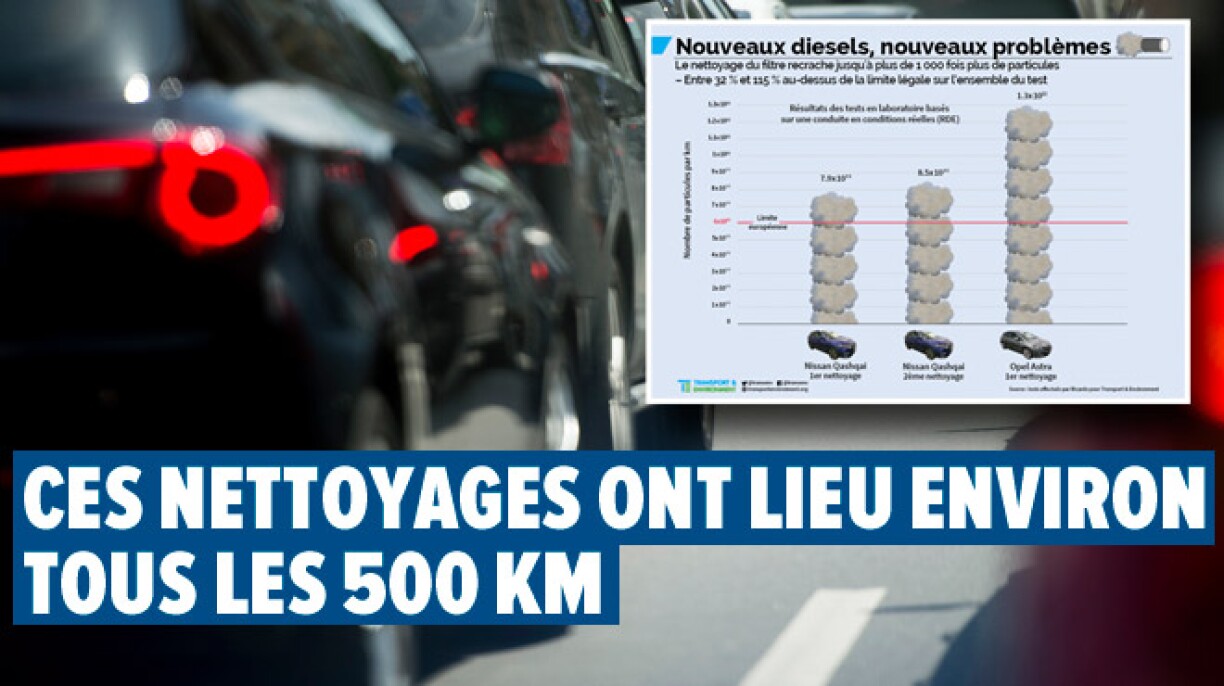
Diesel engine particulate filters regularly go through automatic cleaning phases, approximately every 500 kilometres, in order to avoid blockage. This process, which can extend over a distance of 15 kilometres, releases a large quantity of particles into the atmosphere, up to twice the quantity authorised by the European Union.
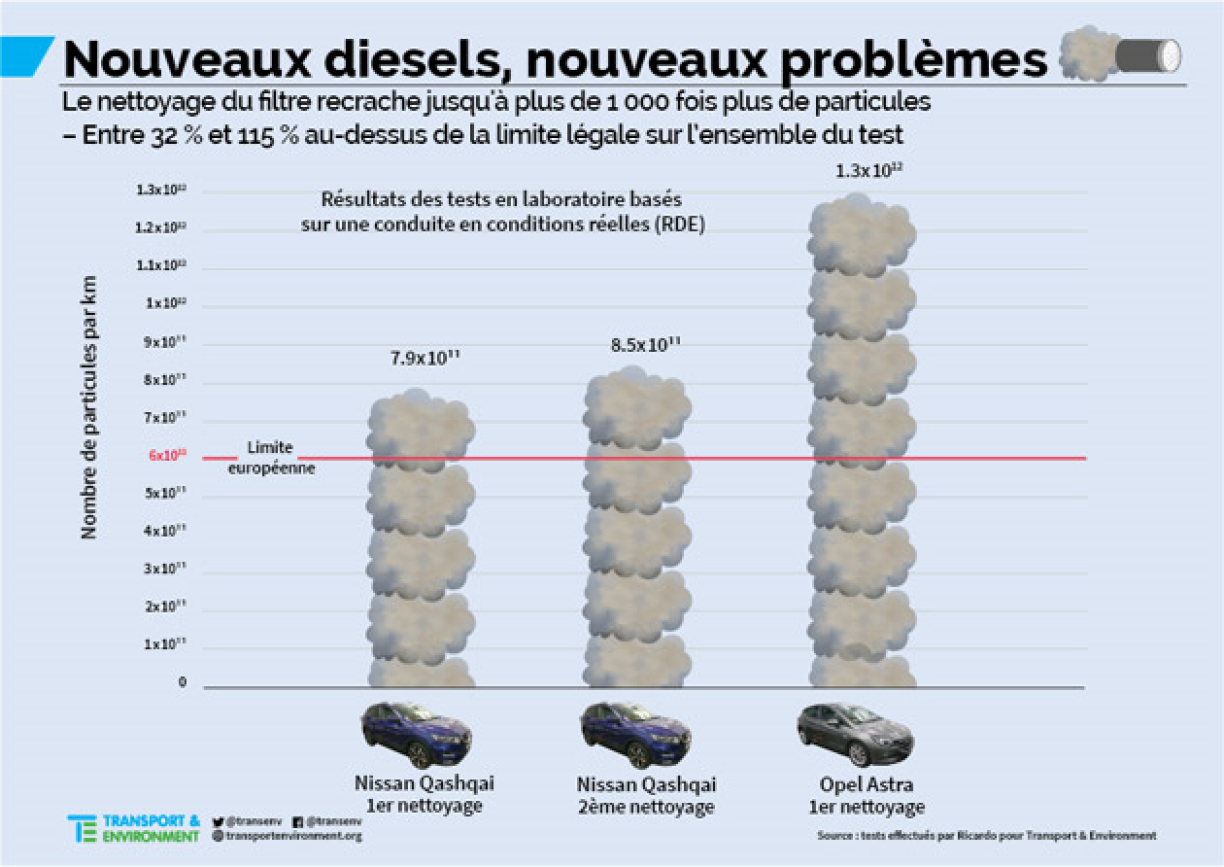
These emissions related to cleaning are not taken into account in the measurements of the emissions of fine particles made and communicated for each automobile model, which means that 60 to 99% of the emissions of regulated particles are ignored in the official figures.
Based on the 45 million cars fitted with a particulate filter in Europe, the report calculated that around 1.3 billion cleaning phases take place each year - proving that even the newest diesel models are still hazardous for our health. The particles released by the filters are "ultrafine", and manage to penetrate deeper into our bodies, which means they are even more harmful. However, the report deplored the fact these particles are ignored by official tests. The NGO said they hoped the next European standard in terms of polluting emissions would impose further limits upon such filters.