Globally, the earth overshoot day is on 22 August.
However, in Luxembourg, earth overshoot day was already on 16 February of this year: at this date, the Grand Duchy had already used up all of its annual natural resources, according to the American non-governmental organisation Global Footprint Network.
The national Council of sustainable development was asking for a report to analyse Luxembourg’s ecological footprint to the non-profit organisation “Institut fir Biologesch Landwirtschaft an Agrarkultur Luxemburg” (IBLA).
In which areas could Luxembourgish resources be saved? Can citizens contribute effectively on an individual level? These are the questions addressed by Romain Poulles, president of the national Council of sustainable development.
The biggest impact, says Poulles, is energy, "there is nothing above that. It constitutes 60% of our ecological footprint." Poulles suggests that the rest is about mobility, "the way we consume, our nutrition and housing.”
One thing that is clear, is that we are using more resources than they exist, which cannot work out in the long run. But what leverage should be used to save our resources?
Sustainable development means that our resources have to be invested well, therefore into products that last long or can be recycled later on.
Poulles is clear on action to be taken, “we have to lose our mentality of everything being disposable, the linear system, where we buy products we use shortly and throw away soon after."
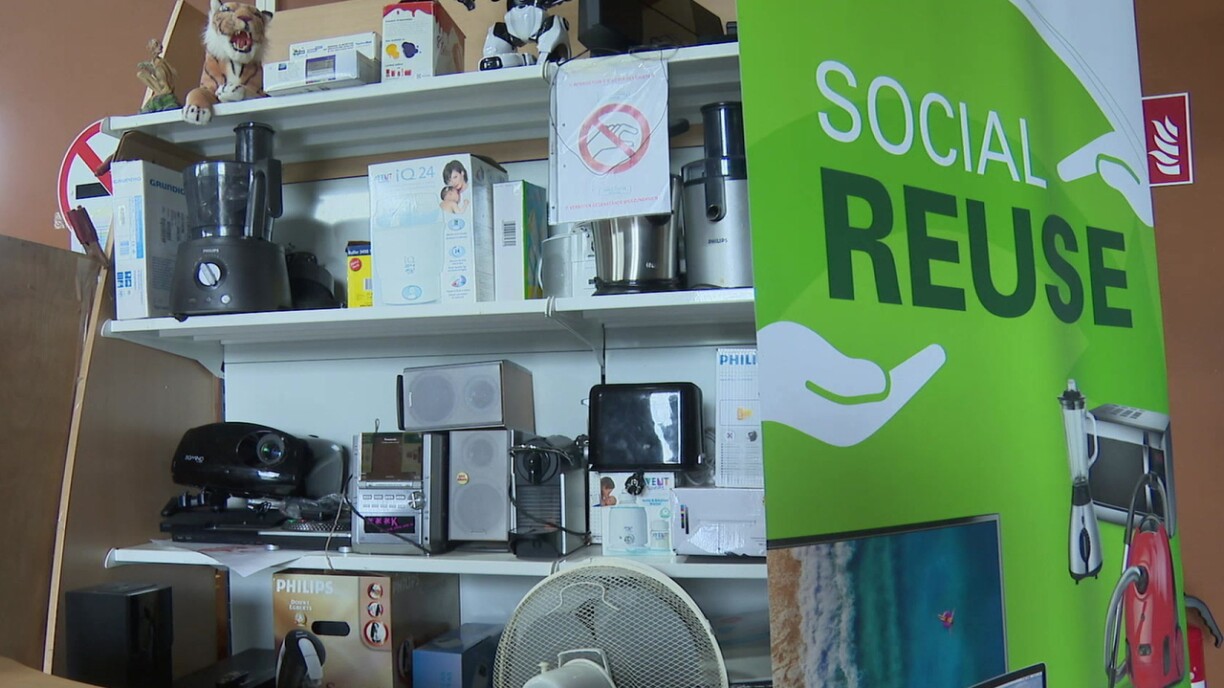
It is not just the purchasing that is the issue but also the storage, "we stock huge amounts of products in our houses, which we might just use once or twice a year. Maybe we can rent them instead or switch them out for different ones instead of throwing them away.”
Everyone is capable of living their daily life in a more sustainable way by changing tiny habits. But those who concretely engage, either politically or socially, to fight for sustainable development, have a real influence.
“As long as we do not change the system, and I truly mean the economic system," says Poulles, "we will not solve the problem of our ecological footprint, that is very clear.”
This means we have to reasonably use our resources, reduce our ecological footprint, which only works if the economy participates, therefore, if economy can earn money with sustainable patters.
This is why what we consume and the way we consume it has an important impact on our future.
Video report in Luxembourgish:





