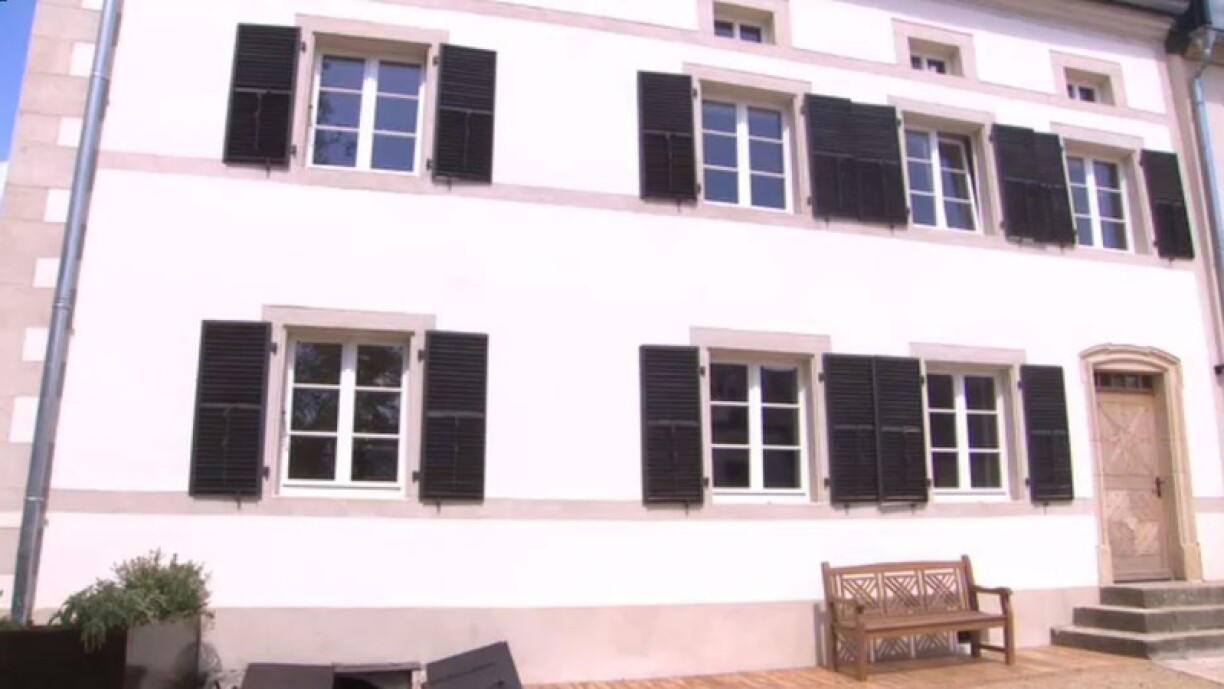
The "Péiteschhaus", built towards the end of the eighteenth century, is known for being the birthplace of the Luxembourgish physician and researcher Michel Gloesener, born in 1792. Now, the house belongs to the national heritage preservation programme after being purchased by Adelino da Silva two years ago. When da Silva bought the house, it was in a relatively dilapidated state. Now, however, residents consider it the village's diamond.
The new owner, carpenter by trade, has managed to keep the building's historic character whilst integrating modern elements. The owner worked closely with the sites and monuments site, and told our colleagues at RTL that he had fallen in love with the 'fascinating building', referring to it as a treasure trove.
For 16 months, da Silva invested both passion and energy in renovating the old building, calling the experience a dream. He explained: "Where else can you find such a beautiful building in Luxembourg? There aren't many left. We were lucky to find the house." He also told RTL he was sad to complete the renovation, having thoroughly enjoyed the construction work.
The carpenter was able to save and restore the old wooden door in addition to old mural paintings. on the modern side, he integrated a sauna, a swimming pool, and built a large garage. Globally, da Silva was very pleased with the collaboration with the sites and monuments service, saying it had gone by without any issues.
As for the architectural heritage experts, the importance of finding compromises with owners is crucial. Architect John Voncken explained that finding a balance is important. The service understands the constant pressure on the housing market in Luxembourg, but as Voncken explained, there is also a drive to save the country's heritage. Hence the establishment of an inventory, which allows the service to work with homeowners, construction site managers, and architects in order to find a natural balance between the new and the old.
Da Silva ultimately surpassed his initial budget by 30%, having encountered some pleasant and not-so-pleasant surprises over the course of the renovation. He believes that people hoping to take on such projects need to have the means to do so and must also be aware of the different aspects involved.
A house which is listed on a national or municipal scale will be able to benefit from funding for the renovation. Funding can go up to 50% if listed nationally, or goes to 25% if listed on the municipal level. Finally, subsidies are not limited to preserving the outside of the building.
Heritage series (2): Larochette - a small municipality bequeathed with much architectural heritage
Heritage series (1): Which buildings should Luxembourg protect?





