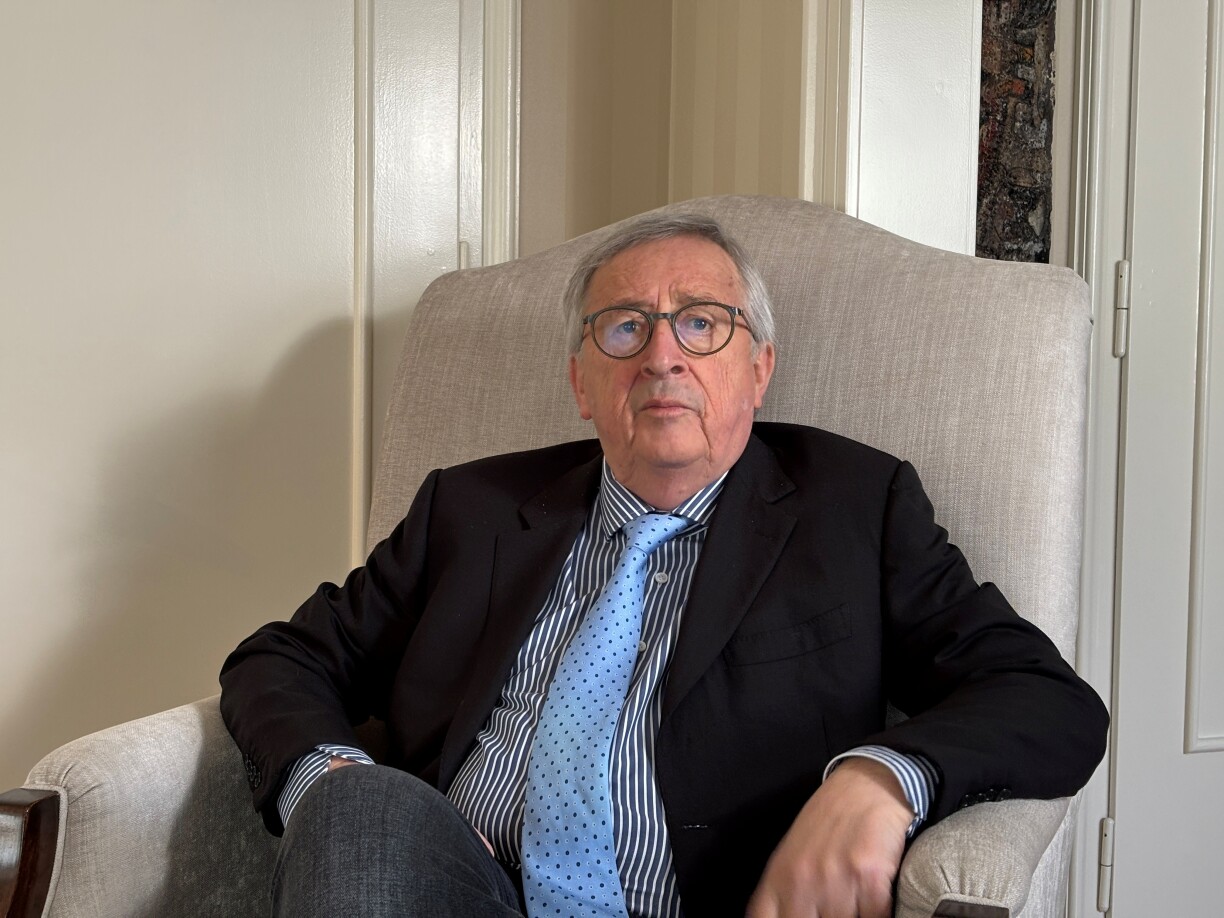
"The war is taking place at our petrol stations", former European Commission President and Luxembourg Prime Minister Jean-Claude Juncker told RTL, capturing what many Europeans are beginning to feel: while the missiles and explosions of the war in Iran may be distant, its economic consequences are arriving closer to home, with energy prices surging and, in his view, no end in sight.
Juncker described the US-Israeli attack on the Iranian regime as likely unavoidable given, in his words, the behaviour of those in power in Tehran. However, Juncker noted it to be a mistake nonetheless, and one incompatible with international law. The former Christian Social People’s Party (CSV) prime minister said he sees no clear exit from the current situation. Talk of the regime change that Donald Trump had promised the Iranian people has, in his view, come to nothing, leaving ordinary Iranians with the feeling that help was on the way when it was not. Any future agreement with Tehran, he argued, could only be worse in substance than the Iran nuclear deal struck in 2015.
Europeans are already starting to feel the pinch of high fuel prices at the pump. However, Juncker cautioned that the longer-term consequences of the war in Iran have not yet registered in the public consciousness. The knock-on effects on supply chains, energy markets and food markets remain, in his words, largely unconsidered. Taken alongside the many other conflicts raging across the world, he warned will undoubtedly cause massive uncertainty. This constant flux risks weighing heavily on the global economy. We are, he said, living in a world of interconnected conflicts.
Turning to the European Union, Juncker once again lamented the limited influence Brussels is able to project on the world stage in foreign policy terms. On Donald Trump's recent threats to distance himself from NATO, the former Commission President urged calm, cautioning against reading too much into the rhetoric. Trump has made such threats on many occasions before, and Juncker said he would not take them too seriously in substance, adding that he suspected Trump himself does not either.





