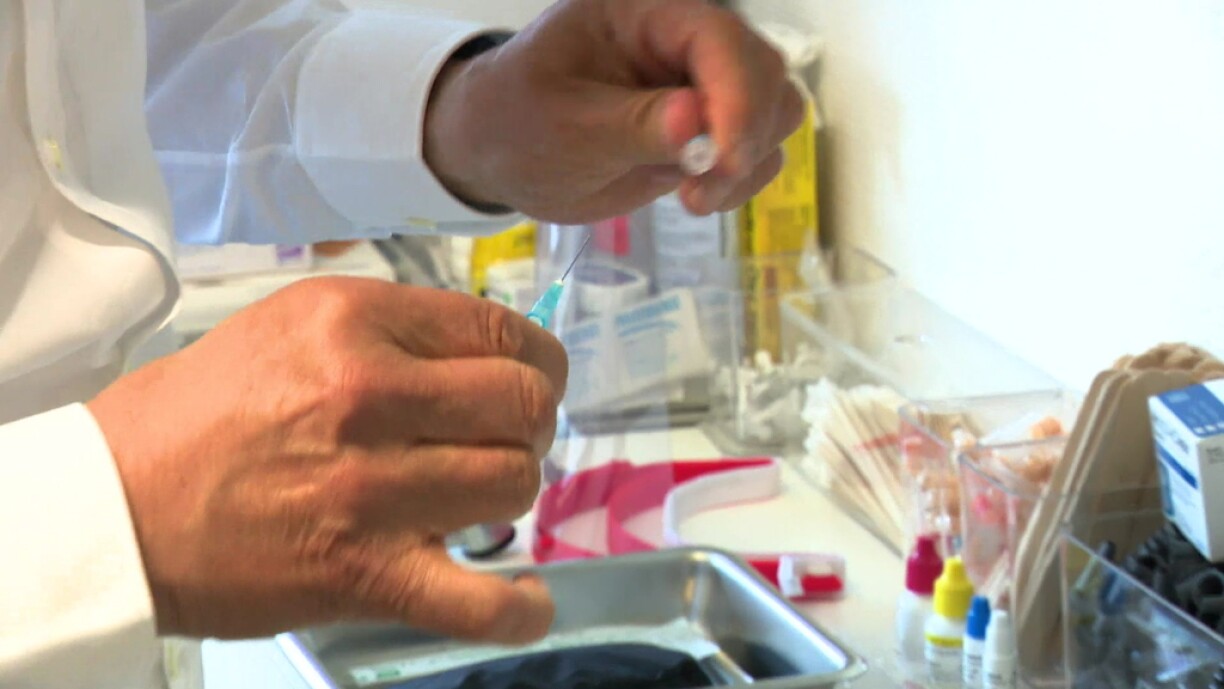
Doctors are noticing this for instance in the case of the vaccination against pneumonia for the elderly.
In view of the upcoming gardening season, people should also check the validity of their tetanus vaccination, which has to be renewed every ten years. Doctors are also calling on people born after 1980 to renew their jab against measles, rubella, and mumps. Diseases which have practically been eradicated.
It is a good and important habit to regularly ask a GP to check one's immunisation record. Especially in order to avoid a resurgence of viral diseases, such as rubella, mumps, or measles. People who have not received their second dose are not benefiting from full immunisation. This was one of the reasons, why the extremely contagious measles resurfaced in the Grand Duchy in 2019.
In terms of its infectivity rate, the measles even put the coronavirus to shame: On average, a person infected with the measles will infect between 12 and 18 other people.
Most people born before the 80s have already been infected with the measles and are thus immune. According to Dr Berthet, the deputy director of the National Health Directorate, they also cannot spread the virus anymore. Any case of the measles has to be reported to the health authorities. The viral infection lasts up to two weeks and can lead to serious complications, including meningitis and encephalitis, i.e. brain inflammations.
Rubella is usually less aggressive, but if the infected person is pregnant, it can cause serious harm to the unborn child. Mumps causes a number of glands to swell. Possible complications include pancreatitis and diabetes.
The three illnesses as well as chickenpox are nowadays all covered by one combined vaccine, which is administered in two doses. 90% of Luxembourg's population have received both, while nearly 99% have received one.
GP Dr Jean-Paul Schwartz states that Luxembourg is well-prepared, but as a small country with a high level of transit, it needs to be. Virus can resurface very quickly, a fact which the 2019 cluster in a school made very clear.
In 2019, the presence of the measles on a global scale had quadrupled. The spread was stopped by the Covid-19 pandemic. No case was recorded in Luxembourg in 2020. However, because the sanitary regulations are expected to become less strict in an increasing number of countries, the National Health Directorate stresses that a complete protection becomes all the more important.





