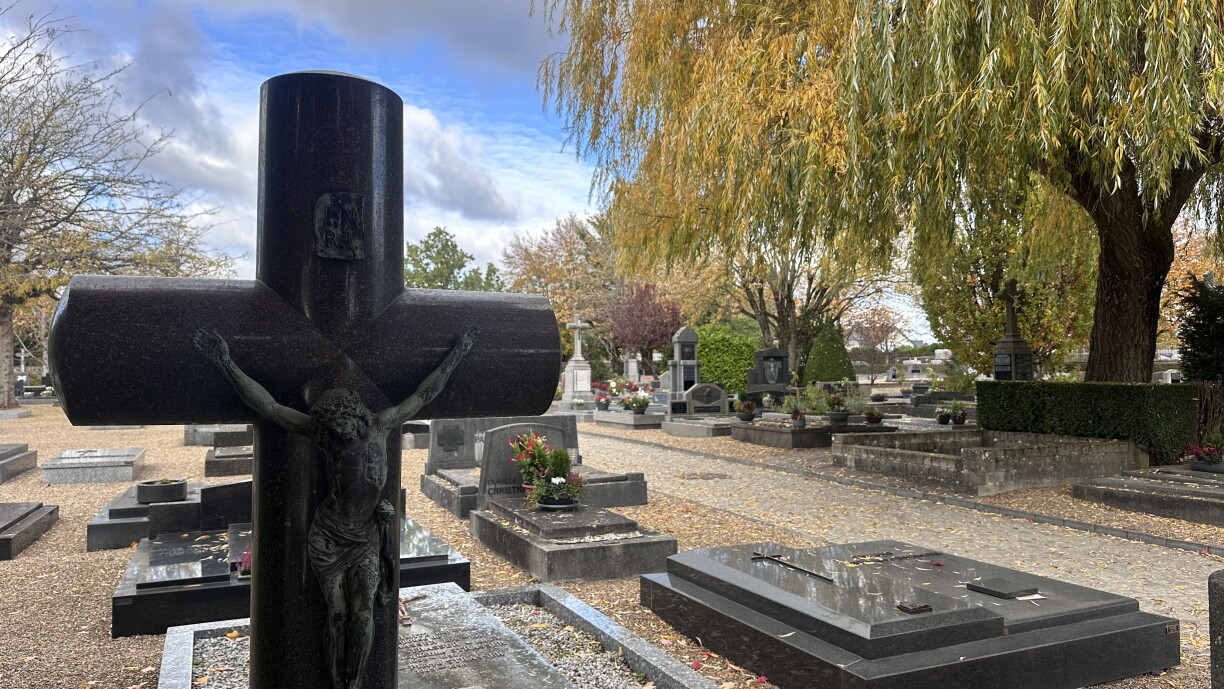
Many people turn their thoughts to loved ones who have passed away on All Saints’ Day, but far fewer consider the practical burden their own death may place on those left behind.
In the immediate aftermath of a death, families are faced not only with grief, but also with a host of practical tasks: funeral arrangements must be made at once, with little time to process the loss.
The death of a loved one can leave families in a state of shock, which makes it even harder to cope with the sudden need to make arrangements and important decisions.
Many feel overwhelmed by the number of questions that must be answered: Where and how should the burial take place? Should it be a traditional burial or a cremation? Which urn or coffin should be chosen? What music should be played at the funeral? What flowers should decorate the grave, and what inscription should appear on the headstone? Should an existing family plot be used, or must a new grave be purchased?
In Luxembourg, graves cannot be purchased in advance, nor can someone own two plots at the same time, further complicating decisions for the bereaved. Ideally, these questions would be settled before a period of intense mourning begins.


Despite the practical advantages of advance planning, few Luxembourgers prepare for their own funerals, according to Jean-Paul Erasmy, who has managed a funeral home for many years.
He estimates that only around five percent of people make arrangements ahead of time or specify their wishes for burial.
In most cases, the funeral home handles everything from transporting the deceased to selecting flowers and managing administrative procedures at the local commune. For many families, simply functioning after a loss can be extremely difficult.
In neighbouring countries, attitudes towards death are often more open. People tend to discuss their wishes for funerals at an earlier stage and frequently organise details through insurance policies while still alive. This approach helps ease the burden on families left behind.
Some believe that recording funeral wishes in a will is sufficient. However, this is not always effective, as wills are often opened days, weeks, or even months after a death, too late to assist with immediate funeral planning.
The most effective approach is, therefore, to discuss funeral wishes with a funeral director in advance.
Clients can specify their preferences, which are then documented and stored for future reference. It is also important for family members to know that such a file exists and where to find it when needed.
A clear trend towards cremation has emerged among people in Luxembourg, with about 60% now opting for cremation, while the remaining 40% choose a traditional burial.
At the Hamm crematorium, the cost of cremation, including scattering of ashes in the 'Jardins du Souvenir', is approximately €2,000.
A traditional burial typically ranges from €3,000 to €4,000, depending on the coffin or urn selected, though costs can be higher.
Whatever the choice, families in Luxembourg are entitled to a funeral allowance currently set at €1,289.91, reimbursed by the National Health Fund (CNS).
1. A doctor must officially certify the death. A death certificate is then issued, providing the basis for all subsequent administrative steps.
2. Within 24 hours – The death must be registered with the local municipality. This procedure is often handled by the funeral director. The official death record is issued as part of this process.
3. Arrange the funeral or cremation – This is handled by the funeral director. This is when decisions about the coffin, urn, flowers, etc. are made.
4. In the following days – Important institutions must be notified, including banks, insurance companies, the employer, the CNS (National Health Fund), the CNAP (National Pension Insurance Fund), and other relevant authorities. Benefits or a survivor’s pension may also be claimed.
5. Finally – Have the will (if there is one) formally opened by a notary. Settle the estate (inheritance) and take care of the legal and financial formalities.
More information can be found on www.guichet.lu