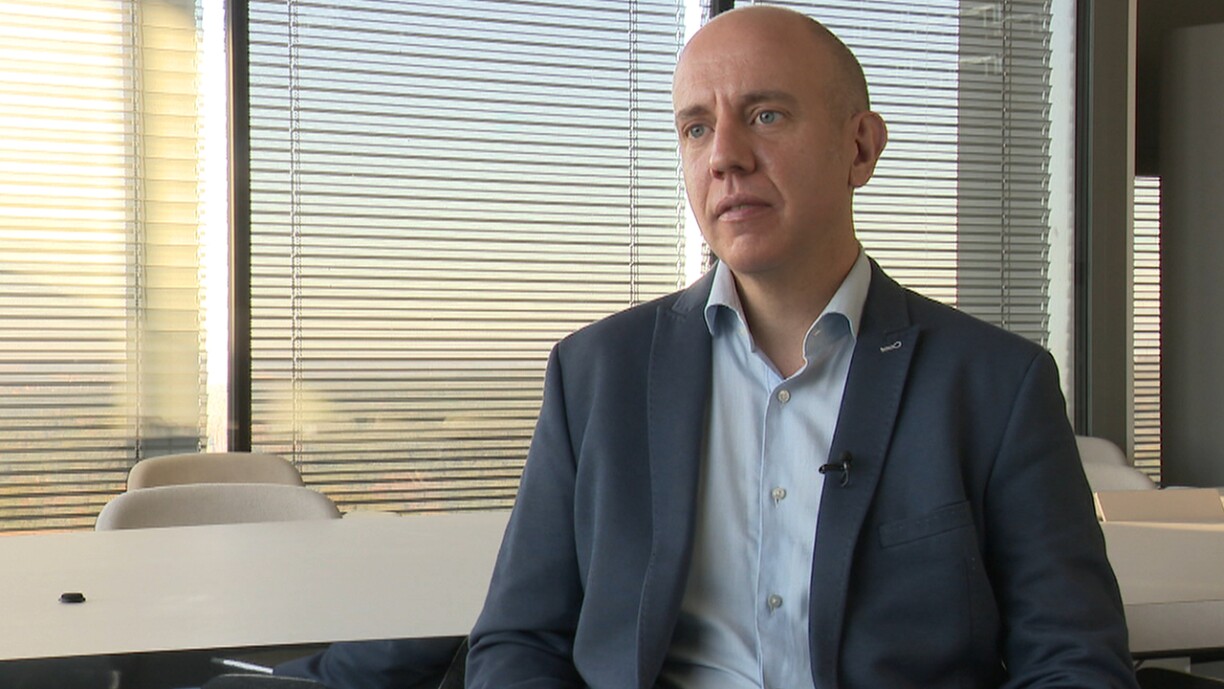
Professor Paul Wilmes of Research Luxembourg explained the projections relied on mathematical models, which are not necessarily incorrect, but difficult to predict. It is a method commonly used to predict such situations. Wilmes said researchers had very clearly forecast a second wave and this prediction did come to fruition.
Wilmes went on to clarify that predictions for the second wave had been based on data gathered from the first wave, in which the focus was primarily on the most vulnerable members of society.
In the meantime, the results of the large-scale testing project, coupled with data on the most affected age groups, have helped researchers adjust their prognosis. However, it is still not feasible to give exact figures, said Wilmes.
At present, the figures would indicate that the Grand Duchy is in a stable situation, explained Wilmes. However, there is still a linear increase, with an average of 45 new infections over the last four weeks. According to Wilmes, although the virus is controlled at this point, the situation could change at any given moment.
Researchers have already predicted an increase of 30-70% in infections from mid-September, coinciding with schools reopening and holidaymakers returning from their travels, as well as increasing social contacts.
Possible 30 to 70% increase in new infections over September
Second wave could overwhelm hospitals in August
Number of new Covid cases did not rise as rapidly as first expected





