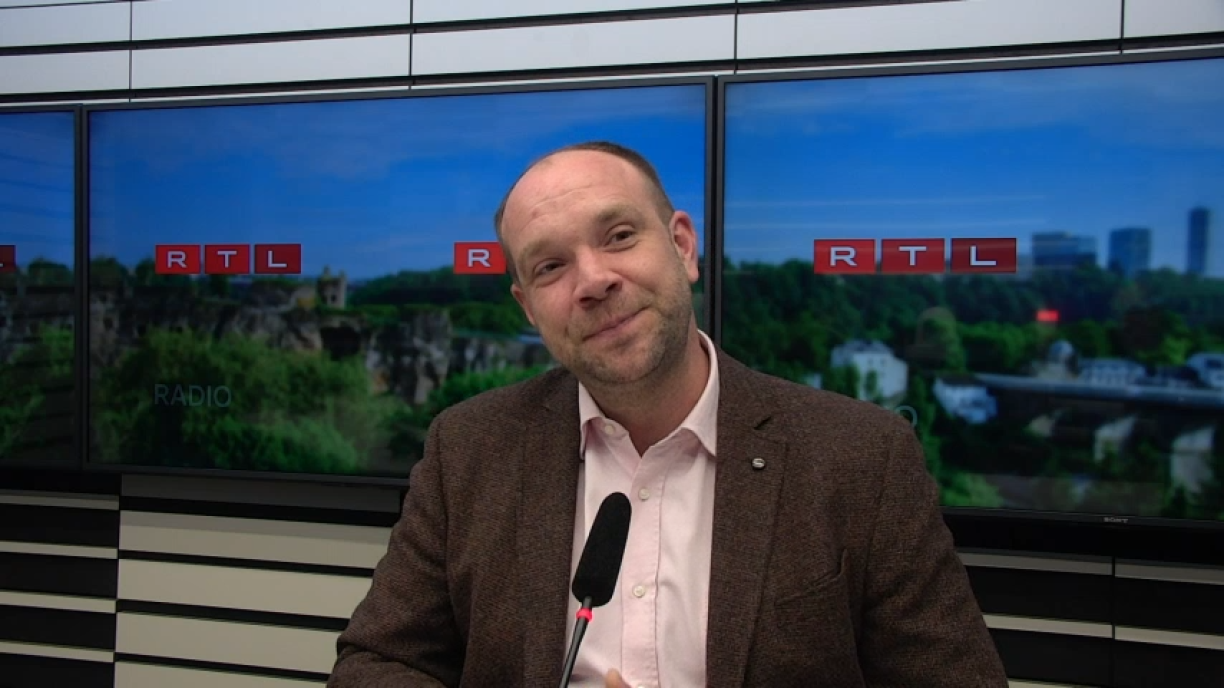
The wolf may have made a howling comeback in Luxembourg, with sheep already falling victim to attacks, but according to President of the Chamber of Agriculture Christian Hahn, farmers are not losing much sleep over it. Hahn, invited as a guest on RTL, says it is the new building regulations in green zones and the surge in energy prices in the wake of the war in Iran that pose a far more worrying challenge for the sector.
Wolf attacks in Wintrange and Heinerscheid have killed sheep. However, as these were isolated cases and large-scale sheep farming is relatively uncommon in the Grand Duchy, tensions have remained relatively low. Adding to this, the state's financial compensation system has helped absorb some of the impact, according to Hahn. However, the Chamber of Agriculture president points out that the system has its limitations. For example, now that spring has arrived and animals are back out in the fields, livestock being frightened due to potential wolf presence would fall outside the scope of what the compensation system covers.
A longer-standing concern for farmers is the question of construction in green zones. A draft law presented to the council of ministers at the end of March sets out new requirements, and while the Chamber of Agriculture has yet to receive the full text, Hahn expressed cautious optimism that many of the sector's longstanding demands will be reflected in it. Hahn is hoping that Environment Minister Serge Wilmes will present the corresponding Grand-Ducal regulation at the next council of ministers.
The new rules on building permissions in green zones would affect virtually the entire agricultural sector, not merely isolated farms. A recurring problem is that farm structures have often grown beyond what the existing building perimeters allow, with many perimeters limiting construction to a depth of 42 metres from the road, leaving parts of larger farm buildings technically outside the permitted zone.
One point of particular importance to farmers is that the new regulation should simplify the direct processing and sale of food on the farm.
Farmers have not been spared from the surge in energy prices, with fertiliser costs adding to the pressure. That said, the rise in fertiliser prices is proving less of an immediate burden than the increase in fuel costs. A large share of fertiliser was purchased last October and November, providing some breathing room before the next purchase is needed. Diesel, however, is a different matter altogether, costing almost twice as much as it did last November.
Grain prices have remained broadly stable rather than rising in line with other costs, while the anticipated increase in the minimum wage will also be felt across the sector.
Hahn stopped short of calling directly for state financial aid, but made his position clear. When support is offered to residents or businesses, he argued, agriculture must not be left out, as it was during a previous scheme designed to offset rising electricity prices. Hahn explained that the scheme was limited to consumption below 25,000 kWh, but most farms exceed this threshold.
To compound matters, farmers who share a single electricity metre between their farm and their home are also unable to benefit from any household relief measures, Hahn added.