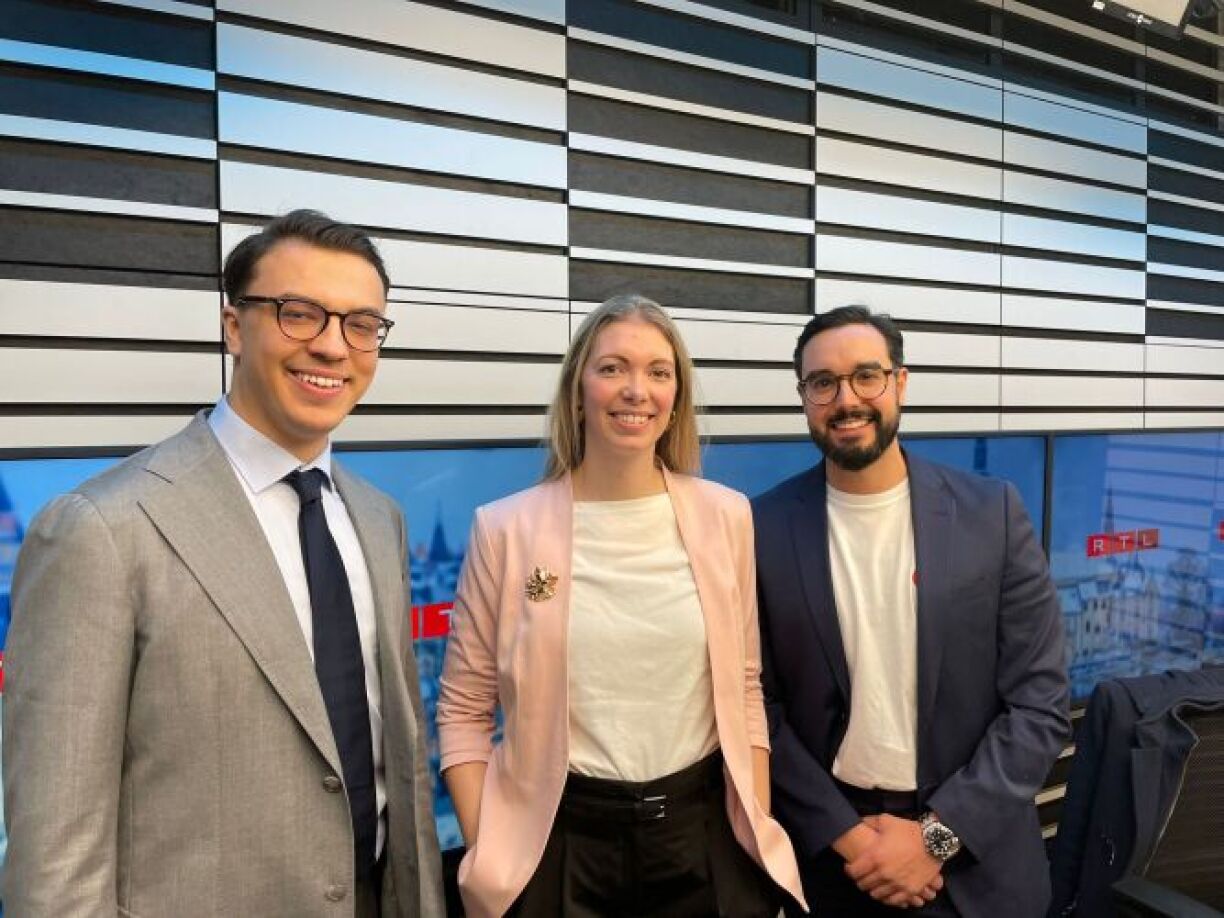
On Saturday, our colleagues from RTL Radio hosted a roundtable discussion featuring young politicians to address issues affecting young people in Luxembourg. The panellists were MP Claire Delcourt of the Luxembourg Socialist Workers' Party (LSAP), MP and Echternach Councillor Ricardo Marques of the Christian Social People's Party (CSV), and Maksymilian Woroszylo, President of the youth wing of the Alternative Democratic Reform Party (ADR).
The three guests broadly agreed that the world has evolved and that young people must adapt accordingly.
Delcourt emphasised the importance of taking contemporary fears – such as those related to climate change – seriously, while cautioning against allowing these challenges to foster collective resignation among an entire generation. She noted that every era presents its own set of difficulties, which ultimately shape societies and, by extension, the generations that live through them. She framed this perspective within a longer-term cyclical view of history.
Marques highlighted the need to address a 19% unemployment rate among young people. He argued that the current matching process between employers and job seekers is not functioning effectively and called for stronger links between vocational training, higher education, and the labour market.
Woroszylo stressed the importance of internships, particularly those undertaken while still in school, as a means for young people to gain practical experience. He suggested that such opportunities help clarify individual interests and potential career paths. He also noted that difficulties related to entering the workforce and the prevalence of fixed-term contracts are structural issues, meaning that pressure should not rest solely on younger generations. Woroszylo added that no single generation can be held responsible for the current challenges.
At the same time, he encouraged young people to make greater efforts to adapt to changing circumstances. In this context, he expressed his party's opposition to a ban on social media platforms for those under 16, arguing that fostering critical thinking is more effective than implementing blanket restrictions. In contrast, the CSV and LSAP representatives both voiced support for such a ban.
Marques stressed the importance of teaching social skills – such as punctuality – from an early age and called for greater emphasis on this in schools. He argued that it would be preferable for young people to be shaped by soft skills rather than by social media, which he claimed can lead individuals into negative spirals.
On labour policy, Delcourt advocated for a reduction in working hours as a means of improving work-life balance. She explained that the goal is for young people to find motivation and satisfaction in their work, which in turn would boost productivity. However, both Marques and Woroszylo disagreed that this approach would effectively stimulate the economy.
When asked why rents continue to rise despite a series of housing measures, Marques responded that the policies introduced under the CSV-DP government must be assessed over a longer timeframe. He pointed out that eligibility thresholds for bonuses and social housing have been raised, making more people eligible for support. He added that his party intends to present additional measures this year aimed at boosting construction.
Ultimately, Marques stressed, the core issue is the need to build more housing. On this point, Delcourt noted that insufficient attention is being paid to vacant buildings as a potential resource.
Woroszylo called for an expansion of student housing, describing it as essential to supporting young people pursuing higher education. He also identified population growth as a fundamental driver of the housing crisis.
The discussion also touched on perceptions among some young people that refugees are being housed more readily than residents. Both the LSAP and CSV MPs firmly rejected this notion, stating that refugees are not given any form of priority. Delcourt described the spread of such sentiments as dangerous, emphasising that they are not grounded in facts.
Woroszylo argued that asylum seekers whose status has been denied and who are no longer legally entitled to remain in the country should be required to leave shelters – and the country – more swiftly. The spaces freed up as a result, he suggested, could then be used to assist families in need.
All three panellists agreed that intergenerational exchanges within their parties are constructive and that young people are taken seriously in their respective political organisations.
Marques described the CSV as having achieved "the perfect balance between experience and renewal." Delcourt noted that more seasoned politicians in her party are consistently available to offer guidance to younger members. Woroszylo pointed to the ADR youth wing's latest national congress as evidence of meaningful exchange, highlighting a record number of MPs and party officials in attendance, several of whom delivered speeches. He also observed that the ADR parliamentary group in the Chamber of Deputies has the lowest average age among political parties.
When asked whether she could envision herself as co-president of the LSAP alongside Georges Engel, Delcourt responded that her party colleague is an excellent choice for the role. Delcourt was herself approached to take on the position. She stated that she felt deeply honoured and took time to consider the proposal. Ultimately, however, she decided that the moment was not right for her to take that step, given that she became an MP only two years ago and remains focused on familiarising herself with the range of policy issues. She also emphasised her desire to be present for her two children. While she did not rule out the possibility that her time might come in the future, she reiterated that she is currently engaged with other challenges that she enjoys and is committed to pursuing successfully.
More broadly, all panellists expressed a shared commitment to doing more for young people through their political work. Woroszylo stressed the need to include young people more actively in debates. Marques voiced optimism about creating new opportunities and perspectives. Delcourt concluded by encouraging young people to become more involved themselves, suggesting that while politicians can help establish contact, young people should not hesitate to communicate and share their ideas.





