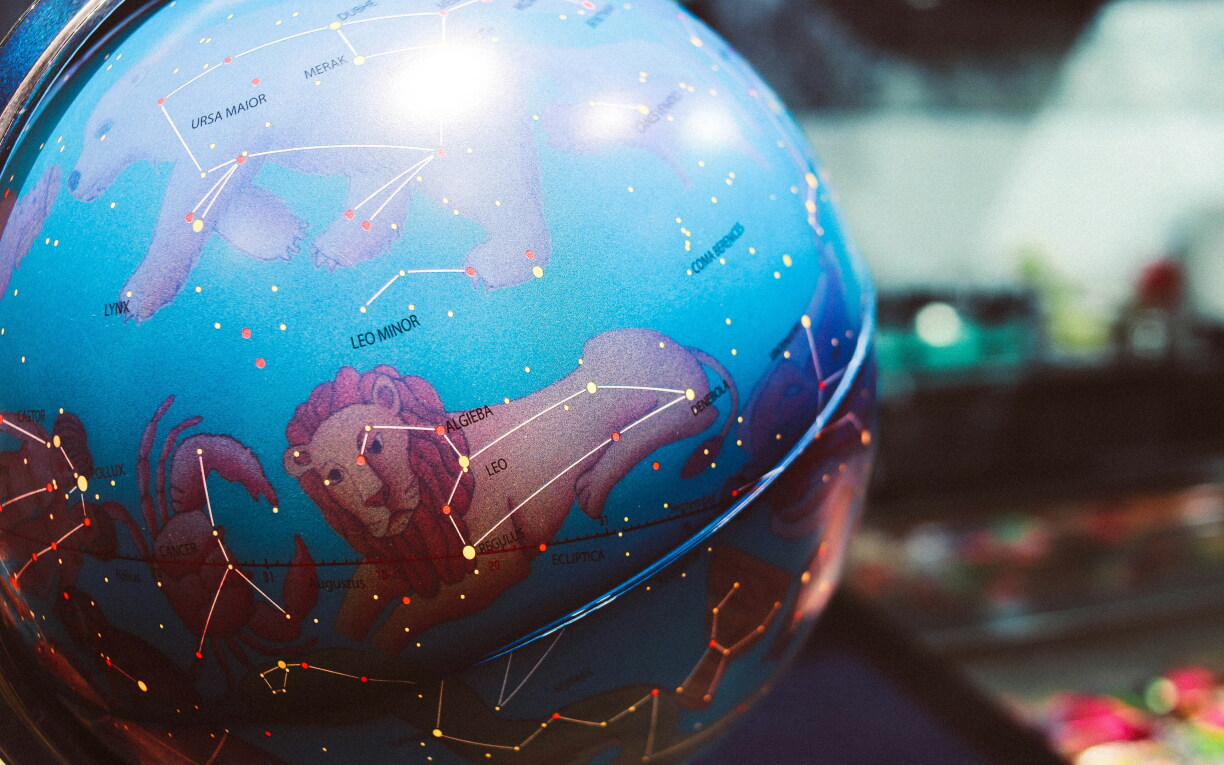
It can be surprisingly compelling to read a horoscope and find that the universe apparently understands our week, especially when we are still trying to make sense of it ourselves. A difficult conversation, a restless mood or the prospect of a fresh start can all sound remarkably familiar, but how have a few lines written for millions of strangers managed to find their way into our lives?
Astrology suggests that our birth can reveal our personality, our compatibility with others and perhaps even our future, with familiar horoscope columns assigning characteristic traits according to our Sun sign. But how could arriving a few hours either side of a zodiac boundary turn a supposedly bold, outgoing Leo into a reserved, practical Virgo, as though the delivery room had a switch for changing character? And since our brains and bodies have already been developing for months before being born, why should delivery be the moment that fixes our astrological identity?
Western astrology has roots in ancient Mesopotamia, largely in what is now Iraq, where scholars tracked celestial movements to organise calendars and interpret supposed messages from the gods. Their interpretations initially concerned rulers and kingdoms, but later extended to individuals, with the earliest surviving Babylonian birth horoscopes recording births in 410 BCE. These ideas subsequently entered the Greek-speaking world, helping to shape the tradition of interpreting character and fortune through celestial positions at birth.
The reason people believed in this was simple: harvests failed, diseases struck without warning, and kingdoms collapsed overnight. Against that chaos, familiar celestial cycles offered a reassuring sense of order: after all, if the Sun's cycle drives the seasons, why shouldn’t the stars rule human events?
Today, neuroscience and psychology explain personality through interacting influences that include genetics, development, and experience, rather than characteristics assigned by a zodiac sign. Physics adds another difficulty, because gravity depends on mass and distance, not on which zodiac sign an object appears to occupy. When the Sun crosses from Leo into Virgo, its gravitational pull does not suddenly change.
So, what physical process would turn that boundary into a change of personality? And knowing that, why can a horoscope still feel convincing enough to influence how we see ourselves?
One explanation is the Barnum effect, also known as the Forer effect, through which people accept broadly applicable descriptions as particularly accurate accounts of themselves. By offering descriptions that sound deeply personal yet apply to almost anyone, horoscopes trigger a natural cognitive bias, where readers selectively focus on the details that resonate while overlooking those that do not.
Confirmation bias can then strengthen the impression by drawing our attention to apparent successes, while failed predictions receive less notice or are reinterpreted to fit what happened. Between flexible wording and selective interpretation, a horoscope can appear much more precise than it actually was.
Familiarity with astrological descriptions may also influence how people see themselves, with research finding that participants who knew about astrology described themselves more strongly in terms of traits associated with their own Sun sign. If we are regularly told that our sign is stubborn, moments when we dig in our heels may become especially noticeable, making the label feel convincing even though we also have plenty of occasions when we willingly compromise.
When researchers test familiar Sun-sign claims at scale, the results offer little support, with a study published in 2020 finding that Western zodiac signs did not predict personality in data from more than 173,000 people in China. A separate study examined more than 65,000 Swedish marriages against several popular compatibility schemes and found no consistent evidence that supposedly favourable pairings had a lower risk of divorce.
These findings concern Sun signs rather than every possible birth-chart interpretation, but they challenge familiar claims about personality and compatibility. Try reading several horoscope descriptions without their labels, then ask whether the one that fits you best also fits other people, and what evidence would persuade you that it was wrong.
The desire to find meaning and connection in the universe is understandable, but when a horoscope next seems uncannily accurate, asking what it actually said, how widely it might apply and which details we supplied ourselves may reveal more about our thinking than about the planets.