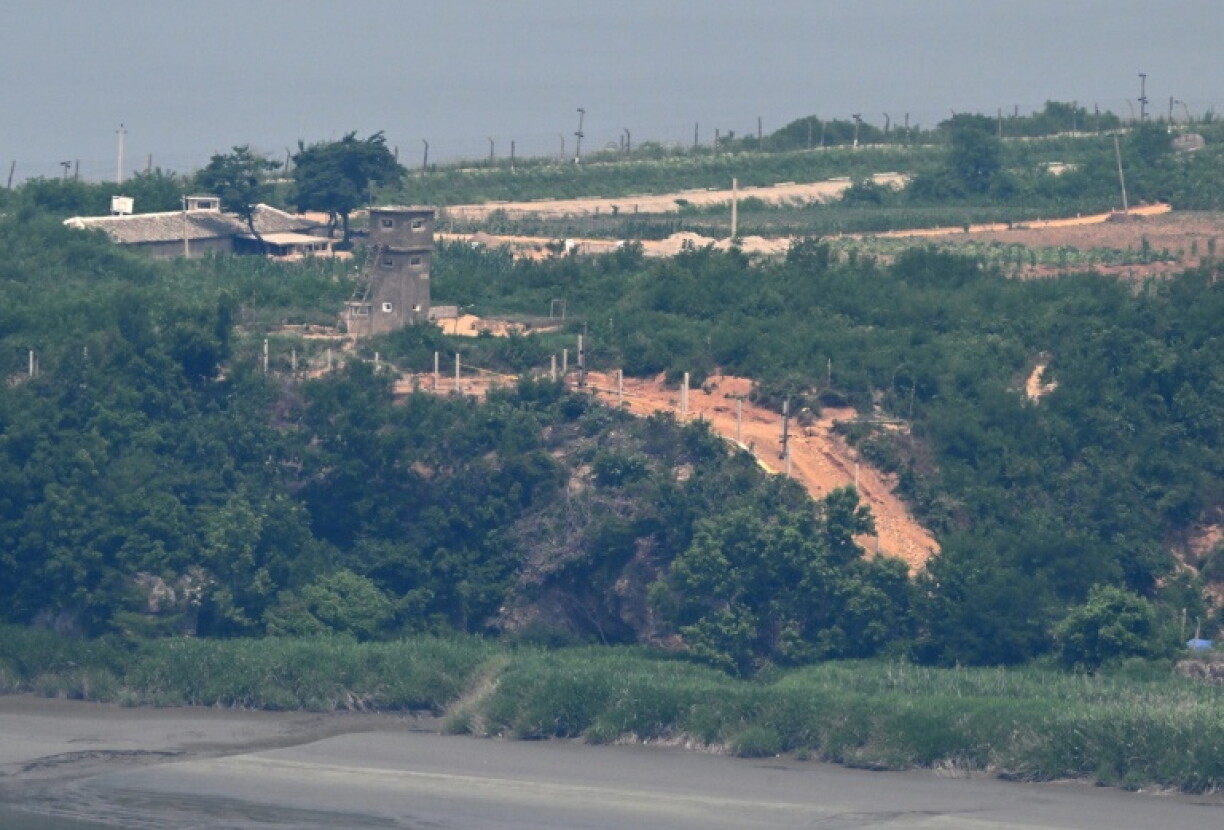
The powerful sister of North Korea's leader said Monday that "a grave situation is prevailing" along the Southern border, according to state media, and Pyongyang was considering deploying "more tactical strike means" to the area.
The announcement comes amid heightened tensions between the two Koreas, with the nuclear-armed North stepping up weapons tests in recent days, including of a "new-type" precision-guided torpedo system that uses artificial intelligence to detect and track targets.
"Now the situation of the southern border is very unstable," Kim Yo Jong, sister of North Korean leader Kim Jong Un, said in a statement.
"A grave situation is prevailing along the southern border due to the reckless behavior of the ROK military gangsters," she said in the English-language statement carried by the official Korean Central News Agency.
Citing South Korea's firing of warning shots, broadcasts from propaganda loudspeakers and what she called a "mine explosion farce", Kim said the incidents had "gone beyond the red line".
North Korea has rejected claims it was behind an explosion that injured three soldiers last month inside the Demilitarised Zone (DMZ), the heavily mined buffer area that has divided the two Koreas since their 1953 armistice.
A joint Seoul-United Nations Command investigation concluded the blast was caused by North Korean mines laid on the South Korean side of the border.
"Our military leadership is examining the issues of deploying more tactical strike means along the southern border as a preemptive and suppressive measure to deal with contingency," said Kim, but did not specify the details of the tactical strike.
Kim also added that the North is reviewing "resuming the loudspeaker broadcasting against the ROK and considering other necessary and appropriate measures".
She warned that if the actions were to continue, "Seoul will surely regret and face uncontrollably terrible danger".
In 2024, North Korea sent thousands of trash-carrying balloons southwards, saying they were retaliation for anti-North propaganda balloons floated by South Korean activists.
Later, the South turned on border loudspeaker broadcasts for the first time in six years -- including K-pop tunes and international news -- and the North started transmitting strange sounds along the frontier, unsettling South Korean residents.
Loudspeaker broadcasts, a tactic that dates back to the Korean War, have previously prompted Pyongyang to threaten artillery strikes on Seoul's speaker units.
South Korea's President Lee Jae Myung has vowed to reach out to the nuclear-armed North and pursue dialogue without preconditions -- a reversal from his hawkish predecessor.
Last year the South's defence ministry removed loudspeakers from its side of the border as "a practical measure aimed at helping ease tensions with the North".
hs/fox