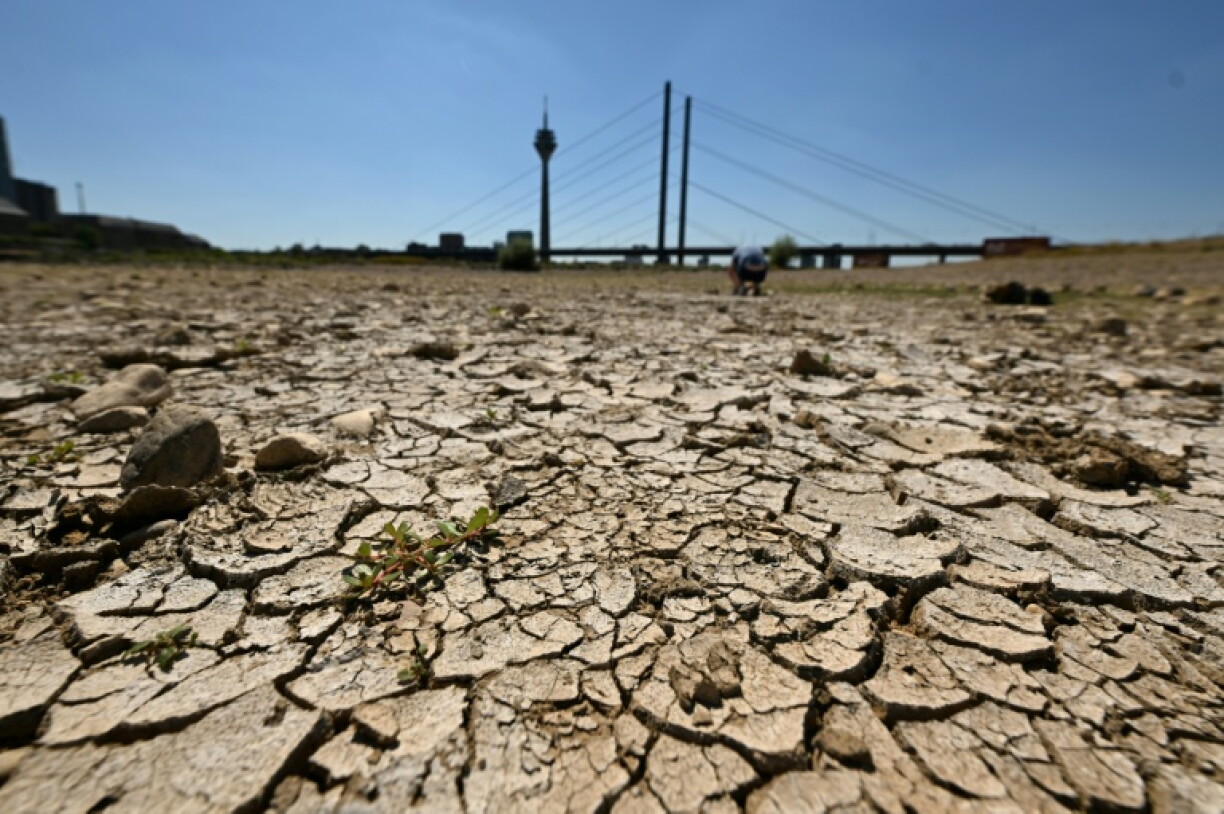
Unusually high temperatures and prolonged drought have driven water levels on the Rhine to historic lows over the weekend in cities including Cologne, Bonn, and elsewhere.
According to the Federal Waterways and Shipping Administration (WSV), the gauge at Düsseldorf on Sunday afternoon measured only 21 centimetres, two centimetres lower than the previous record set in 2018. Similar record lows were recorded on Sunday in Duisburg, Wesel, and other locations along the river.
In Cologne, the gauge fell to 67 centimetres on Saturday, also surpassing the 2018 low by two centimetres. While some sites, such as Cologne, saw a slight rebound, reaching 69 centimetres by Sunday afternoon, forecasts suggest that additional record lows may be reached along the Rhine in the coming week.
Low water levels are significantly increasing transport costs for businesses, particularly in industries reliant on bulk shipments. Inland cargo vessels are forced to operate with sharply reduced loads or, in some cases, suspend services altogether.
The exceptionally low water has also disrupted tourism and passenger shipping. Köln-Düsseldorfer (KD), a German river cruise operator, reports that numerous cruises have been cancelled, and some vessels are unable to access certain landing stages along the river.
The persistent low water is the result of a lengthy dry period affecting large parts of Germany. Scientists note that climate change is increasing the likelihood of such extreme droughts and other weather events. Other major rivers, including the Danube, are experiencing similar problems. In Hungary, low water levels recently forced the country’s only nuclear power plant to temporarily go offline.





