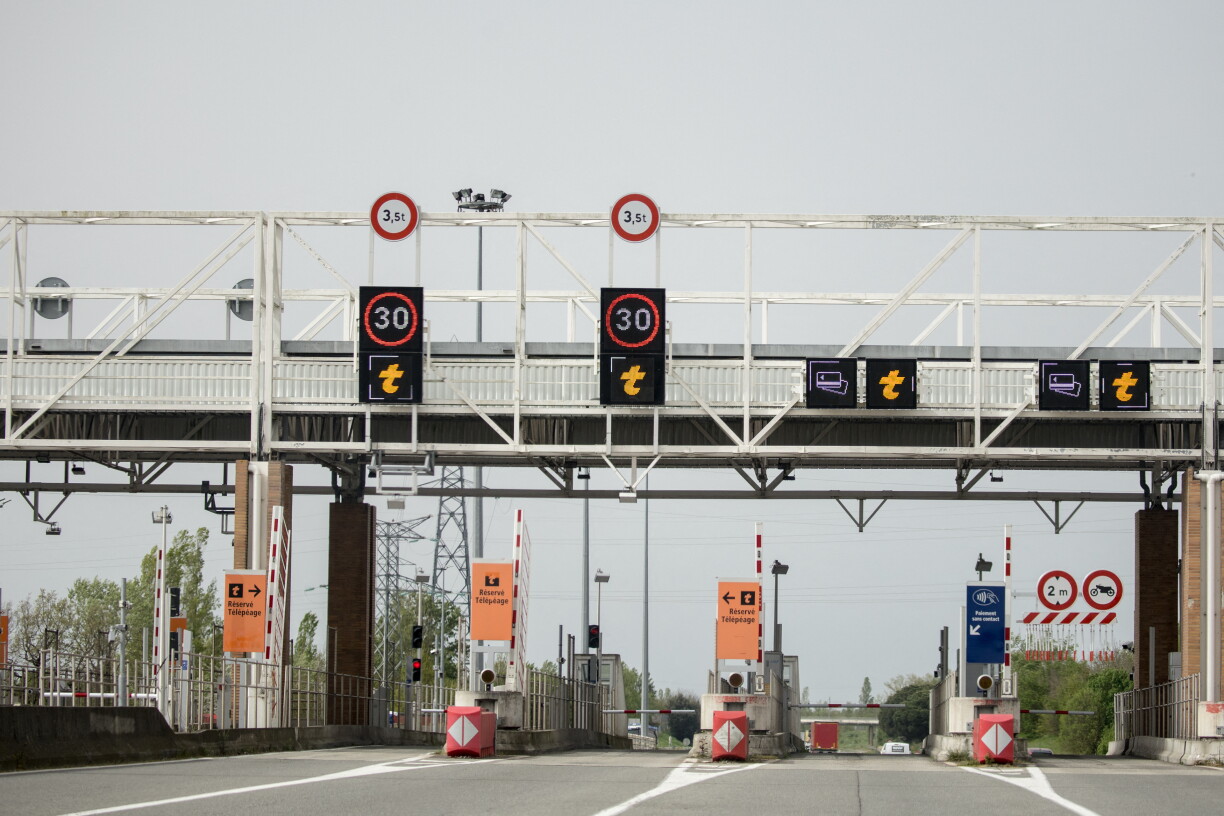
Systems across Europe differ widely: some countries require a vignette (a sticker or digital pass), others charge distance-based tolls at toll stations, and a number of cities add fees for entering environmental or urban zones.
Ten European countries require a vignette for motorways or expressways, including Austria, Switzerland, Bulgaria, Moldova, Romania, Slovakia, the Czechia, Hungary, and Slovenia. Validity ranges from short-term passes to annual ones.
Some countries still require a physical sticker on the windscreen, but a growing number are moving to digital vignettes or electronic tolls, where billing is automatic and often linked to the vehicle's registration.
Most vignettes can be bought in advance through motoring clubs such as the Automobile Club of Luxembourg (ACL) or the German equivalent ADAC.
Austria offers both physical and digital vignettes, plus electronic tolls for specific routes. E-vignettes are also used in the Czechia, Slovakia, Slovenia, Hungary, Bulgaria and Moldova.
In Italy, France, Spain, the United Kingdom and Ireland, certain stretches of motorway require advance online registration.
Sixteen countries charge by the kilometre, including Italy, France, Spain, Portugal, Ireland, Poland, Croatia, Greece, the United Kingdom, Norway, Bosnia-Herzegovina, Serbia, Montenegro, North Macedonia, Belarus and Turkey.
Not all motorways are tolled, and charges are typically collected at toll stations on entry or exit.
In France and Portugal, some stretches use electronic systems that detect vehicles by transponder or number plate and charge the toll automatically.
You must register your vehicle in advance to use them.
Some countries charge extra for specific bridges, tunnels or passes, whether or not general tolls or vignettes apply.
They include Austria, Switzerland, Italy, France, Andorra, the Netherlands, Belgium, Denmark, Sweden, Montenegro and Albania.
The Alps are known for their toll bridges, tunnels and high passes, many charged separately from motorway fees or vignettes.
Prices vary widely: Austria's Bosruck Tunnel costs around €7, while the 11.6-kilometre Mont Blanc Tunnel between France and Italy can cost as much as €55.50.
Several countries charge for entering city centres or environmental zones. Germany, for example, has many environmental zones, affecting cities such as Aachen, Berlin, Cologne, Munich and those in the Ruhr area. The same goes for Paris.
In Austria, a vignette is compulsory and costs €9.60 for one day, €12.80 for ten days, €32 for two months or €106.80 for a year.
Switzerland offers only an annual vignette, at €44.50. Among EU countries, the cheapest are in Bulgaria (€49.60) and Romania (€48-63).
At the top end, Hungary’s annual vignette can cost between €160 and €173, depending on exchange rates.
Belgium plans to introduce a vignette with more options than Austria’s, with passes for one day, ten days, one month, two months or a year.
Prices will also reflect emissions classes: electric vehicles will pay the least, followed by Euro 4 vehicles (most modern cars), then vehicles in categories 0 to 3 (generally those registered before 2005).
More details are on the ACL website.
In countries with distance-based tolls, drivers pay for each kilometre travelled. France is among the most expensive, at €0.09 to €0.14 per kilometre, with Spain (€0.09 to €0.12) and Poland (€0.10 to €0.13) not far behind.
Greece and Croatia are considerably cheaper, at under €0.07 per kilometre.
Denmark and Sweden have toll-free motorways, but drivers pay to cross two major bridges: the Storebælt Bridge in Denmark (€35-€52) and the Öresund Bridge between Sweden and Denmark (€60-€120).
Check the requirements for every country you will cross before setting off. Fines can be steep: up to €800 in Slovenia and €200 in Austria for a missing vignette, and around €217 in Switzerland on top of the cost of the vignette.