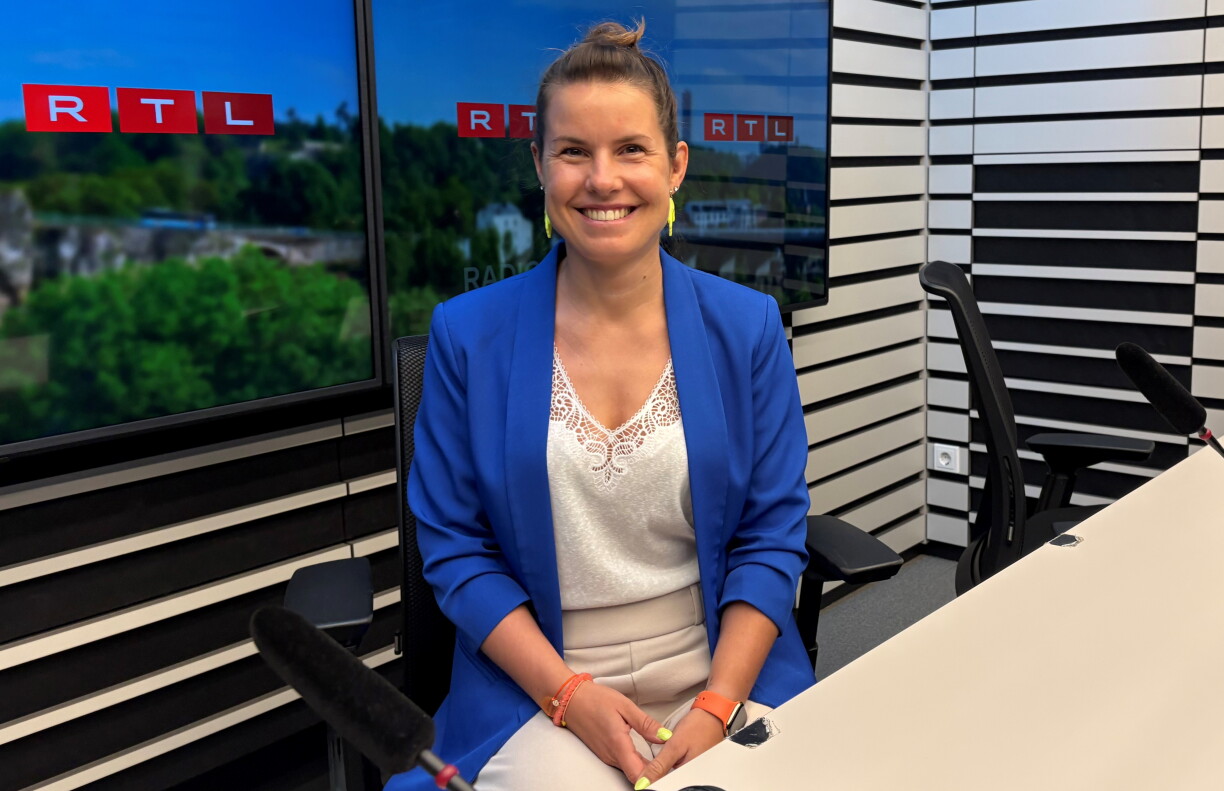
MP Alexandra Schoos, who presides the Alternative Democratic Reform Party (ADR), spoke to RTL Radio on Tuesday morning about the investigation into suspected residence permit fraud, the effectiveness of Luxembourg's public administration, state finances, and the government's latest measures for the housing sector.
The interview began with the investigation into a suspected labour migration scheme involving residence permits obtained using forged documents. Hundreds of people may have received permits through the scheme, while searches have been carried out at the Directorate of Immigration, the Ministry of Higher Education, the employment agency ADEM, businesses, and private homes.
Schoos stressed that politicians should not interfere in the judicial investigation or prejudge the individuals concerned. However, she said it was now parliament's responsibility to determine which safeguards had failed, how the alleged abuses had been possible, and who knew what at each stage.
Schoos said the investigation involved serious allegations, including possible corruption, undue influence, and money laundering. The presumption of innocence nevertheless continued to apply, she stressed.
"The investigation into the individuals is the responsibility of the judiciary. Politics has no place there", she said. "But politics must examine which control mechanisms failed, how this could have happened, who knew what and at what point."
Schoos argued that the political review should begin at the lowest administrative level and trace how each file was handled.
She explained that this should include examining who received the applications, which officials signed which documents, and whether information was withheld, overlooked, or inadequately communicated. Any possible influence or movement of money should also be investigated, she said.
According to Schoos, the review should cover the different authorities involved in labour migration, including the Directorate of Immigration, ADEM, and the Ministry of Higher Education, which is responsible for the recognition of certain qualifications. Employers who subsequently hired the people concerned might also need to be heard to establish what information they had received, she said.
Schoos emphasised that the affair concerned labour migration rather than asylum. While access to the European and Luxembourg labour markets is tightly regulated for people from non-EU countries, she said legislation alone could never entirely prevent deliberate fraud.
The more important question, she argued, was how those laws were enforced.
The public prosecutor's office previously criticised insufficient exchanges of information between the administrations involved in the case. Schoos said the affair reflected a broader problem in which one public authority often did not know what another was doing.
Although the ADR strongly supports data protection, she said this did not mean that authorities should be prevented from exchanging information.
"The problem is what happens to the data afterwards, what it is used for, and who has access to it", she said, adding that these questions had to be clearly regulated.
Better data sharing could also support administrative simplification, she argued, as residents were often frustrated at having to submit the same information repeatedly. At the same time, safeguards were needed to prevent the data itself from being misused, she said.
Schoos said the wider issue was one of effectiveness rather than staffing levels. More controls did not automatically require the state to recruit more people, she argued, provided that existing staff and information were used more efficiently.
The ADR leader also discussed the tripartite agreement reached by the government, trade unions, and employers in June in response to price pressures linked to the war involving Iran.
Schoos welcomed the fact that an agreement had been reached and supported measures to help households, businesses, and the agricultural sector with energy costs. However, she rejected the suggestion that Luxembourg's social dialogue was now running entirely smoothly.
She argued that the agreement had only been possible because the state had offered to cover measures linked to the minimum wage. Without that commitment, she said, employers and trade unions would probably not have reached a common position.
Her main concern was the long-term financing of the support measures. While temporary assistance could be justified, she said the government had to explain how subsidies and relief measures would be funded over time without weakening the public finances.
Unlike the Luxembourg Socialist Workers' Party (LSAP), the Greens (déi Gréng), and The Left (déi Lénk), the ADR does not favour placing a greater tax burden on higher salaries or capital, she stressed.
Schoos said there first had to be a clearer definition of what constituted a high income. She suggested that Luxembourg should instead consider how new forms of profit generated through digitalisation and artificial intelligence could be taxed and contribute to the social security system.
At the same time, the state should conduct a broader review of its expenditure, including the accumulation of relatively small expenses across different administrations, she said.
Schoos supported Finance Minister Gilles Roth's intention to curb the growth of public spending, including by slowing recruitment into the civil service. The ADR leader, who previously worked for Luxembourg City and is currently on leave from her position, said the public sector had expanded considerably.
"I believe we genuinely have enough people", she said. "We also have highly capable people working for the state, but they must be able to work more efficiently."
She called for better coordination between ministries and public authorities and rejected the idea that every new responsibility automatically required additional staff.
"The problem is one of effectiveness, not the number of people working for the state", she said.
Schoos also welcomed the government's seven new tax measures intended to stimulate housing construction, describing them as useful initial steps.
The measures include reductions in registration duties for certain purchases and changes to accelerated depreciation and housing-related tax credits. However, she cautioned that they remained isolated interventions and said their true impact would depend on the final legislation and how the measures were implemented in practice.
Schoos said the cost of building social and affordable housing remained far too high and argued that tax incentives alone would not solve that fundamental problem.
She also referred to a proposal discussed during the tripartite talks to increase the ceiling for the super-reduced VAT rate from €50,000 to €100,000. Such a measure would have provided more immediate assistance to households, including those carrying out renovations, she said.
Although Schoos described the government's new measures as positive, she agreed with Roth's assessment that they amounted to a "booster" rather than a solution to Luxembourg's housing crisis.
The country had been struggling with the issue for years, she concluded, and would continue falling behind unless the structural cost of delivering housing was addressed.