A new ILRES poll conducted for RTL suggests Luxembourg’s governing coalition would lose its parliamentary majority if elections were held this Sunday, with the Christian Social People's Party (CSV) projected to suffer historic losses despite holding the office of prime minister.
According to the poll, the CSV would fall to just 15 seats in the Chamber, six fewer than at the last election. The result would mark the party's worst performance in such a poll to date.
Although the Democratic Party (DP) would gain one seat, it would not be enough to preserve a majority for the current coalition government.
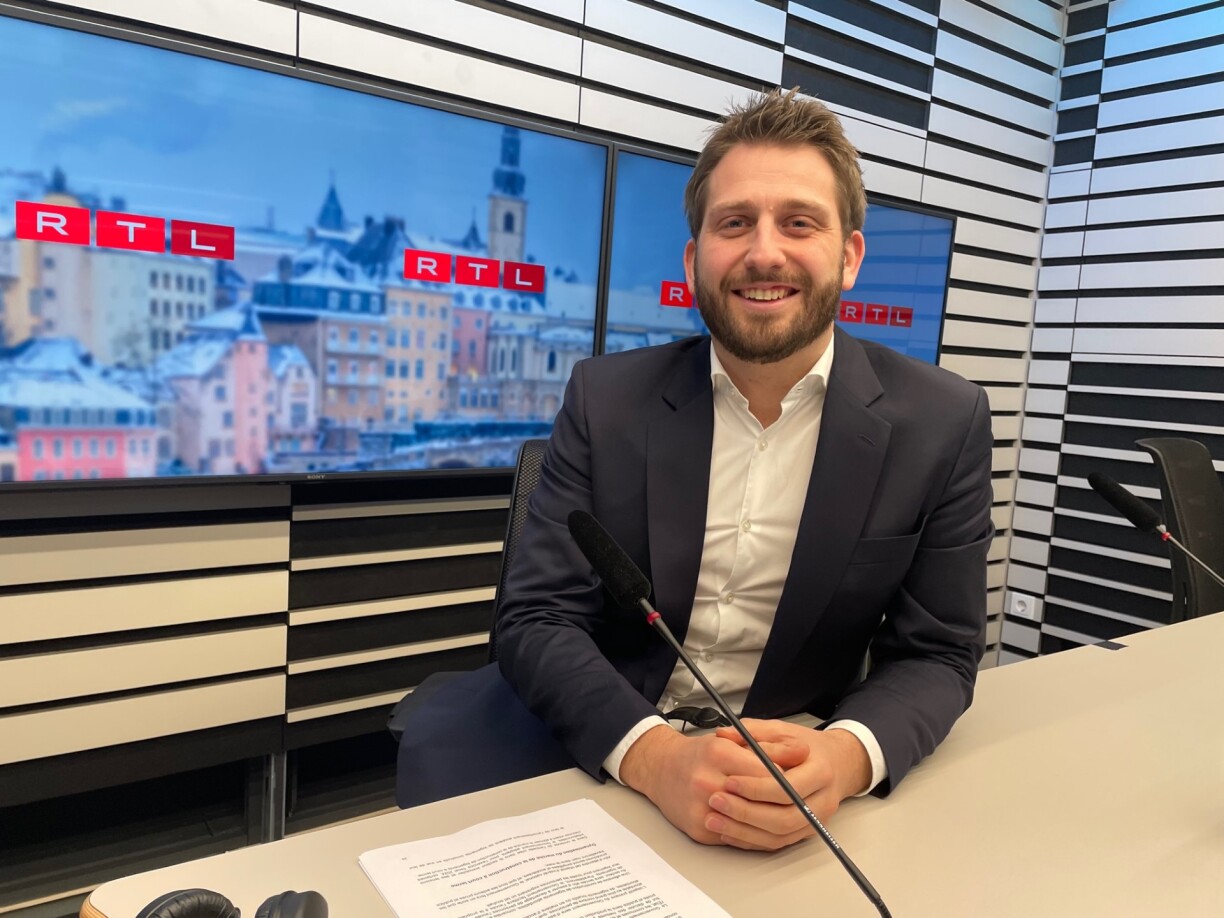
Speaking to RTL on Wednesday, CSV secretary-general and MP Alex Donnersbach acknowledged that the result was deeply disappointing for the party.
"As secretary-general and as a member of the majority, you cannot be satisfied with this result", he said, noting that significantly fewer people appeared willing to place their trust in the party compared with the 2023 election.
Donnersbach said the CSV now had to understand why support had fallen and work to regain voters' confidence ahead of the next election in two and a half years' time.
He argued that the government had delivered on several of the priorities it campaigned on, including strengthening purchasing power, supporting young families, and improving security. Measures such as tax-free minimum wages, adjusted tax brackets, and energy support schemes had been introduced, he said.
At the same time, he admitted that many of these measures had not resonated with voters in the way the party had hoped. According to Donnersbach, the CSV's political "signature" within the government was not coming across clearly enough, while ongoing tensions with trade unions may also have influenced public perception.
He also acknowledged that progress had been slower than expected in several key areas that mattered to voters, including the economy, housing, and what he described as pragmatic environmental protection.
"We are not yet where we wanted to be," he admitted, adding that many voters who had supported the CSV had expected quicker progress in these areas.
Asked why the DP appeared unaffected by the coalition's unpopularity and was even gaining support despite overseeing difficult ministries such as housing, family affairs, and the economy, Donnersbach insisted the issue was less about portfolios and more about how the CSV communicated its role within government.
He argued that positive government measures also needed to be more clearly associated with both the CSV and PM Luc Frieden.
He was also asked whether the problem could partly lie with Frieden's leadership style, suggesting that voters might be looking for someone "closer to the people" rather than a "CEO".
Donnersbach rejected that criticism, stressing that Frieden remained a strong leader who had recently received the backing of nearly 90% of the party base at the CSV congress. He argued that Frieden had originally been elected because of his perceived economic competence and said the government now needed to deliver tangible results in that area.
While acknowledging that mistakes had been made, Donnersbach defended the government's overall record, pointing to what he described as a series of important reforms and measures launched during the current term.
He nevertheless conceded that the party still had considerable work to do if it wanted to reconnect with voters before the next general election.





