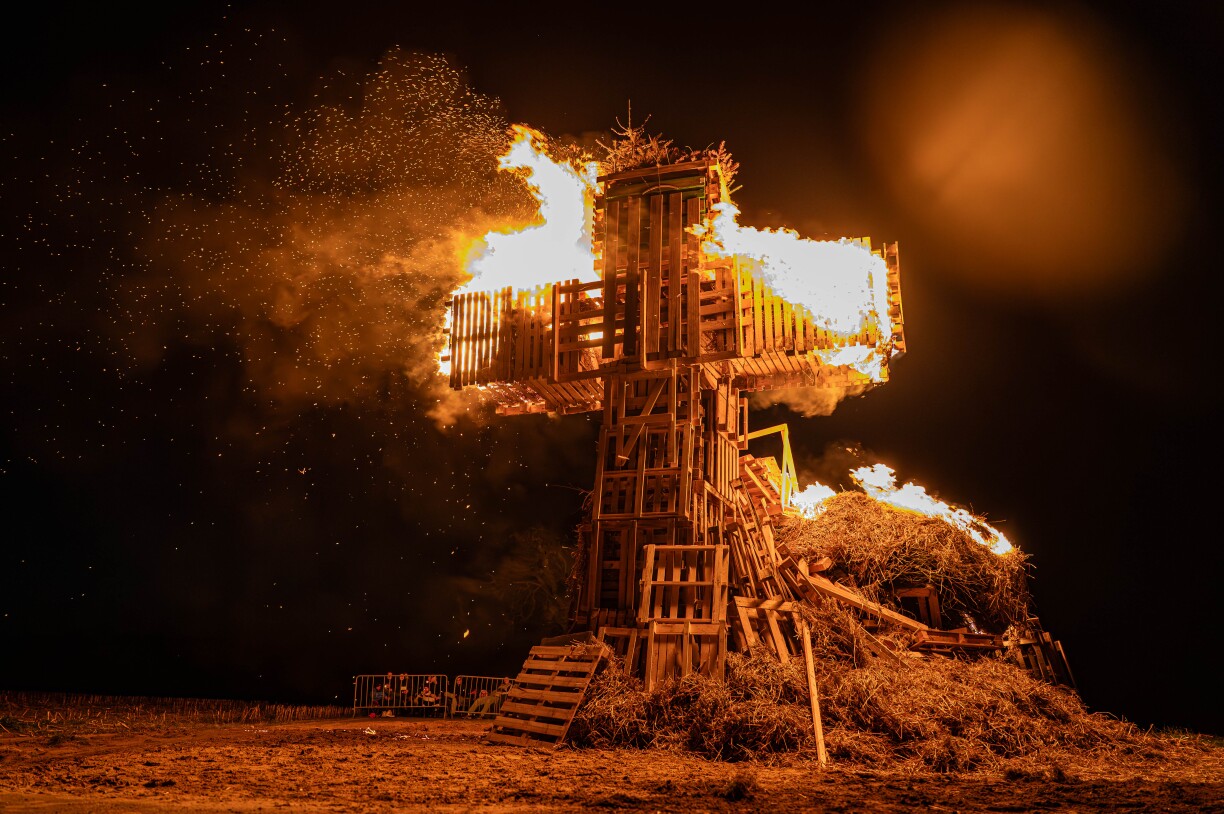
On the first Sunday after Carnival, Buergbrennen events take place across Luxembourg, as communities light traditional bonfires to symbolically drive away the winter.
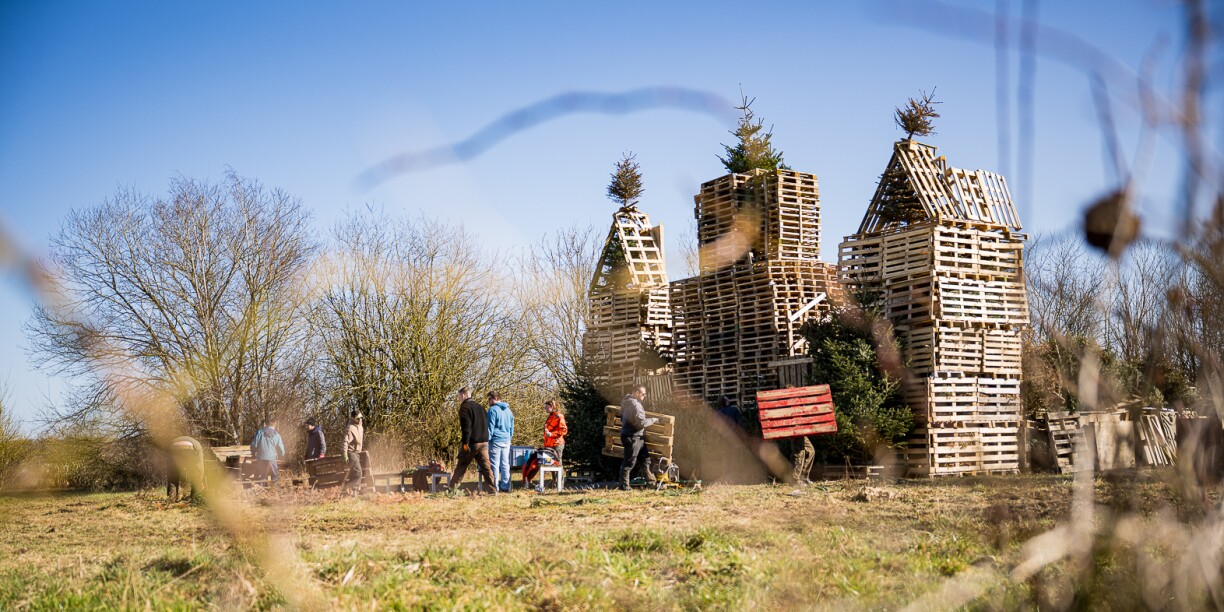
Almost every village organises its own, sometimes even several, Buergbrennen celebrations, varying in size. In the weeks leading up to the event, wood, straw, and garden cuttings are often collected, including old Christmas trees, before being stacked in an open space into a large bonfire structure, typically topped with a cross or a symbolic fortress, which is then set alight.
Many villages also organise a torchlight procession through the streets, with participants using their torches to ignite the pile. In some places, though not everywhere anymore, it remains customary for the most recently married couple or a local personality to light the fire.
In the past, Buergbrennen took place exclusively on Sunday, but nowadays many local associations have moved the event to Saturday or even Friday, as this is easier to organise. In many municipalities, groups such as the scouts play a key role in organising the festivities, ensuring that even smaller communities can keep the tradition alive.
Together, communities symbolically chase away the cold and burn winter. This custom is not unique to Luxembourg. In neighbouring regions of Germany and in parts of France, similar traditions involving the burning of a cross are firmly established.
In the Swabian-Alemannic region, for example, the event is known as the 'Funkenfeuer'. In Zurich, Switzerland, a snowman-like effigy called the 'Böögg' is burned during the Sechseläuten festival, while in France the tradition is known as the 'fête des brandons'.
Originally, Buergbrennen was a pagan custom marking the beginning of spring. The fire symbolises the return of spring and the driving away of winter, the triumph of warmth over cold.
In the past, farmers and winegrowers would use the smoke from Buergbrennen to predict the weather, believing that the direction of the smoke would indicate the pattern for the early summer. Experts also note that the word 'Buerg' has nothing to do with a castle, but instead derives from the Latin word 'burere', meaning 'to burn'.





