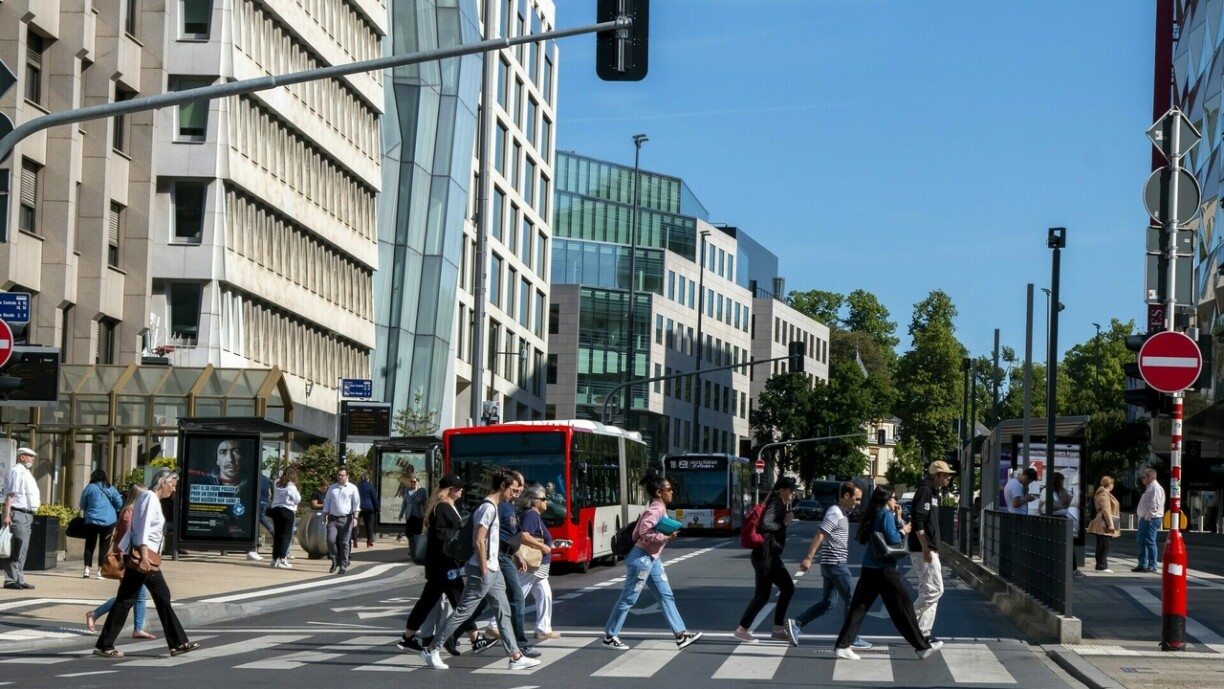
Household confidence in Luxembourg deteriorated significantly in March, according to a survey by the National Institute of Statistics and Economic Studies (STATEC).
Consumer confidence "fell sharply (to its lowest in a year)", STATEC reported, with households expressing gloomier expectations regarding both the economic situation and their personal finances. Meanwhile, inflation expectations "rebounded strongly, reaching their highest level since September 2022". With energy prices remaining under pressure and eurozone inflation rising to 2.6%, residents fear a fresh blow to their wallets.
This caution is also reflected in consumption patterns. Car registrations remain sluggish: Luxembourg has not exceeded 50,000 registrations per year since the pandemic, and the start of 2026 confirms the trend, with a 1.1% year-on-year decline. The ageing vehicle fleet suggests postponed purchases and a less favourable economic climate.
While households are proving more cautious, the labour market displays contrasting dynamics. Cross-border employment is growing significantly faster than domestic employment: up 2% year-on-year in the first quarter, compared with 1.2% for residents. Cross-border workers living in France are driving this increase, with a rise of 3.5% over the year, representing an additional 4,270 employees. They are particularly present in retail, finance, and business services, though the strongest growth is in health and social work. The number of cross-border workers from Belgium has started to rise slightly again, while those from Germany continue to decline.
For Luxembourg households, the equation remains delicate: inflation is rising again, confidence is falling, and the international environment is unstable. By contrast, businesses and cross-border employment show a resilience that contrasts with the growing anxiety among residents. The next quarter will tell whether this divide widens or whether households can hope for some relief.