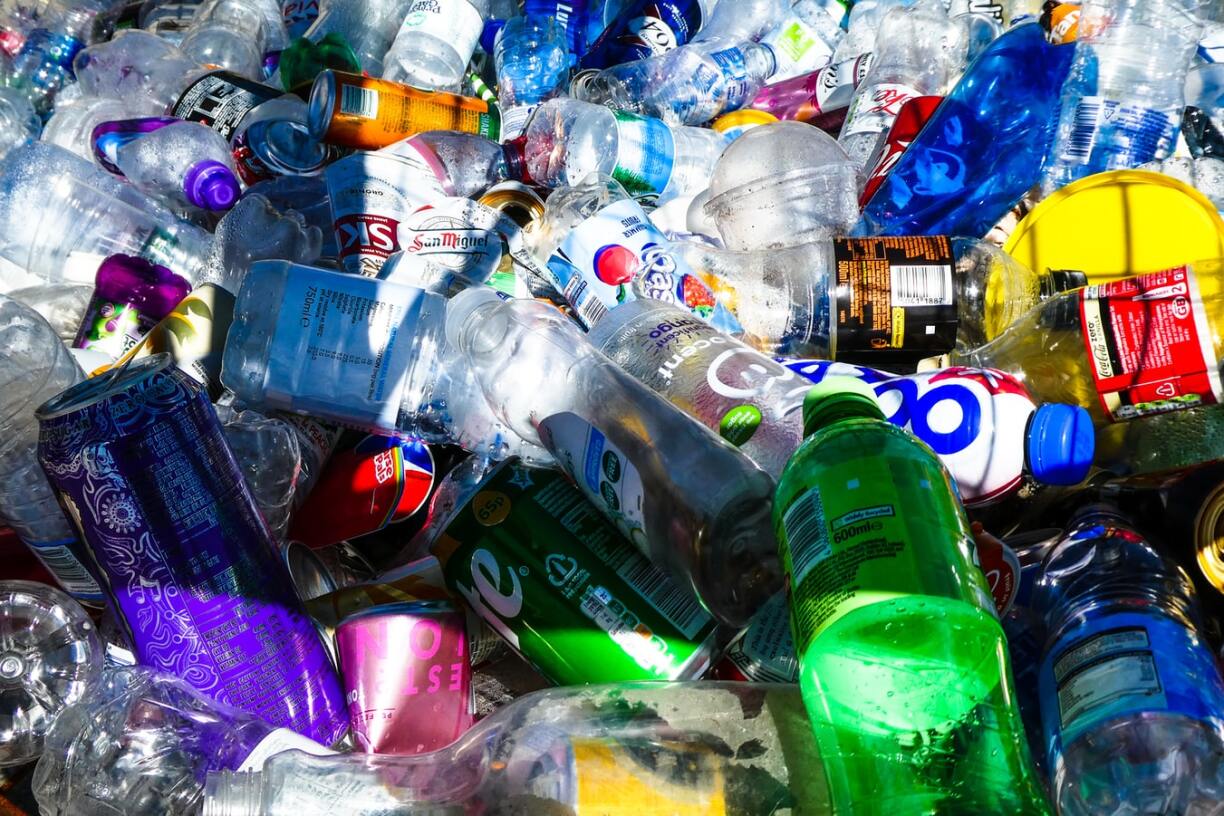
In 2018, Vanuatu banned the production, import and use of plastic straws, plastic bags and polystyrene boxes. This initiative has turned Vanuatu into one of the pioneering countries in the fight against plastic pollution.
As a result, plastic waste is becoming more rare on the beaches of the archipelago. Locals are constantly finding sustainable alternatives to plastic bags, and some are now reusing items such as plastic bottles.
Vanuatu is an archipelago which currently has a population of over 300,000, half the population of Luxembourg, but does not face the same problems as the Grand Duchy. In the archipelago, waste management poses a serious issue. According to our colleagues from Brut, only 30 to 70% of the waste would be captured by the Vanuatu management system. What is the situation in Luxembourg?
In 2019, the Grand Duchy took a first significant step in the fight against plastic pollution by banning free plastic bags. A measure that reduced the number of single-use plastic bags found in shops across the country by 90%, according to the Minister of Environment.
But is it enough? A few days after unveiling its national waste management plan (PGND), Carole Dieschbourg had an interview in which she reminded us that by introducing the Ecosac in 2004, Luxembourg had become a pioneer country in the fight against plastic pollution.
And indeed, according to Valorlux's estimates, the introduction of these bags saved the production of one billion single-use bags, 6,862 tonnes of plastic and 15.26 million litres of oil. This gives food for thought on the impact of a hard ban on the most commonly used plastic products in Luxembourg.
Mrs Dieschbourg’s answer to further measures remains nuanced. While the Luxembourgish government is not considering measures as drastic as those imposed in Vanuatu, the minister says that further important steps will be taken in the coming years.
Three laws are currently in the making to introduce a series of bans and more restrictive measures concerning waste in the Grand Duchy. Increased penalties and fines against littering are being considered, as is a ban on the use of certain single-use products such as pre-packaged fruit and vegetables, cups, plates and cutlery in restaurants and single-use objects at events and festivals. A ban on the use of primary microplastics in cosmetic products and measures against secondary microplastics is also planned.
The only problem is that these laws are only at the draft stage. They must therefore receive a positive feedback from the state council, and be scrutinised by the responsible committee before the law can be put to the vote in the national parliament. Therefore, it could be a while before these measures come into force in Luxembourg. This is not necessarily a problem for the minister, who says that society must be given time to reinvent itself in order to avoid resorting to unsustainable solutions.
Carole Dieschbourg is ambitious: she announced that she wants to go beyond the European guidelines in terms of plastic pollution, and stresses the importance of quality recycling. This is an important issue for Luxembourg, which has a slightly lower recycling rate for plastic packaging than the European average (32% compared to 32.5%). This rate places the Grand Duchy well below Norway (45%) but still above its French neighbour (26%).
In this context, the ministry has set new goals for the coming years: the recycling rate of plastic packaging must reach 50% in 2025 and 70% in 2030. To achieve this, Luxembourg will have to double its efforts. In the meantime, initiatives such as ‘Choose to refuse’ have been implemented by some 50 companies in the country, and Luxembourg has joined the OSPAR Commission, of which Vanuatu is a member.
These steps prove that there is a desire to move towards a circular economy, but do not necessarily guarantee progress in the fight against plastic pollution in the Grand Duchy.
https://today.rtl.lu/dossier/tdf/news/a/1579142.html