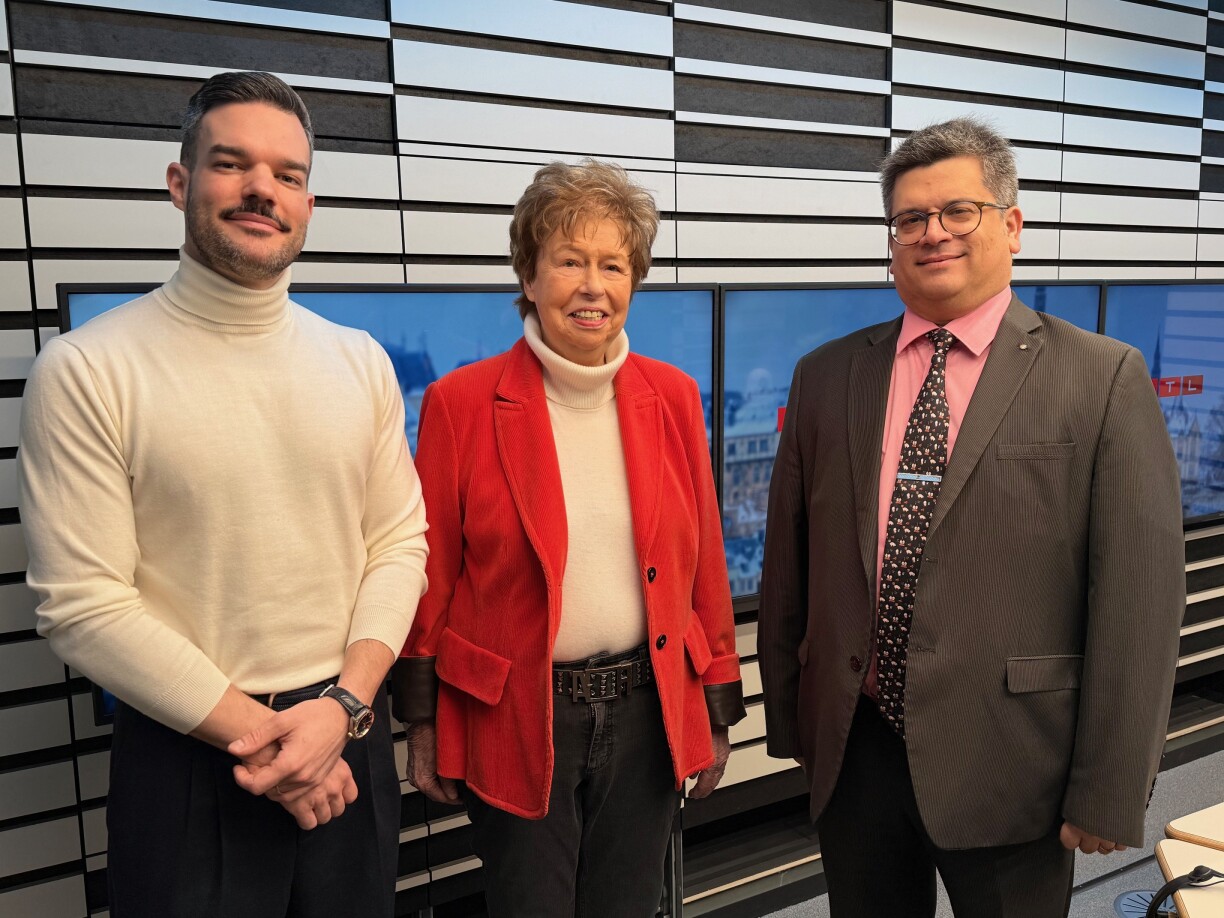
On Saturday, our colleagues from RTL Radio hosted a roundtable discussion on the quality of life in old age, bringing together three experts in the field. The panellists were Edmée Anen, Secretary General of the elderly support organisation AMIPERAS; Alain Brever, Director of the GERO Competence Centre for Old Age; and René Dondelinger, President of the Luxembourg Society of Geriatrics and Gerontology.
With average life expectancy in Luxembourg standing at 83 years, demographic shifts are increasingly apparent. Alain Brever noted that soon, more elderly people will live in the country than young people. He emphasised that the over-65 age group is more diverse than any other and must be given a greater voice and taken seriously. This view was shared by all three participants.
Edmée Anen, who began her career at AMIPERAS as a student, explained that the organisation was founded in 1963 precisely to give seniors a voice and foster connections among older people. However, she observed that old age is still often viewed negatively – a perception she argued must change.
A key message directed at seniors themselves was the importance of informing themselves early about life after work and, above all, staying active for as long as possible. René Dondelinger described staying active "in mind and body" as the best recipe for ageing well, far preferable to passively letting life pass by.
90% of people would prefer to grow old in their own homes. Regarding residential facilities, Dondelinger advised that the best time to move into a retirement home or assisted living is a time of one's own choosing – but stressed that it requires forward planning.
Anen raised concerns she has heard from individuals who feel their autonomy is diminished in care homes. Brever offered a more nuanced perspective, acknowledging that the transition to a retirement home is often a crisis due to the loss of familiar bearings, but noting that conditions tend to improve over time.
The discussion also touched on the challenges of digitalisation – from web banking to online shopping – and how to ensure older people are not left behind.
Brever stressed the importance of autonomy and noted that many courses are available to help people of all ages navigate digital tools. However, he cautioned that not everyone is able to adapt, and those individuals must not be forgotten. He called for non-digital alternatives to remain available through banks, the post office, and other service providers.
Geriatrician René Dondelinger added that concentration naturally declines with age, which can make digitalisation complicated. He argued that there must be no "digital exclusion" and that, for instance, individuals who continue to make bank transfers on paper should not face penalties such as high fees.





