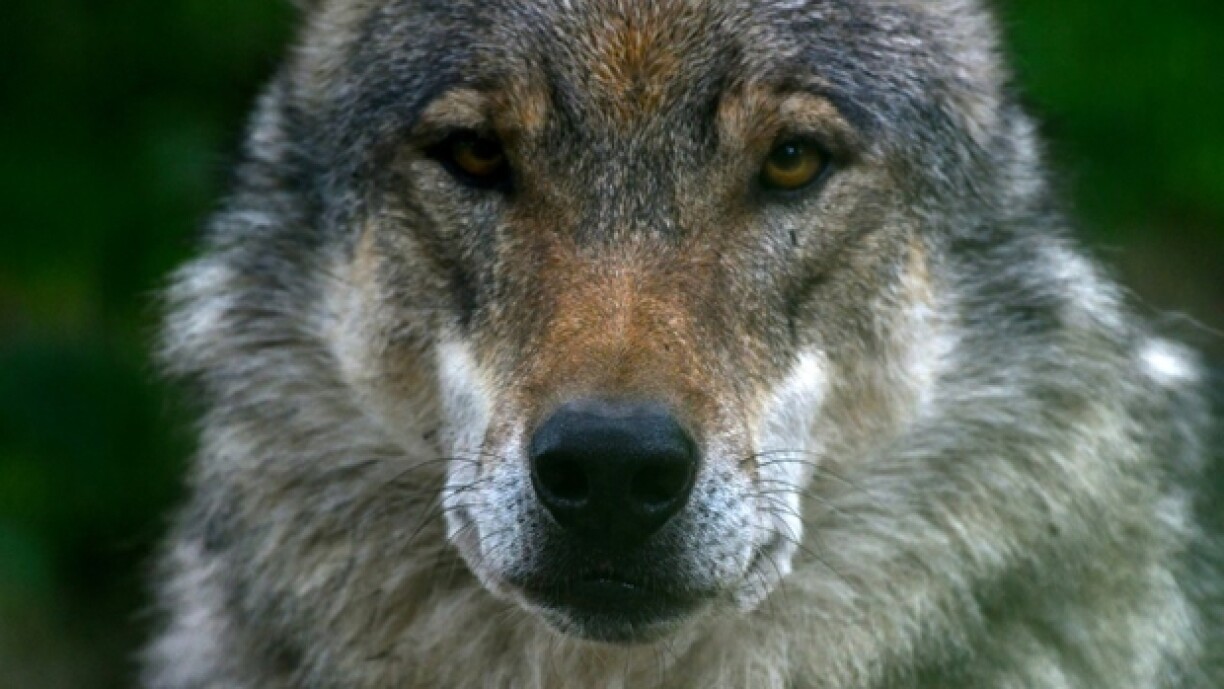
The administration of nature and forests recently confirmed that a wolf was photographed near Wincrange last Tuesday. How will this presence affect human and animal lives in the region?
Laurent Schley, deputy director of the administration, provided insights as to how one can recognise a wolf: "The ears cannot be overly pointy, otherwise it's likely to be a dog. Wolf ears tend to be a bit shorter and rounder." Similarly, their tails are relatively short in comparison to dogs.
There is no doubt that the annimal spotted in Wincrange was a wolf since there has recently also been a sighting in Bourcy in Belgium. Authorities estimate that the wolf has been in the region for a while, but it is difficult to assess whether it will stay or whether it is only passing through.
According to Schley, mating could have an affect on the animal's moves: "If it is a solitary animal, it is likely to leave once it fails to find a mate."
Wolves tend to shy away from human contact, which makes an encounter highly unlikely. In case of meeting a wolf that will not immediately leave, people are advised to raise their voice as well as their arms to make their presence clear.
Wolves usually feed on game, but also farm animals such as sheep, which is the major cause of conflict with humans. A respective action and management plan has been in place since 2017, which also provides cost coverage in case of lost farm animals.
Nevertheless, it remains difficult to protect oneself against wolves, says Raymond Baulesch, president of the Sheep Farmers Association: "We cannot close off our grass fields with two-metre high barriers. Sheep farmers in the Oesling region have to start thinking about measures though. We don't want the wolf to be shot, but have to find a solution still. Support from the government should be greater."
Christian Wester, president of the Luxembourg Farmers Association (Bauerenzentral), agrees that the action and management plan is going in the right direction, but that overall support from the government should be increased: "Farmers are only compensated for the loss of animal if its death can be traced back to a wolf with absolute certainty. Procedures are lengthy and this doesn't sit well with many in the sector."
Wester further lamented that indirect consequences are not being considered. Safety fences are only subsidised if the presence of a wolf has been officially confirmed. It thus remains difficult for farmers to take any preventive measures.
The Wolf spotted near Wincrange could be a solitary animal, but wolf packs have already been seen forming in some places abroad, like for instance in the German-Belgian border region near Hohen Venn. Laurent Schley estimates that the first pack in Luxembourg is only a question of time.





