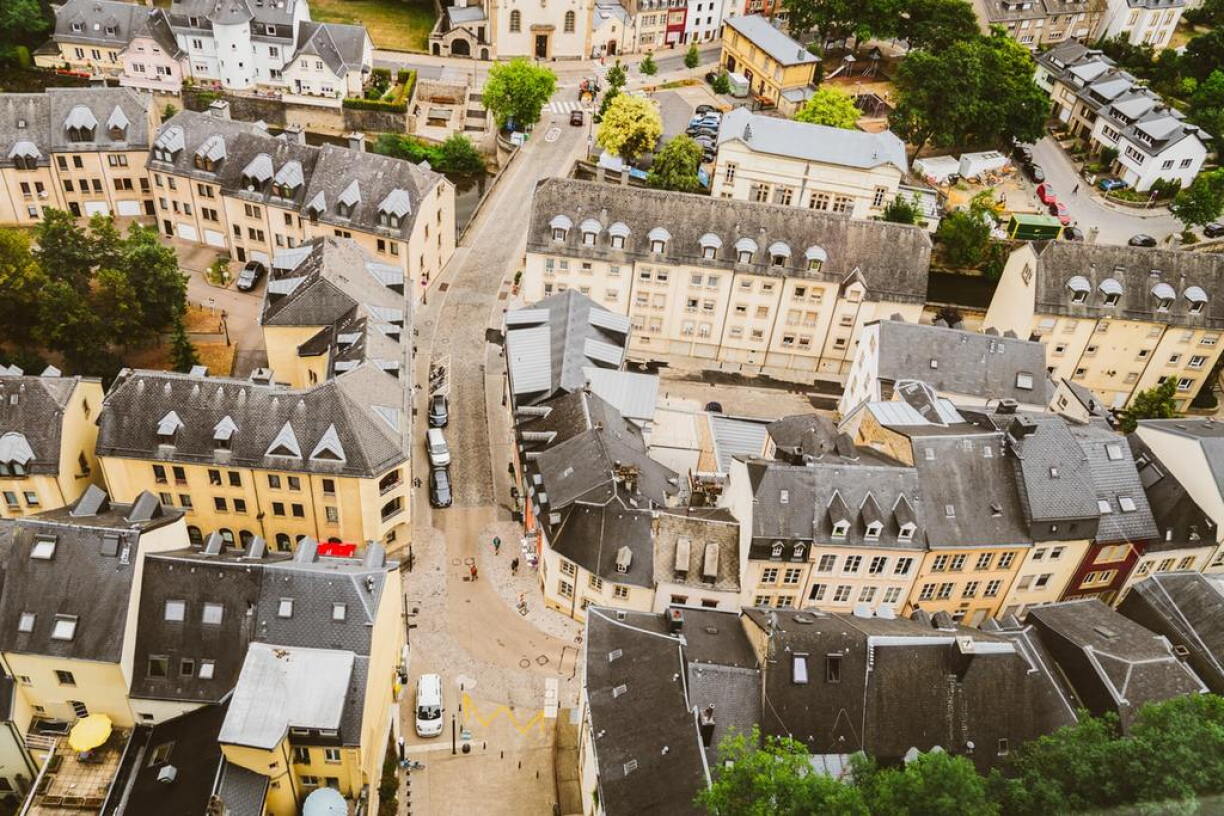
With the Cloche d’Or rising into the heavens like a concrete giant, Hamilius being transformed turning into a shopping centre, real estate projects on every street corner, and the possible arrival of a huge leisure centre in Junglinster, there are a number of reasons why one might worry about the future Grand Duchy looking like one big slab of grey.
However, if we look at the facts, this is not quite the case.
According to the latest Statec data, urban areas only represent 9.7% of Luxembourg's territory. While this might place the Grand Duchy in the upper range of Europe in terms of "artificial ground", our Belgian neighbours, the Netherlands and the island of Malta far exceed us.


It seems that the agricultural and forestry sectors occupy the majority of the Grand-Ducal territory. In 2018, they represented no less than 85.2% of Luxembourg's total surface area, an amount that has remained relatively constant since 2010 (-0.5%).
You might ask, what about our forests?
Well, contrary to what one might think, the total area of the country's forests has increased since the year 2000. The reforestation rate has risen from 33.9 to 34.8% in the last 10 years, which has guaranteed that forests cover more than a third of the country’s surface. While this places Luxembourg well below Finland with 68% woodland areas, it also sees us well above Belgium (24.7%) and France (30.1%).
In sum, even though Luxembourg is situated well above the European average in terms of "artificial surface" (4.2%) and below in terms of "woodlands" (37.7%), the findings provide no grounds for alarm. Agricultural and forest surfaces still take up the most space in the Grand Duchy.
Statec’s latest set of data also reveals that roads and railways cover 4.5% of Luxembourgish territory.
In other words: our travel network takes up space. This represents a little less than half of the built surface of the country and much more than the industrial areas identified in Luxembourg (3%).
Should this be a cause for concern for the Luxembourgish populace? We’ll leave that for you to decide.





