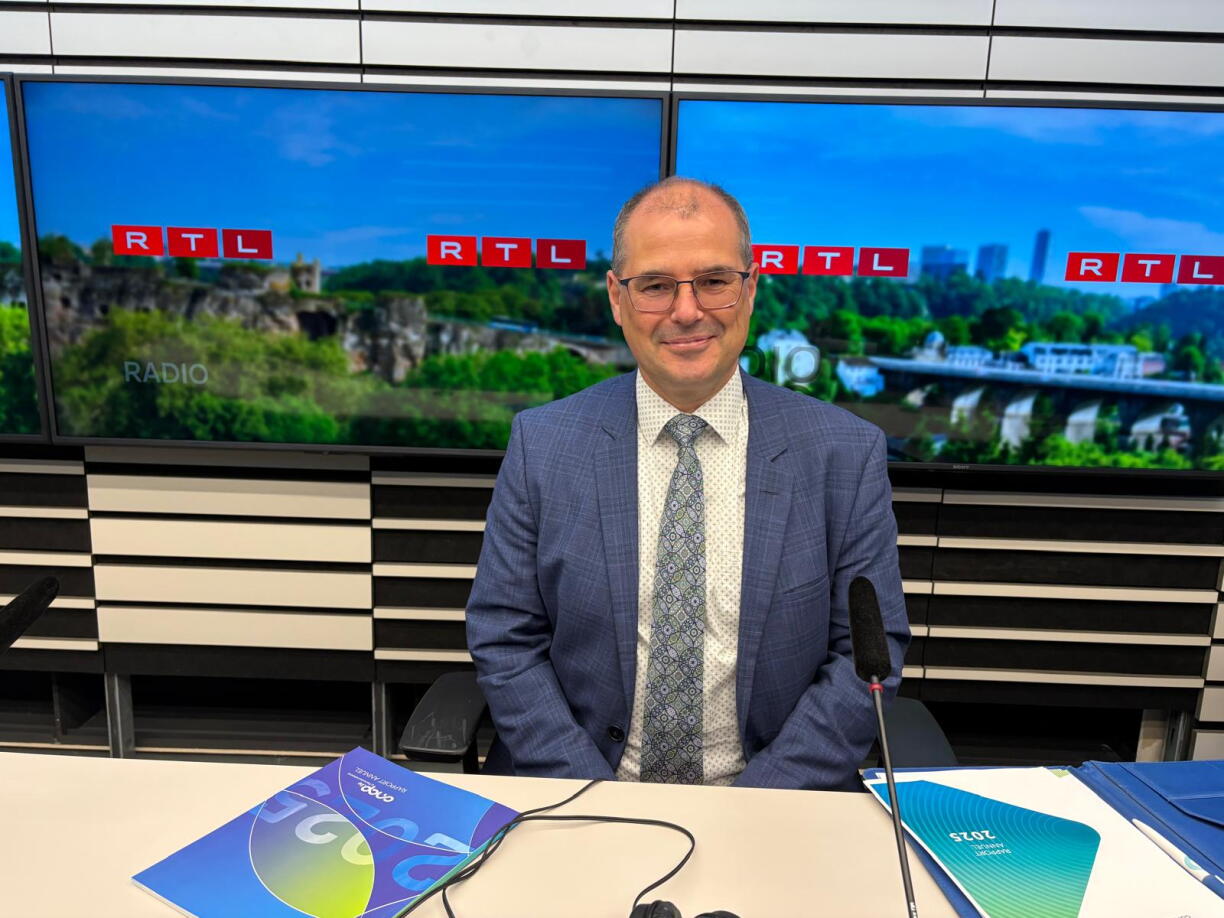
Alain Reuter, president of the National Pension Insurance Office (CNAP), explained in conversation with RTL that the pension system's financial outlook remains positive for now, but underlined that recent reforms only provide a few years of breathing space while failing to address underlying structural issues. Reuter detailed that in 2023, the expenditure for pensions amounted to €7.5 billion, while income from contributions slightly exceeded €8 billion.
He explained that the margin from the initial 24% contribution rate to the CNAP's expenses became very narrow, highlighting the need to reform the system. As a result, the government initiated a broad consultation and, in December, passed measures that increased the contribution rate to 25.5%, effective from this year.
According to Reuter, this gives the pension system "a bit of a buffer" to consider what further structural changes might be needed to keep the system viable for both current and future generations.
Reuter clarified that the reforms have pushed back the so-called "wall" – the moment when the system's reserves fall to 1.5 times the annual expenses – by around four years, from 2036–2037 to 2040–2041. As of now, the system's reserves stand at around 4.24 times the annual spending, or €32 billion, but Reuter warned that once the reserves fall below the 1.5 threshold, they would be quickly exhausted, which must be avoided at all costs.
The main driver of the risk remains demographic: the number of pensioners is growing faster than the number of new jobs being created. Reuter observed that the labour market only grows by 1%, which is not enough to offset the increase in pension claims running at around 4.4%.
He stressed that this imbalance, if not addressed, would quickly push the contribution rate above 25.5% again and force the system to draw on its reserves.
The reforms adopted in December sparked criticism from opposition parties and led to parliamentary questions regarding their legal clarity and administrative impact. Reuter noted that while it was normal for new legislative drafts to still contain some gaps or inconsistencies, these had been analysed and reported to the ministry and the administration's supervisory board.
The ministry has since provided the necessary clarifications, and is certain that the technical formula is correct. Reuter also confirmed that no formal complaints had been received regarding the changes, adding that legal and IT teams worked closely to anticipate and resolve any uncertainties before the rules took effect.
One of the headline measures of the reform was the introduction of a progressive pension. However, Reuter reported that only a handful of people had made use of this so far.
The anticipated 25% increase in administrative workload has not materialised in this area, but another measure – tax deductions for those who choose to remain in the workforce instead of retiring – could lead to higher demand once tax declaration periods approach.
Meanwhile, the CNAP faces increasing complexity in managing pensions, including more international cases. For the first time, more pensions were paid abroad than within Luxembourg, although the value of domestic pensions remains higher.
Reuter highlighted the challenge of recruiting and training staff to handle this complexity, noting that they are currently in the process of recruitment. CNAP has hired the equivalent of 10 full-time staff recently, with recruitment ongoing to catch up as the system's workload grows.
Despite the temporary breathing room, Reuter was clear that further reforms would be needed to keep the system sustainable in the long term. He argued that the current measures only move the wall further out but do not remove it altogether, hence why the challenge to maintain a good pension system for future generations is not fully solved yet.





