Here are five things you should know at the end of this week:

Incident – The incident occurred late on Saturday outside the Il Castello nightclub in Sangineto, in the province of Cosenza. According to Italian media, the brothers had entered the club without tickets, and were asked to leave by security staff. When security guard Antonio Perrotta, 34, arrived on the scene, an argument ensued and escalated into violence outside the venue. Perrotta was taken first to hospital in Cetraro, then transferred in critical condition to Cosenza, where he died several hours later.
Suspects – The Luxembourgish brothers, born in 2002 and 2004 respectively, are both originally from Calabria but currently reside in Luxembourg, where the younger sibling plays for the national rugby team and the older is reported to work as a physiotherapist. They were arrested on Tuesday in connection with the death of Perrotta, having, according to Corriere della Sera, already purchased plane tickets and been preparing to leave Italy when they were detained.
Reactions – The mayor of Sangineto, Michele Guardia, said the news had left the community "stunned and saddened", while assuring that law enforcement and the judiciary would "shed full light on what happened and ensure those responsible are brought to justice." A representative for the Luxembourg Rugby Federation told RTL the team had no information beyond media reports, in addition to reminding the public of the importance of not speculating.
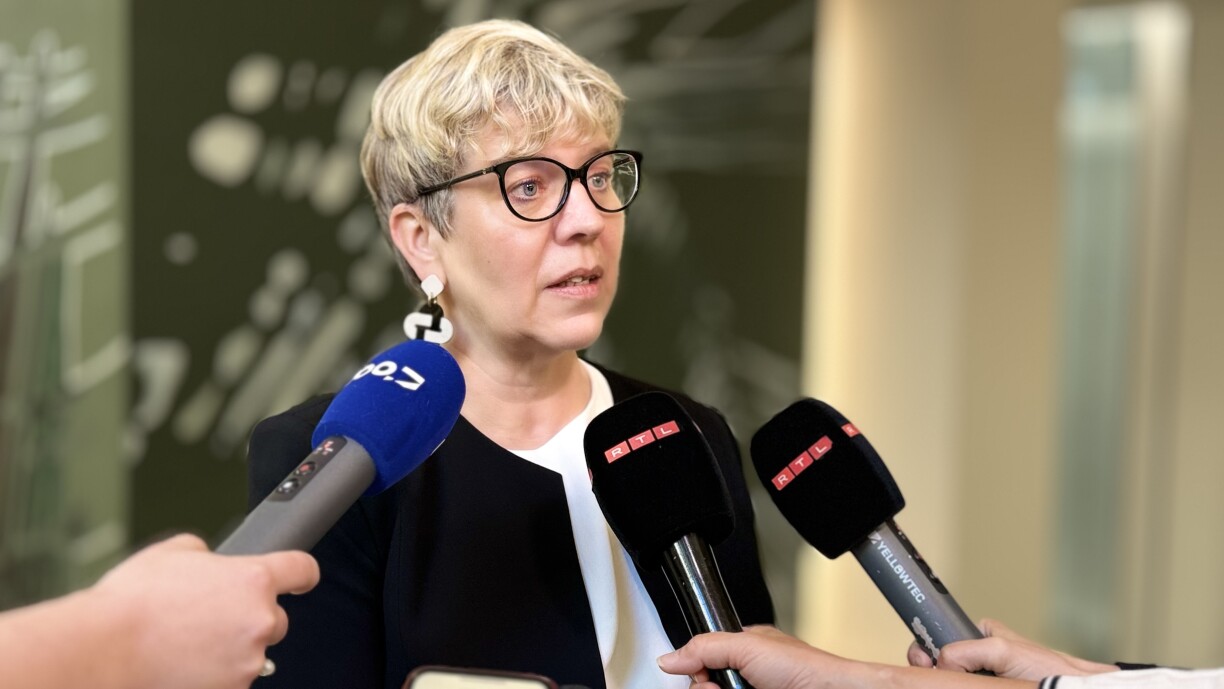
Long-running dispute – The AMMD had terminated the existing agreements with the CNS last October and entered talks for a new legal text, which it now says failed to deliver meaningful reform. Its main points of contention include more opportunities to provide outpatient medical services outside hospitals, fair negotiations over tariffs, and adjustments to reflect actual operating costs.
AMMD president Chris Roller argued that politicians in particular had made a whole set of promises when the Christian Social People's Party (CSV) was in opposition, but that there is now a lack of political appetite, with no changes in sight, as the CNS consistently referred back to the current law during negotiations, which outright benefits the fund.
Push-back – Health Minister Martine Deprez, on her part, was surprised at the AMMD's premature announcement given that the mediation process was still ongoing at the time, with the official deadline being Thursday. Deprez rejected the criticism by arguing that the negotiations were centred on the convention but that what the AMMD wants to achieve cannot be resolved within that framework. The CNS has so far not commented publicly.
Risk of two-tier system? – Unions and opposition parties have voiced concerns that Luxembourg's solidarity-based healthcare system could be undermined following the AMMD's decision. The AMMD rejected the accusation as fear-mongering. Both the unions and the opposition do, however, acknowledge that the current system needs reform, particularly in the area of medical practice and remuneration.
If no new convention is agreed, everything previously governed by the agreement will, from October onwards, be regulated through a new Grand Ducal regulation that still needs to be drafted. Notably, for patients, nothing will change immediately.
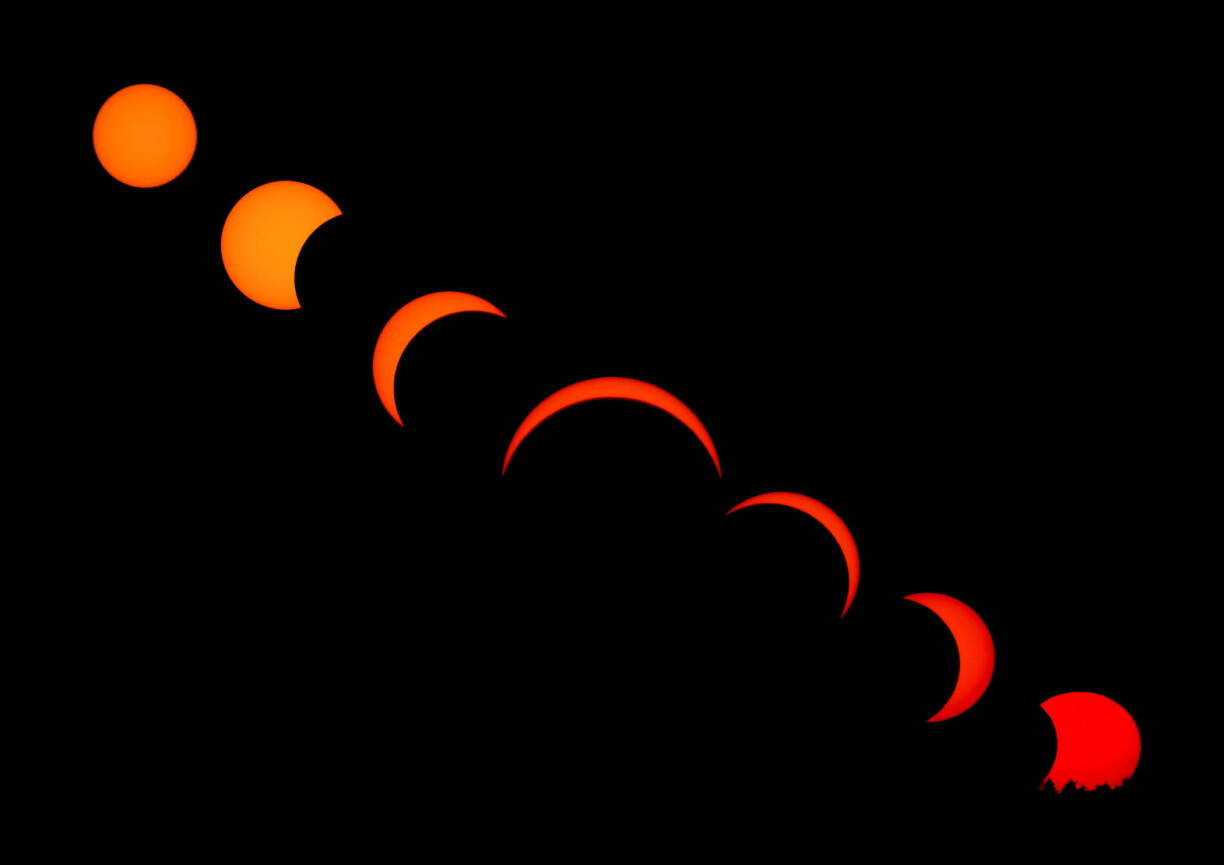
Sight to behold – People across Luxembourg were treated to a rare sight on Wednesday, as a near-total solar eclipse dimmed the sky. While the eclipse was total in parts of Russia, Greenland, Iceland, and Spain, a substantial partial phase with around 90% of the Sun obscured could be observed from the Grand Duchy and much of mainland France, making it the most important event in Luxembourg since the eclipse of 11 August 1999.
Moon-umental – A total solar eclipse occurs when the Moon moves directly between the earth and the Sun, casting its shadow onto a narrow strip of the earth’s surface. As the French Astronomy Association (AFA) explains, “by a remarkable coincidence – the result of one of the most unique balances in the solar system – the Moon, although 400 times smaller than the Sun, is also 400 times closer: their apparent diameters are identical.”
Reaching for the stars? – The rare spectacle also led to an unusual intervention for emergency services in Junglinster, where two people climbed the RTL antennas, presumably for a better view. According to the Grand Ducal Fire and Rescue Corps (CGDIS), the individuals descended on their own, and no one was injured during the incident.

Contentious visit – The Kremlin posted a video of Putin on one of the four main islands, with Russian media reporting that he toured a fish-processing plant and sampled the local caviar. It was the first visit by a Russian president since Dmitry Medvedev in 2010. Japan summoned Moscow's ambassador to protest and Prime Minister Sanae Takaichi told reporters: "The Northern Territories are an inherent part of Japan's territory, both historically and under international law."
Moscow rejected the complaint, with spokeswoman Maria Zakharova denouncing Tokyo's "anti-Russia policy bordering on hostile", and the embassy stating the islands were "an integral part of the Russian Federation" and not a matter for discussion with foreign states. A UN spokeswoman urged all concerned to exercise restraint and avoid escalation.
Disputed territory – Part of the volcanic Kuril archipelago stretching from Russia's Kamchatka peninsula down towards Hokkaido, the islands are home to around 20,000 Russian citizens living in a harsh climate, but hold mineral deposits including gold and silver as well as rich fishing grounds. Moscow deported the roughly 17,000 Japanese residents after occupying the territory in 1945 and has maintained a military presence ever since.
Ukraine tensions – Ties between Tokyo and Moscow have deteriorated profusely since Russia's full-scale invasion of Ukraine began in 2022, with Japan joining its fellow G7 nations in sanctioning Russia and providing Kyiv with support. Moscow, for its part, has drawn closer to China, whose forces have conducted joint exercises near Japan, while North Korea has thrown its support behind Russia's war effort, further placing Japan at risk.
According to Yee Kuang Heng, a professor at the University of Tokyo, Putin's visit may serve as a reminder of the cards Moscow holds, and of his displeasure at Japan's continuing sanctions.

Magnitude 7.4 – A powerful earthquake rocked Colombia and neighbouring countries on Monday, with at least 273 people confirmed dead. Emergency teams rushed to help victims and search for survivors after geologists recorded the quake at a magnitude of 7.4 with an epicenter 100km deep in the west of the country. Rescuers made a last-ditch effort early Thursday as the 72-hour period when survivors are most likely to be found alive drew to a close.
Search efforts continue – In Pereira and in Cali, emergency crews used cranes, dogs and heavy machinery to search ruined buildings while volunteers formed human chains to clear debris by hand, hoping to reach people still trapped beneath collapsed structures. Dozens of aftershocks and widespread structural damage complicated the effort, with buildings left on the verge of collapse. More than 13,000 homes have been destroyed and the toll may yet rise.
Grief and loss – For many families, the desperate search was becoming a vigil. "My aunt lived there. She's under the rubble," said Jorge Gonzalez, standing beside a collapsed building in Pereira. "I arrived yesterday and I haven't left, and until they find her body I don't intend to leave here." While some families waited for news of missing relatives, others were grappling with the loss of homes, possessions and livelihoods. "We lost everything", one resident grieved.
Your Weekly Recap is published every Friday at noon.
Read earlier versions here.





