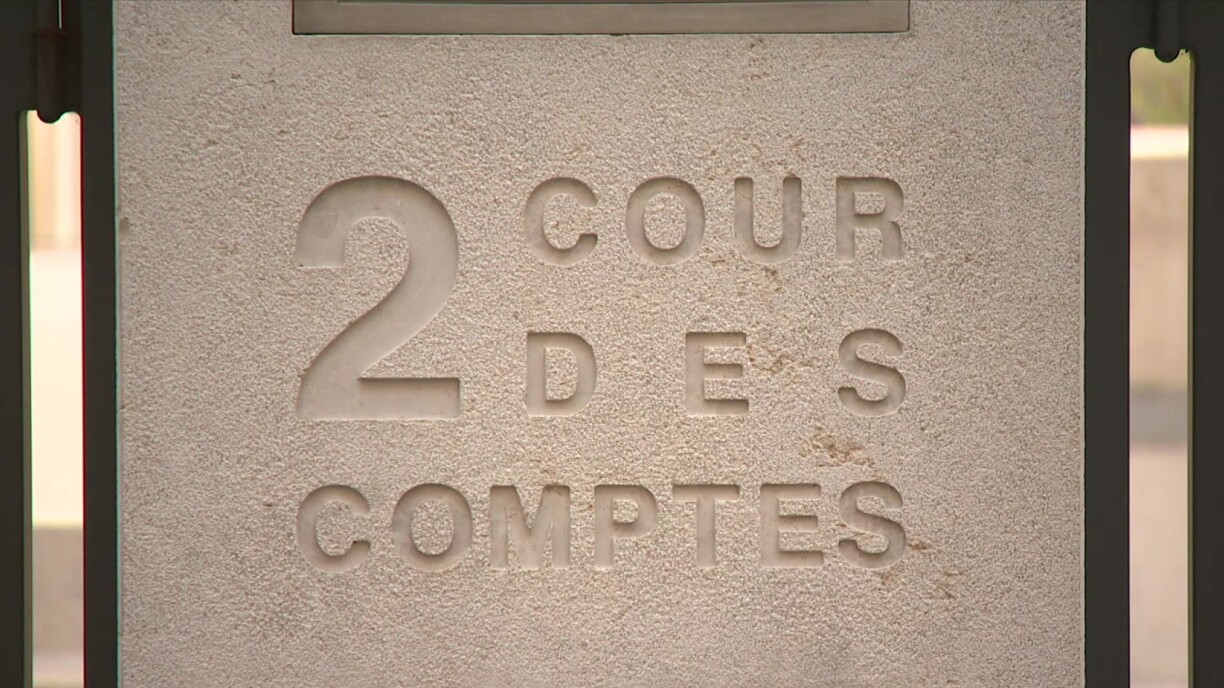
A special report from the Court of Auditors has laid bare significant shortcomings in the oversight of Luxembourg's contracted sector, specifically the operating costs incurred by ministries under the Occupational Health Association for the Tertiary and the Financial Sector (ASTF) law, which governs financial agreements between the state and approved managers carrying out social, family and therapeutic activities on its behalf. The bulk of the agreements examined were created by the Ministry of Education, including those covering crèche operators.
The report has been a long time coming. Its origins date back to 2015, when questions arose around the salaries of directors of public establishments. More than ten years later, it was only presented to the relevant parliamentary committee this week. Along the way, its scope expanded to encompass the state's broader expenditure on organisations in the conventional sector, and in 2020 the Court of Auditors was formally tasked with examining the financial detail. The figures paint a damning image: spending in this area amounted to €667 million in 2020 alone, representing an increase of over 50% compared to 2016.
The Court of Auditors itself acknowledged the delay openly. Vice-President Patrick Graffé admitted that while a report of this kind would normally take around 12 months, this one took far longer. A follow-up review is now planned in three years to monitor progress and ensure such a gap does not recur.
The approximately 150-page report identifies a number of serious weaknesses. In some cases, a single person is responsible for checking all agreements, representing a significant control risk. Approvals have been granted on incomplete files, and financial oversight is neither uniform nor governed by consistent rules across the ministries involved.
Perhaps most strikingly, the report identified cases of double funding. In one instance, a manager invoiced the same service to two different ministries. When the duplication was discovered, the response fell well short of a meaningful sanction: the manager was simply asked to choose one ministry going forward. The Court of Auditors was not even informed over what period the double billing had taken place.
The Court of Auditors' recommendations are clear: more regular checks, a uniform and modernised organisational framework, a digitalised approach, and greater cooperation between ministries. The existing loopholes that facilitate the duplication of funds must be closed.
Reaction in the Chamber was broadly critical. Green MP Sam Tanson and DP MP André Bauler both called for harmonisation, while Pirate MP Marc Goergen noted that the €600 to €700 million involved in 2020 is likely to be considerably higher today. There was general agreement that the ASFT sector performs important work, but that the law underpinning it is outdated and no longer fit for purpose.
Budget Control Committee chair Franz Fayot proposed producing a follow-up report to be examined across multiple committees before being consolidated. Sam Tanson cautioned that this should not delay an urgent reform of the law itself.
Whether a broader policy debate will follow remains to be seen, but the Court of Auditors' report has made one thing clear: the structural problems in this sector can no longer be ignored.