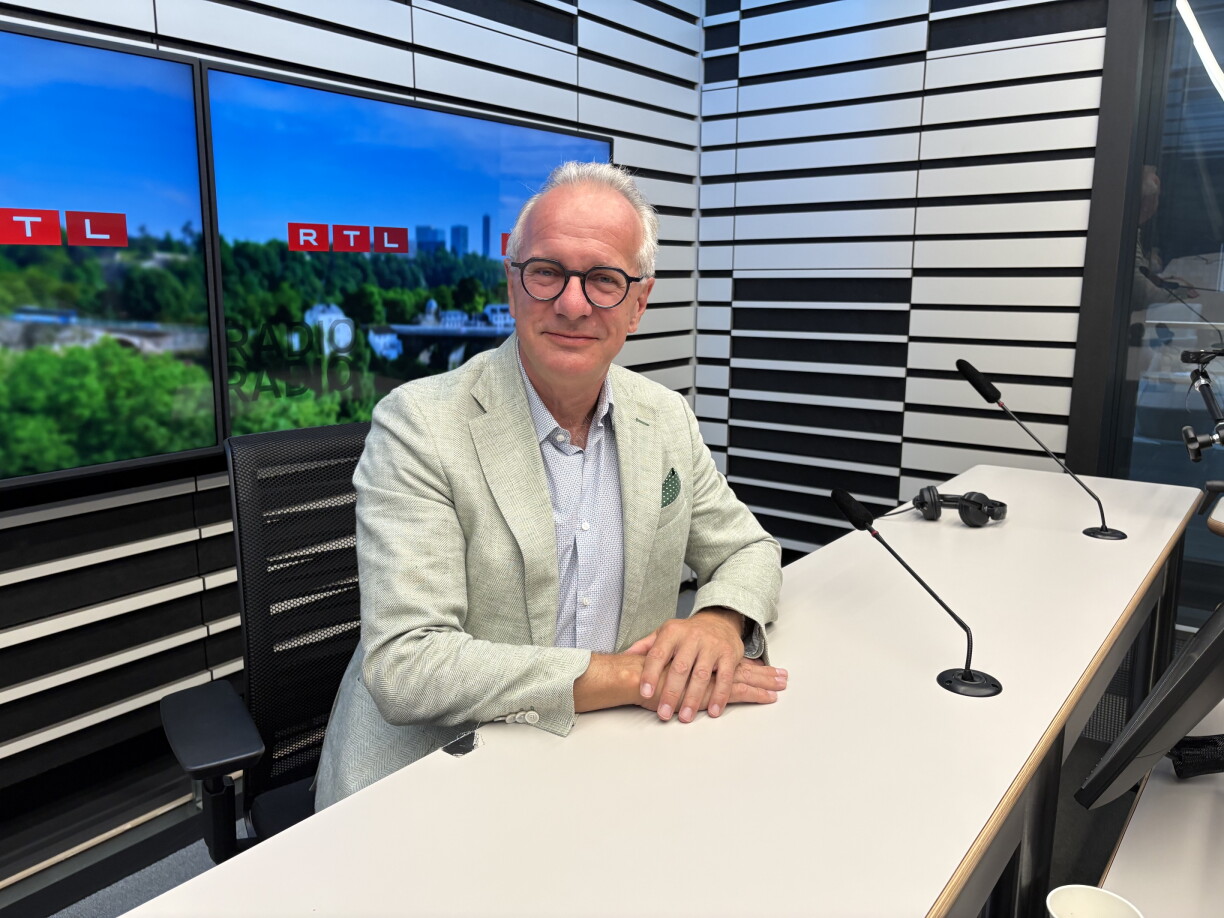
Marc Lauer will take over the presidency of the Union of Luxembourg Enterprises (UEL) on 1 October, succeeding Michel Reckinger. Reckinger comes from the crafts sector and Lauer's professional background lies in finance and insurance, though Lauer is quick to point out that the UEL's leadership is not about one person's profile.
The UEL, he explained, has a full council made up of every one of the employers' federations, and he assured that the organisation would keep evolving as it has done in the past.
Lauer also points to his own ties to small business through his family history: "My parents had a small butcher's shop, so I know what craftwork means for those working in it."
The UEL's approach, he insisted, has to reflect the reality of both small and large companies across the sectors. The federation's main focus, he said, will continue to be on three areas that concern every one of its members: taxation, labour law, and social security.
Looking ahead, Lauer identifies four major challenges for the Luxembourg economy: an ageing population, technological change, the climate crisis, and infrastructure gaps. He put demographic shifts and their impact on the social security system at the top of the list.
He also pointed to the continuing importance of digitalisation and artificial intelligence, which, he noted, have not yet been fully rolled out across all companies. Climate change, he added, remains pressing, and everyone can feel that it is unusually warm for August.
He also raised the issue of housing and transport to warn that if the country wants to keep growing, it has to make sure that people coming to work here can actually find somewhere to live.
Lauer also warned about the country's economic outlook: "In the coming years, I don't think the cake will get any bigger, or at least not as quickly as before. So we need to agree on how to divide it fairly, and if possible, make it grow again", he noted.
Social dialogue, in Lauer's view, is at the heart of the UEL's mission, even where consensus is not always within reach. The UEL, he said, works for the competitiveness of companies, while the unions focus on purchasing power, which is what makes social dialogue interesting.
The two sides have to talk to each other, he added, and they will not always agree.
On collective agreements, Lauer sees room for greater flexibility and modernisation. He noted that the way people work has changed dramatically over recent decades, and even more so since Covid-19.
Flexibility in the workplace has to be organised so that it works for each sector, he explained, while still respecting the interests of employees. That, he added, was one of the central ideas behind the recent collective agreement plan.
Lauer then focused on the role of education and lifelong learning in helping the workforce keep pace with technological change. Education, he said, is extremely important.
If the country wants to come through this transformation without too much damage, it has to move quickly to train both children and those already in work, so that they are in a position to meet tomorrow's challenges and opportunities.





