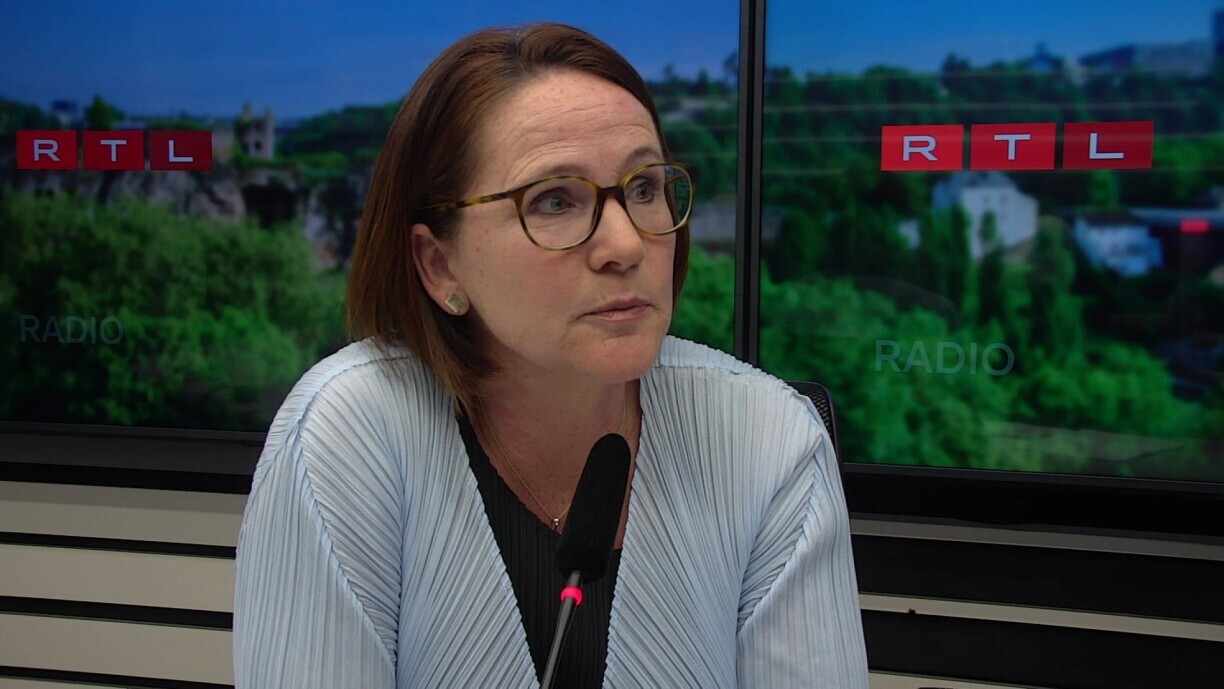
In conversation with RTL Radio on Monday, Mobility and Public Works Minister Yuriko Backes said that the Democratic Party (DP) is open to entering tripartite talks.
She stressed the need for a long-term perspective, pointing out that the issues at stake include people's purchasing power, business competitiveness, and reducing unemployment. The tripartite format, bringing together employees, employers, and the government, remains a key tool for finding joint solutions, she said.
Given the current challenges facing Luxembourg as a business location, discussions would not be easy, but ultimately beneficial for both workers and employers, Backes said. It is now up to PM Luc Frieden to convene such talks, she added.
Another key topic was the planned expansion of Luxembourg Airport, which Backes described as essential. Passenger numbers are expected to double to 10 million by 2050, while cargo volumes could increase by 50%.
According to Backes, the airport plays a major role in the economy, supporting around 90,000 jobs in the Greater Region and 55,000 in Luxembourg itself, while making a significant contribution to GDP. The government has therefore committed €200 million to the expansion, with LuxAirport investing a further €800 million, she said.
An increase in flights would also mean more noise for residents in areas such as Hamm, Bonnevoie, and Sandweiler. To address this, the government is placing strong emphasis on the development of electric aviation, which could reduce both noise and CO2 emissions, Backes explained.
She added that new aircraft, such as Embraer aircraft used by Luxair, can already carry more passengers while producing less noise and fewer emissions.
According to Backes, no changes are planned to night flight restrictions, which remain in place between 11pm and 6am, noting that night flights had already decreased by 6% between 2024 and 2025.
To allow further growth at the airport, certain activities will need to be relocated, including sport aviation, she said. However, no alternative site has yet been identified, with Backes acknowledging that this would not be straightforward and may not happen in the short term.
Plans also include the construction of a new hybrid control tower. This project sparked debate last year with the Guild of Air Traffic Controllers, but a compromise has since been reached.
The tower will retain direct visibility of the runway while incorporating more digital technologies, according to Backes. An exhibition on air navigation in Luxembourg, including future tower concepts, is expected to open at the airport in May, she said.
In addition, she stressed that a new military area is planned at the airport, with details to be defined by the army. Luxembourg Airport is already a NATO-designated airport, supplied by a NATO kerosene pipeline, and military aircraft such as Luxembourg's A400M already operate there. In the event of a crisis their use could increase, Backes said.
A second "contingency runway" is also being considered in case the main runway becomes unavailable. Backes explained that one option would be to build it on the current taxiway, should the control tower be relocated, although further technical studies are required. She said it would not be possible to operate both runways simultaneously
Asked about a full renovation of the existing runway, Backes said she had inherited the issue from her predecessor. She explained that, although works were carried out in 2022, LuxAirport reportedly received a product that did not meet specifications. Legal steps are now being considered, while the runway continues to be closely monitored, she said.