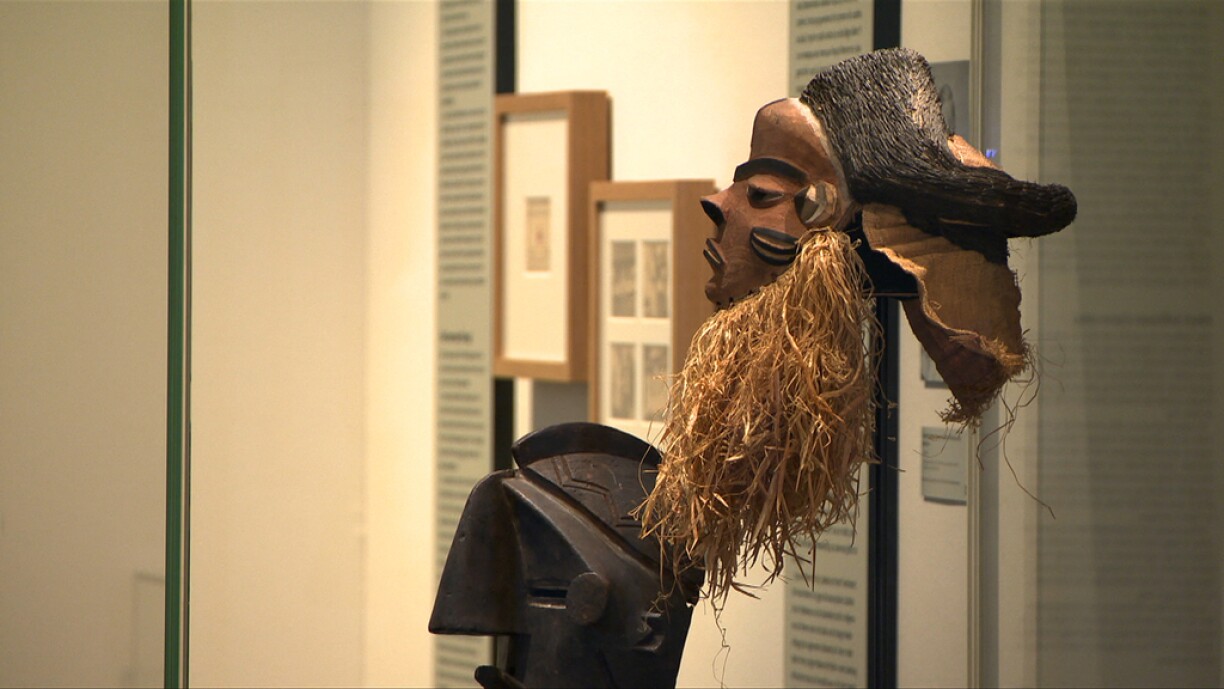
A new exhibition on Luxembourg's colonial past was recently inaugurated at the National Museum of History and Art. The display shines a light on the Grand Duchy's involvement in the occupation of foreign territory and the submission of indigenous people.
When setting up the exhibition, the MNHA team also reviewed the corresponding objects in their inventory to determine whether there are problematic possessions.
The curators identified a number of items, including weapons, jewellery, and a drum, which further research has shown to be illegitimate. The objects, which arrived in Luxembourg in 1898, are positioned at the beginning of the new exhibition.
Curator Régis Moes explained why the acquisition of these items is considered problematic: "Today we have access to more sources as our predecessors had 30 to 40 years ago. We can look through digital archives from abroad, which allowed us to identify the donor of these items, a German ship captain called Spring. He wrote about how he got the items in his memoirs."
MNHA Director Michel Polfer provided further insight: "Captain Spring did expeditions in the geographical region that is today known as Tanzania. We know that he was violent and committed murders to acquire the items in question." Captain Spring retained in his journal that he killed the chief of a local tribe during the expedition.
Moes concluded that from today's perspective, the objects on display thus have to be considered "loot". After the review process was over, the MNHA team shared their assessment with the Ministry for Culture and the national museum in Tanzania.
Director Polfer underlined that all objects would be returned if their counterparts in Tanzania demanded to have them back.





