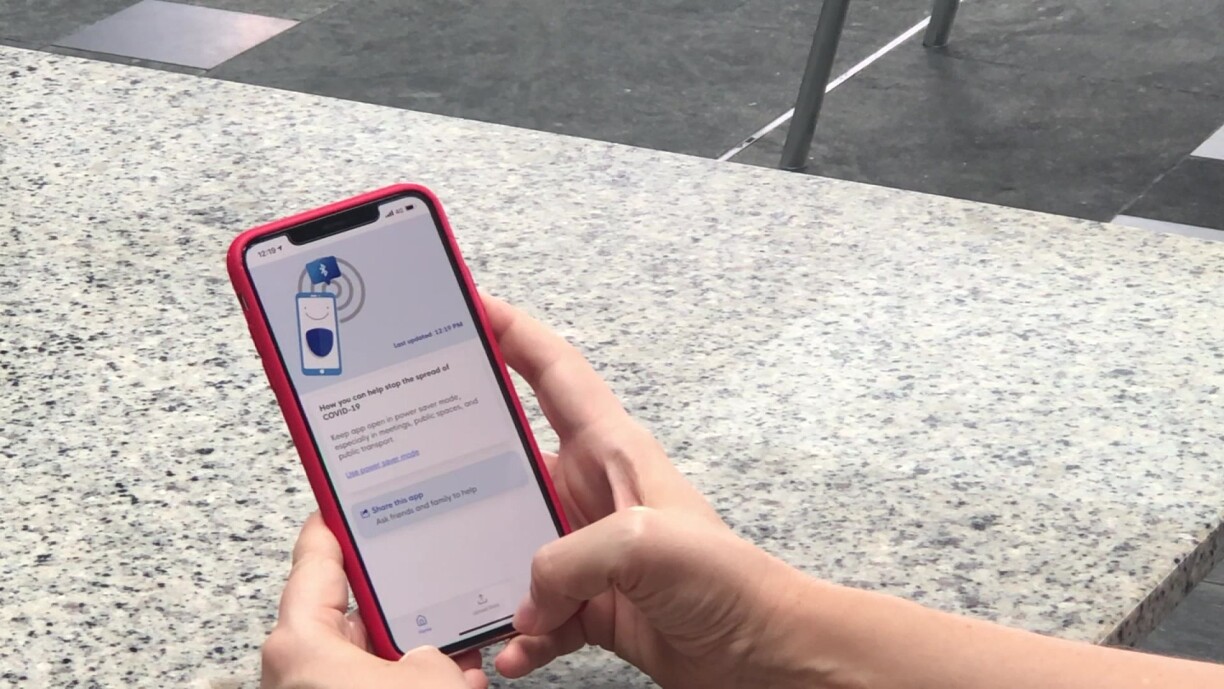
Contact tracing consists of identifying where a patient has become infected, and retracing their contact with contaminated people. In Luxembourg, tracing is currently carried out as a form of declaration, in which people who have tested positive are contacted and interrogated on the people with whom they have come into contact.
A contact tracing app could speed up the process - however, opinions have been varied in the Grand Duchy, with such an app proving to be the subject of many discussions. A research project is to be launched in Luxembourg, observing international examples in the process.
Singapore launched a contact tracing app early on in the health crisis, with Australia following suit and launching an app based on similar technology in recent weeks.
Use of the app is voluntary and anonymous. Users must provide a phone number, a postcode and confirm which age category they fall into. This data is registered on a server in Australia and deleted after 21 days.
The information is collated by the Ministry of Health. If someone tests positive, the people who have been in contact with them are notified or called by the authorities to be tested.
A research group is currently analysing similar initiatives to find the best model for Luxembourg, whilst prioritising data protection.
Professor and Doctor Peter YA Ryan, head of the" SmartExit "project, said the app should be controlled by Luxembourg health authorities, but should also have the possibility of exchanging information with neighbouring countries.
As the country exits confinement, citizens will come into contact with a larger number of people. In order to retrace eventual contacts, the majority of the population should ideally participate in contact tracing.
Dr Ryan said the app should be accessible to as many people as possible, ensuring users are comfortable with using the app. It also depends on how many people own a smartphone, how many are likely to download the app and activate Bluetooth.
Many questions remain before the app could theoretically be implemented. Above all, Dr Ryan underlined the importance of guaranteeing data protection after the pandemic. He said there needs to be a solution which will maximise efficiency while minimising the impact on data protection, for the long and short term.
Video report in Luxembourgish





