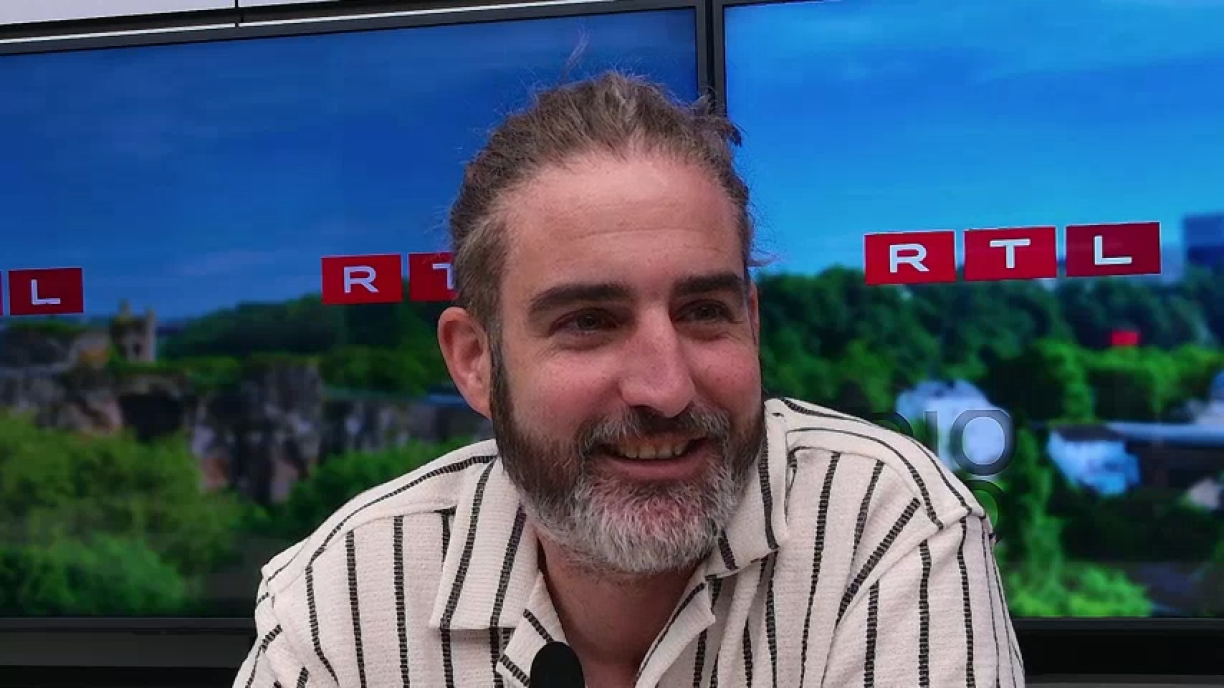
The grape harvest in Luxembourg is set to start earlier than usual this year as a result of the persistent dry and hot weather, according to Jeff Konsbrück, president of the Private Winemakers (Privatwënzer Lëtzebuerg). He told RTL that the first vineyards could begin picking grapes as early as the end of August, with the main harvest likely to follow at the start of September.
The weather has had a clear impact on both the quantity and quality of the grapes this year. Konsbrück noted that if there is no further rain, quantity will be significantly impacted while the quality is expected to remain high. When asked about ideal weather conditions for the coming weeks, Konsbrück replied that some light summer rain once a week would be very beneficial for the vineyards.
The reduction in harvest volumes will have economic consequences for wine producers. Konsbrück explained that every business will have to recalculate its own figures, but if yields are down by a third, the loss in revenue has to be compensated somehow, meaning that less wine to sell could drive up prices. He said it is up to each vineyard to decide how to handle the shortfall, whether by raising prices or by other means.
The early harvest also increases the need for seasonal labour, traditionally filled with harvest workers, who often come from Eastern Europe. Konsbrück observed that it is becoming increasingly difficult to find enough workers, with fewer coming from Poland and more now arriving from Romania and, more recently, Ukraine.
While the shift in workers’ origins has not affected the quality of work, Konsbrück pointed out some challenges with communication, since Polish workers typically spoke better German than their Romanian counterparts. Now English is increasingly used to communicate on the vineyards.
A draft law currently under discussion aims to make it easier for vineyards to employ seasonal workers. This includes allowing the entire wage to be paid in a single payment for contracts under one month, and accepting medical certificates from workers’ countries of origin instead of requiring a Luxembourg-based medical examination, provided the job is not considered hazardous.
Konsbrück welcomed these planned simplifications. However, he also regrets that the changes will not come into effect in time for this year’s harvest, stressing that simpler procedures would already have been necessary and useful this year. Given that finding enough workers becomes harder each year, he argued that it will become increasingly necessary to consider opening the labour market further to third countries.
Konsbrück confirmed that automation is on the rise in Luxembourg’s vineyards due to larger business sizes and labour shortages. However, for certain products such as Crémant, the grapes must be picked by hand, and some winemakers, including Konsbrück himself, choose to hand-pick all their grapes to allow for selective harvesting.
The number of independent winemakers continues to decline, with Konsbrück stating that the Private Winemakers now have just over 60 members, of whom only 45 to 50 still bottle their own wine. He observed that family-owned holdings are getting larger, with many now cultivating well over 10 hectares, compared to five to eight in past generations.
Konsbrück also addressed the downward trend in alcohol consumption, which he does not view as an exaggerated health obsession, but rather as increased awareness and moderation. He encourages consumers to enjoy wine in moderation, noting that people now prefer to drink higher quality products, perhaps in lesser quantities.
On the topic of changing consumer preferences, Konsbrück notes that the production of alcohol-free wine is still at an early stage, and that Luxembourg’s winemakers face technical challenges compared to brewers of alcohol-free beer. He also explains that it is difficult to remove alcohol without the product losing its taste, hence why current methods often rely on adding sugar. Konsbrück is also sceptical of so-called 0.0 wines, saying many are essentially grape juice rather than true alcohol-free wine.
With consumers increasingly focused on quality over quantity, Konsbrück believes the sector can turn this into an opportunity, emphasising that Luxembourgish white wines and Crémant can compete on international markets.
He also argued that laws should make it easier for winemakers to diversify, for example by building guest accommodation and developing wine tourism. This would also entail creating better transport options for visitors in the east of the country, since taxis are expensive and bus services are limited in wine regions.





