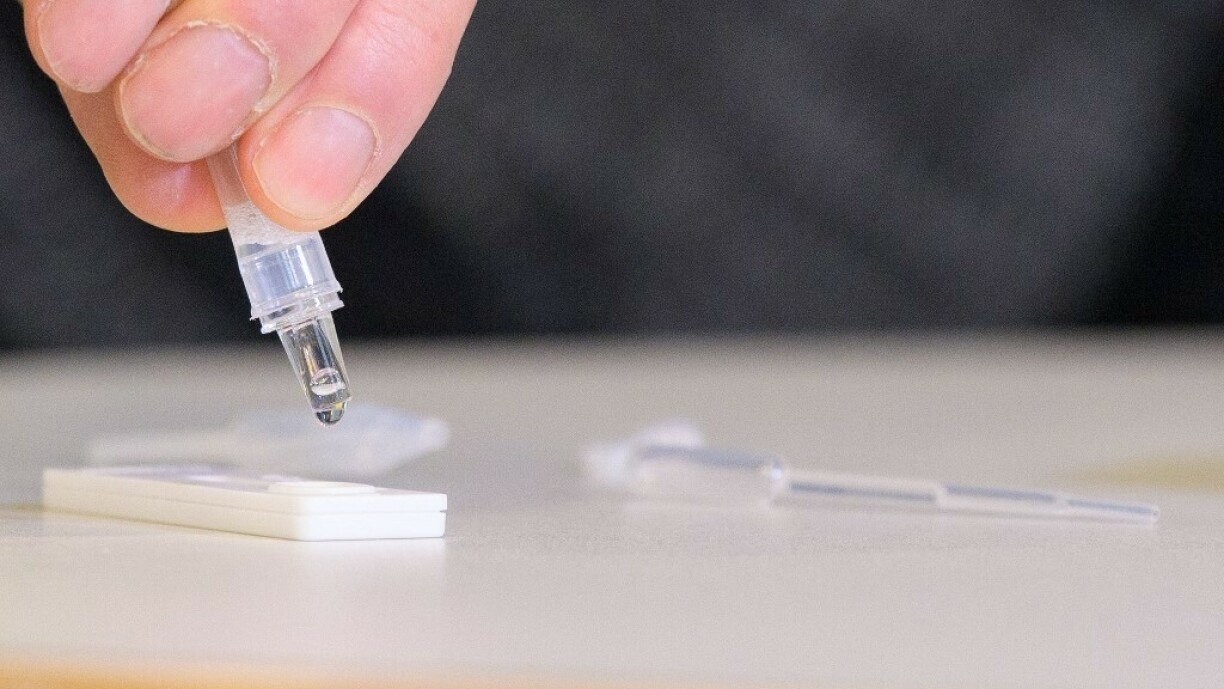
Thomas Dentzer, crisis management coordinator for the Health Inspectorate, said that rapid tests which work with saliva could offer new perspectives, as their use does not require any intervention by medically trained staff. The Ministry of Education has already said it plans to use these tests in schools.
Among the options currently being examined in conjunction with pharmacies is the possibility of sending tests directly to residents, as part of making them easily accessible to the general public.
The National Health Laboratory is carrying out a comparative study between conventional PCR tests conducted at drive-in centres, and rapid saliva tests as well as PCR saliva tests which will eventually make it possible to use patients' saliva, rather than using a sample from the nostril or throat. Patients who go to the drive-in have the opportunity to participate in this study by donating some of their saliva.
If the effectiveness of these saliva tests is certified, the government will order them. Several suppliers have already been shortlisted by Luxembourg authorities; however, it is not yet known how many tests can be delivered, nor how quickly.
Audio report no in English
Dentzer also commented on the news that the Council of Infectious Diseases has recommended extending the interval from 4 to 10/12 weeks between doses of the AstraZeneca virus. He said studies had shown that the extended interval increased the vaccine's efficacy. Now authorities must decide whether they maintain the second dose as scheduled, or increase the number of vaccinations on offer using the AstraZeneca vaccine.
Dentzer said they would tread carefully to be on the safe side, but there were indications that the first dose alone provided a significant amount of immunity, albeit not as much as after the second dose. He expected a decision would be confirmed over the coming days by the operations team.
Audio report not in English





