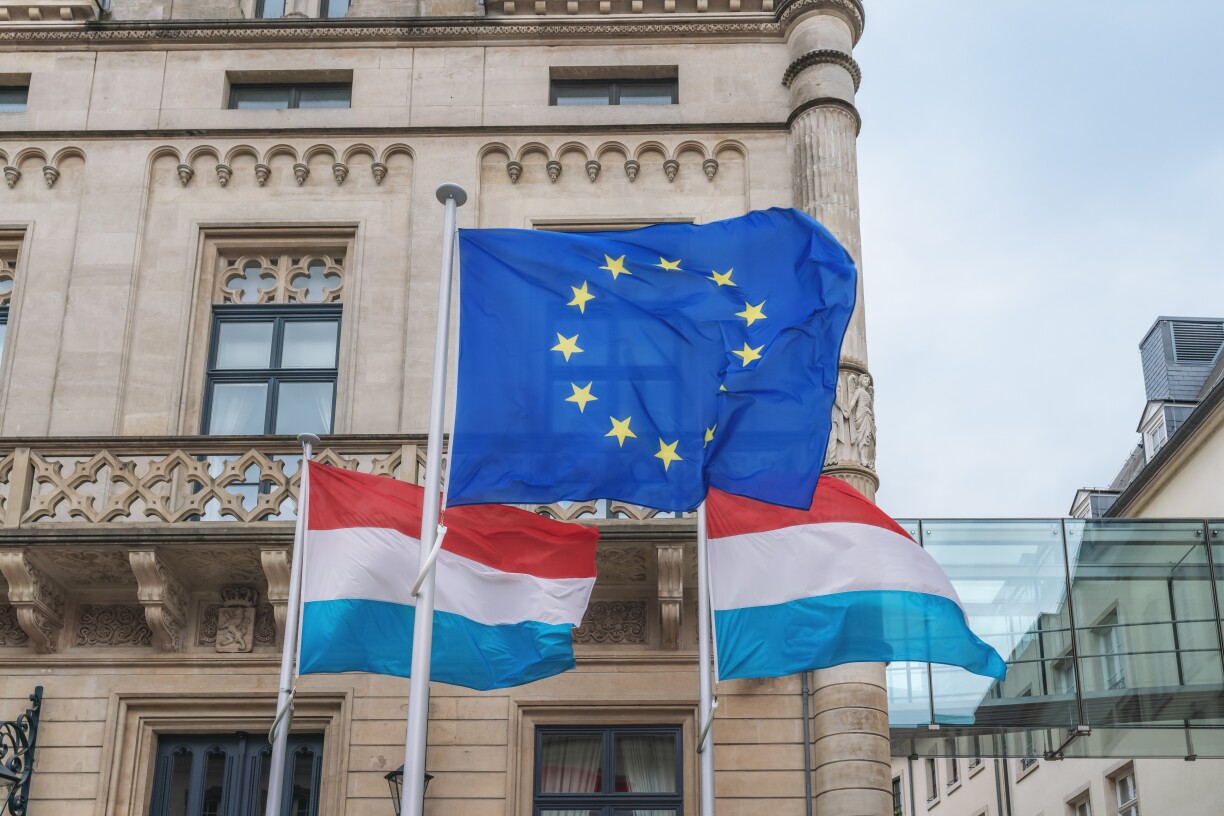
In recent days, the announcement of a European agreement on unemployment benefits for cross-border workers has generated significant press coverage.
On Wednesday, the 27 EU member states gave their final approval to a major reform of the unemployment insurance system for European cross-border workers, adopted after a decade of discussions. A significant change is now on the horizon for cross-border workers in Luxembourg.
At stake is the substantial unemployment bill for these workers.
To clarify the current rules, the Ministry of Labour explained the existing regulations to our colleagues from RTL Infos. Regarding the coverage and payment of unemployment benefits, the law dictates that "the country of residence is responsible for paying unemployment benefits, primarily for cross-border workers, regardless of the duration of their professional activity (as an employee or self-employed person) in another country."
According to the ministry, the same regulation also stipulates that the country of the last professional activity reimburses the country of residence – which is responsible for paying the benefits – for the amount of those benefits over a period of three months (or five months in certain cases, except for Luxembourg, which has an exception in the regulation and therefore remains at three months).
In other words, under the current system, a cross-border worker residing in Belgium who works and pays unemployment contributions in Luxembourg receives unemployment benefits from Belgium if they lose their job. This can lead to payment delays or even discrepancies between the contributions paid and the benefits received, as the unemployment insurance funds of different countries sometimes struggle to communicate with one another. It also results in a heavy financial burden for the countries where cross-border workers reside.
To address this situation, the European Commission proposed in December 2016 to completely overhaul the system: in the future, the country where the worker paid contributions would pay their unemployment benefits directly.
The Luxembourg Ministry of Labour confirms that this paradigm shift is indeed planned. The European agreement states that it will be up to the country of last employment to monitor and pay unemployment benefits to cross-border workers, provided they meet the affiliation conditions set out in the regulation and the legal conditions laid down in the competent Member State that grant entitlement to unemployment benefits. Conversely, the current rule on reimbursement of three to five months of unemployment benefits to the country of residence would be abolished under the revision, the ministry explained.
According to the text, which reached a provisional agreement among co-legislators in Brussels on 22 April, "one must have worked continuously for at least 22 weeks in a Member State other than the country of residence for the Member State of last employment to become responsible for unemployment (monitoring and payment of benefits)."
The ministry further explained that, in practical terms, this means a former cross-border worker who has worked continuously for at least 22 weeks in Luxembourg would have to register with the National Employment Agency (ADEM) and would be monitored as a jobseeker like any other person residing in Luxembourg and registered with ADEM.
However, the ministry pointed out that this rule does not grant an automatic right to unemployment benefits. It must still be verified, according to the national legislation of the competent Member State, whether the person registered as a jobseeker fulfils the qualifying period necessary to be eligible for benefits.
As a reminder, under current Luxembourg law, a person must have worked for at least 26 weeks (or 182 days) during the 12 months preceding their registration as a jobseeker with public employment offices in order to receive unemployment benefits.
The ministry also noted that the reform still requires final formal approval from the European Parliament. Thereafter, the new provisions will apply only "after a period of two years following the entry into force of the reform, this period being extended to seven years for Luxembourg to take account of its particular situation with its significant number of cross-border workers," the Ministry of Labour confirmed.
Luxembourg negotiated an additional two-year reprieve compared to other countries. With nearly 47% of its workforce consisting of cross-border workers, the country will be impacted by the new regulations more than any other Member State.
In other words, during this seven-year transitional period specific to Luxembourg, the status quo remains applicable – both with regard to the monitoring of former cross-border workers and the payment of unemployment benefits.
Questioned on the subject on Tuesday, Minister of Labour Marc Spautz first stressed that "without all these workers, we would never have reached our current GDP, nor achieved the progress we have made."
As for the cost of the agreement for Luxembourg, if ratified, it is impossible to estimate precisely, as it will depend on the evolution of unemployment. However, Spautz estimated that if unemployment remains stable, the cost would amount to around €200 million per year.
"At the same time, we will have to adapt our employment administration if we have to process these cases in the future," the minister further explained to RTL. He confirmed that "the ADEM's workforce should be reinforced, while continuing the digitalisation of procedures, which will also facilitate exchanges with neighbouring countries."
Additionally, Spautz noted that "we have a dynamic labour market in the Greater Region, and Luxembourg also benefits from this market. It is therefore necessary to act bilaterally, while considering the possibilities for collaboration within the Greater Region, between Germans, Belgians, the French, and ourselves."