The graves at Mertert cemetery, tucked between the railway and the Moselle river, rarely draw much attention; yet here, several Russians who fled the aftermath of the 1917 Revolution and the fall of the Tsar have found their final resting place.
These exiles, known locally as the "Exil-Russen", are woven into the fabric of Mertert’s history. Some of their descendants still live in the area, and while commonly called Russians, many originated from regions that later became part of the USSR.
After a long and difficult journey across much of Europe, the exiles came to Mertert in the hope of finding work at the Cerabati tile factory. A small Russian community established itself between Mertert and Wasserbillig, while others travelled as far as Wiltz to work in the leather industry.
The exiles’ graves, as well as those of their families, can be found in the upper section of the cemetery. On Sunday afternoon, as the graves were blessed for All Saints’ Day, the cemetery saw more visitors than usual. Among them was a German group, who gathered at the Orthodox graves to honour the deceased.
Their appearance, in vintage military uniforms, caught the eye of many. The visitors had consciously chosen to wear historical uniforms as a sign of respect for their forebears who were forced to leave Russia.
"We are all dressed differently because the soldiers came from different regions and held different ranks", said Vladimir Poleschaev, who had travelled from near Saarbrücken for the occasion. He explains that "even a general is buried here". He noted that he himself has Ukrainian ancestry, and that Cossack uniforms were present.
Another member of the group, proudly posing for a group photo at the cemetery, added that the uniforms were just as they had been back in the day.
The group emphasised that, despite one participant’s armband showing the Russian flag, their gesture should not be conflated with current events. Their ancestors, who fled conflict and found their final rest far from home, would likely have agreed.
The small German group, with their boots, coats, and striking headgear, attracted much curiosity but were pleased to take part in the official ceremony. The local Catholic priest also stopped by their graves, which they greatly appreciated.
For them, the day was about remembrance, even if the events in question happened long ago. By that measure, their mission was accomplished on All Saints’ Day at Mertert cemetery.
The Russian graves from the First World War era are not the only ones at Mertert with stories to tell. Victims of the Second World War are also buried there.
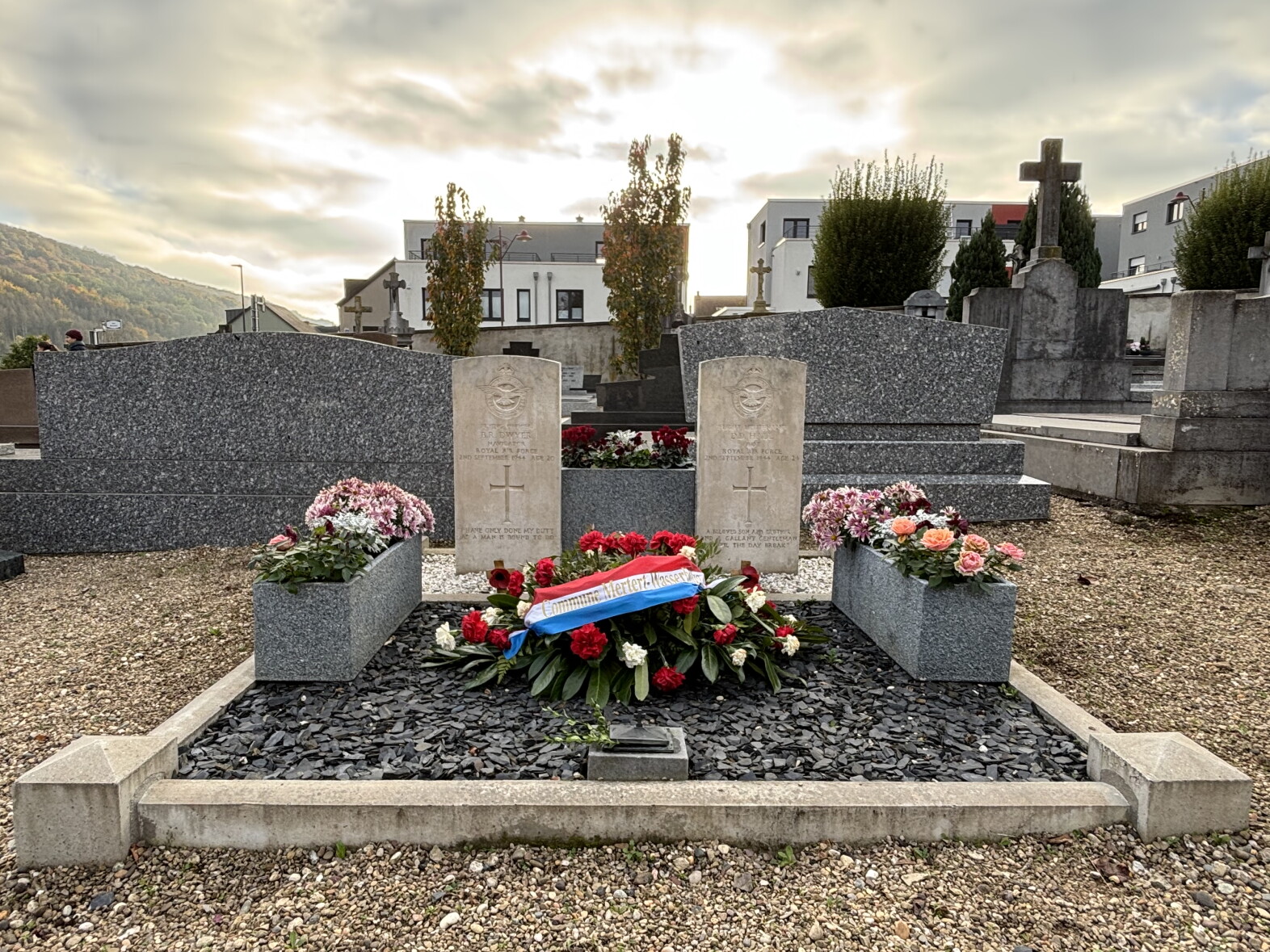
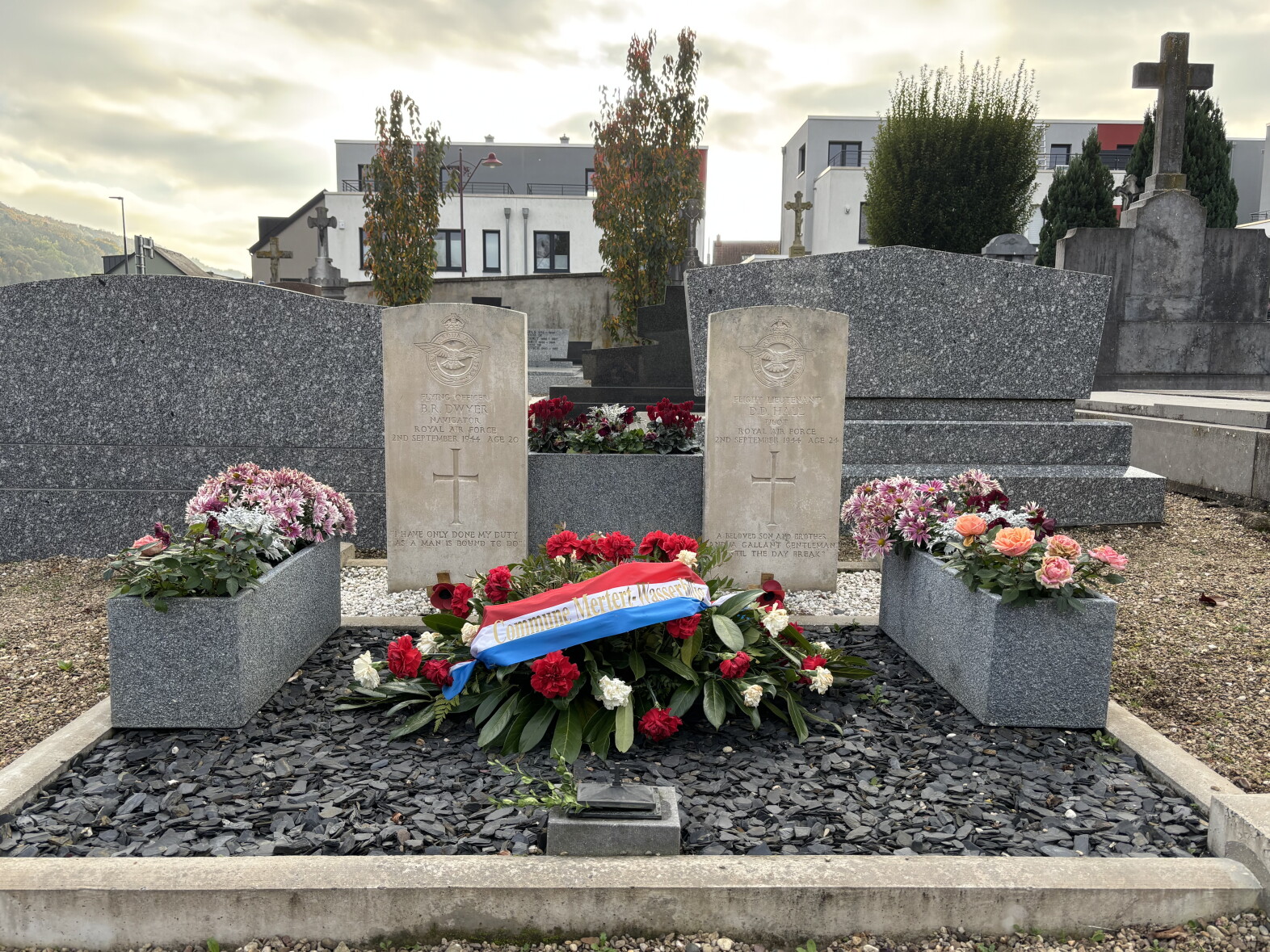
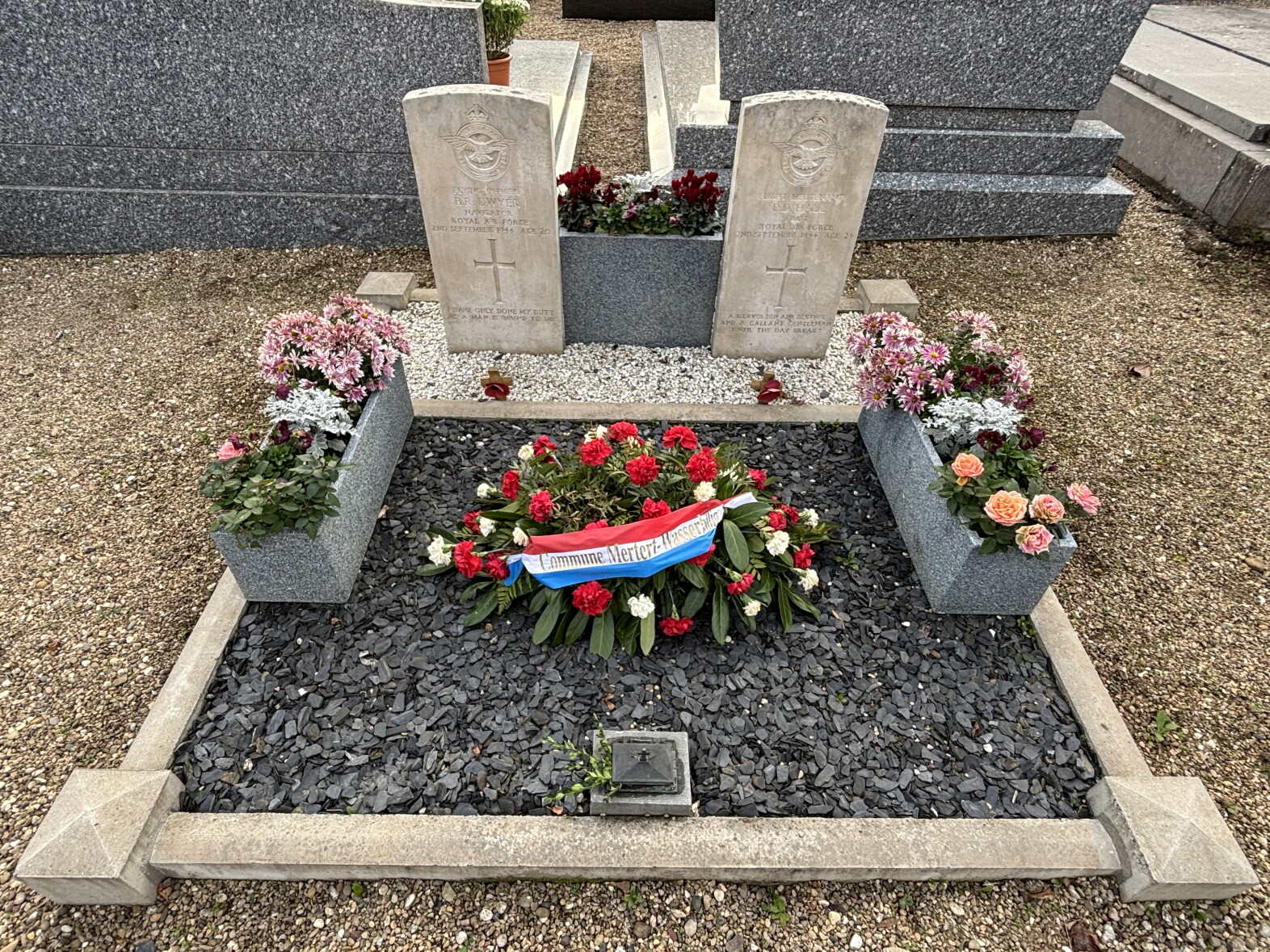
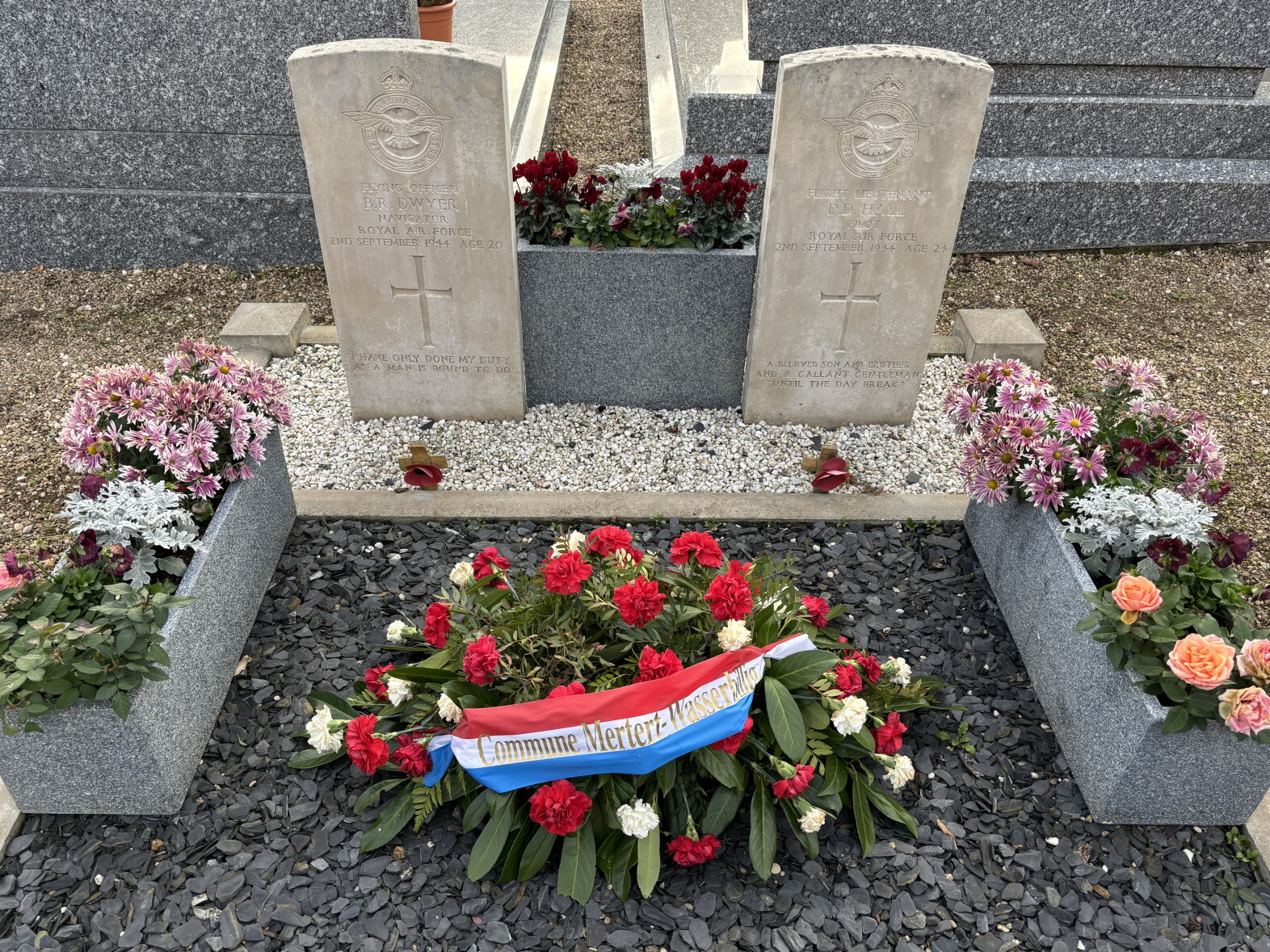
On 2 September 1944, a British reconnaissance aircraft was shot down in the area by anti-aircraft guns stationed on a train. Both pilots, B. R. Dwyer and D. D. Hall, died in the crash and were buried at Mertert cemetery.
Eighty years later, on this year’s All Saints’ Day, they too were specially remembered.