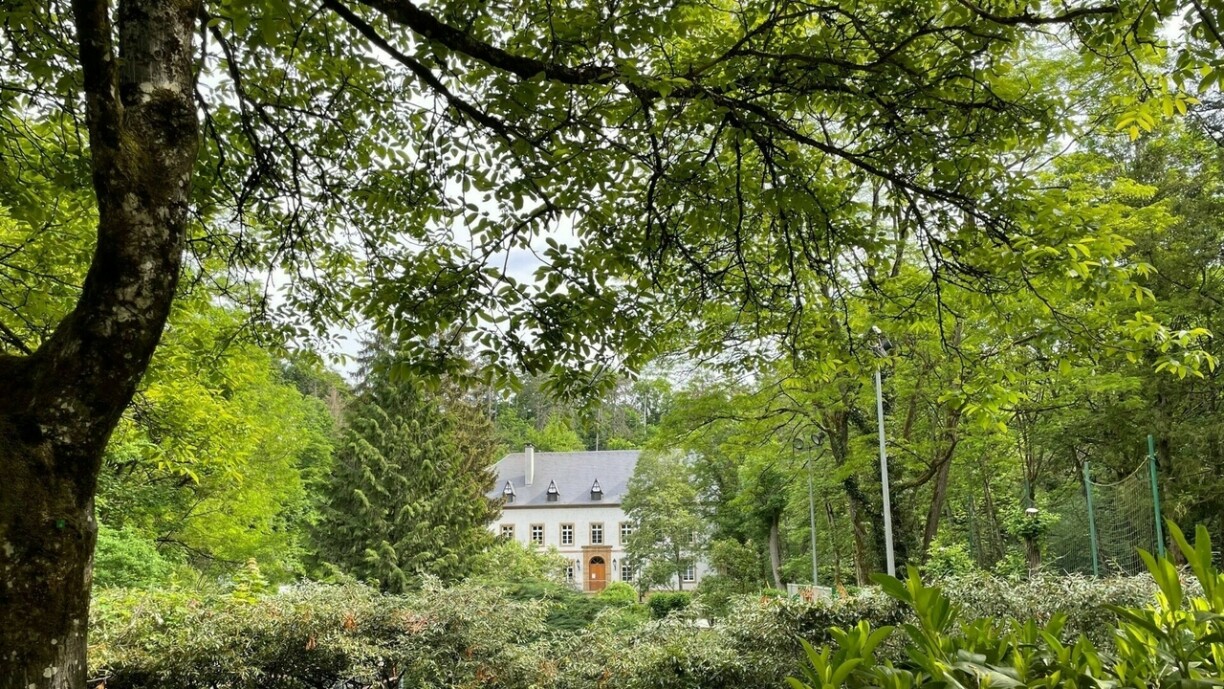
Until now, they were treated jointly with other patients. However, two weeks ago, a separate building dedicated only to addicted parents opened its doors. Contrary to conventional drug therapy, the Manternach Centre also involves the infants of patients.
One of the advantages is that children do not need to placed in foster care, explains Michèle Rech, coordinator of the 'Parent-Child' programme: "The priority of the project is to avoid separating patients from their children, and to strengthen their parenting abilities along the way. A network of stability therefore allows children to have the best-possible development."
Since the close contact with regular patients was at times hectic, the parents recently moved to a separate building, which has four available rooms. A new team, consisting of a social worker, a nurse, and an educator, has also been compiled for the project.


The first step to enter the programme is to contact the office of the 'Alternative Information Centre', which is located in Luxembourg City's Gare district.
"Here, parents receive information and direct help from the Parental Services or the Youth and Drug Support. ... Together, they can plan the physical withdrawal and the admission to the therapy centre."
This means that patients need to respond to certain criteria to be admitted to the Manternach project: "People need to show willingness to go through with therapy. The minimum age for mothers and fathers is 18, children should not be older than four, so pre-school aged. The physical withdrawal is conducted in a hospital."
Pregnant women can also be admitted to the programmes, notes Georges Majerus, spokesman for the Manternach directorate: "It happens that women with drug addictions get pregnant and decide to seek help. They are also admitted to the programme, to which they can return even after giving birth."
During the parents' therapy sessions, children spend time in a daycare.
At the moment, two of the four rooms are already occupied, while two further women are on the waiting list.