The invasive Asian hornet is now firmly established in Luxembourg, prompting authorities to introduce an emergency plan that includes financial aid for removing nests on private property. A pest control specialist explains why the species is considered both highly invasive and dangerous.
If you encounter an Asian hornet, crushing it can make the situation worse. Eddy Boland, head of pest control company Rodents Hygiene Service (RHS), explained in conversation with RTL that hornets release pheromones when they feel threatened or are killed, signalling danger to others and potentially attracting more hornets to the area.
Boland, who has worked in pest control in Luxembourg for more than 30 years, noted that while wasp nests were once the main concern, the Asian hornet has now become a major issue for residents.
The Asian hornet is significantly more dangerous than local insects such as bees, wasps, or European hornets. Boland described it as capable of delivering multiple stings in quick succession, with stronger venom and larger quantities injected.
For this reason, attempting to remove a nest without professional help is strongly discouraged.
However, professional removal can cost several hundred euros. In response, the government has introduced financial support for private individuals.


In a statement, Environment Minister Serge Wilmes said the 2026 emergency plan reflects a determination to act early, effectively, and collectively against a growing threat. The Asian hornet poses risks to pollinators, particularly bees, disrupts ecosystems, and spreads rapidly.
Early detection and destruction of nests in spring are considered crucial to limiting the number of colonies that develop over the summer.
Under the scheme, financial support depends on the stage of the nest:
Boland explained that secondary nests can be particularly difficult and costly to remove, sometimes requiring specialised equipment such as lifting platforms and multiple interventions. In complex cases, costs can exceed €1,000, he said. Technicians must wear heavy protective suits and visors, as the hornets can even project venom, Boland stressed.
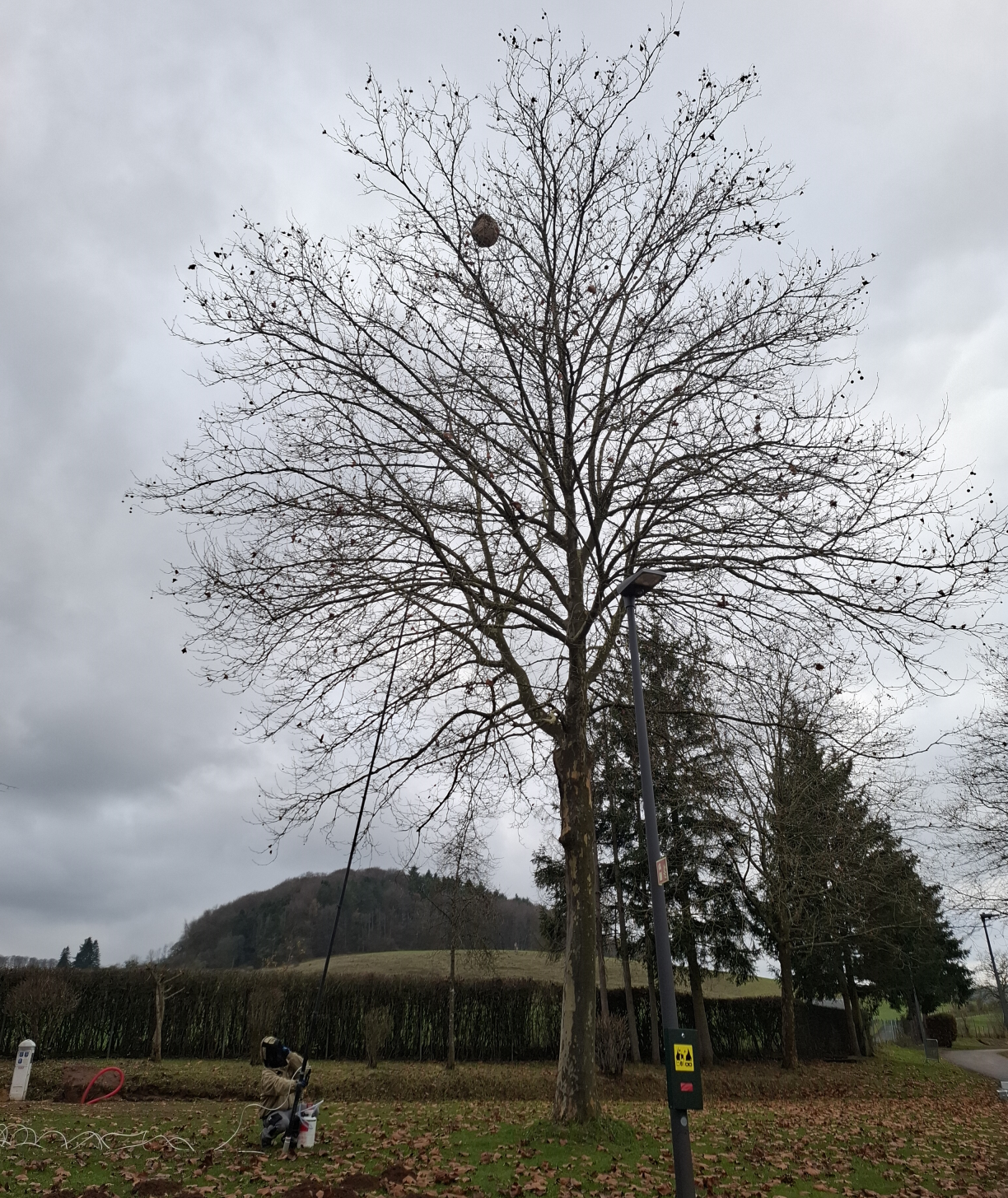
Financial support comes with strict conditions. Any nest treated with an insecticide must be removed shortly afterwards.
Boland explained that this is necessary to avoid environmental damage, as leaving a treated nest in place could contaminate nature and harm other insects. In practice, this means professionals often need to return for a second intervention to physically remove the nest after treatment, he said.
Authorities also require either the use of non-insecticidal methods or techniques that ensure the insecticide is precisely targeted, without spreading into the surrounding environment. However, Boland noted that alternatives to insecticides remain limited.
He said that thermal treatments do exist, such as using steam to destroy the nest or specialised equipment similar to flame devices, but these methods are less common and not always suitable depending on the situation.
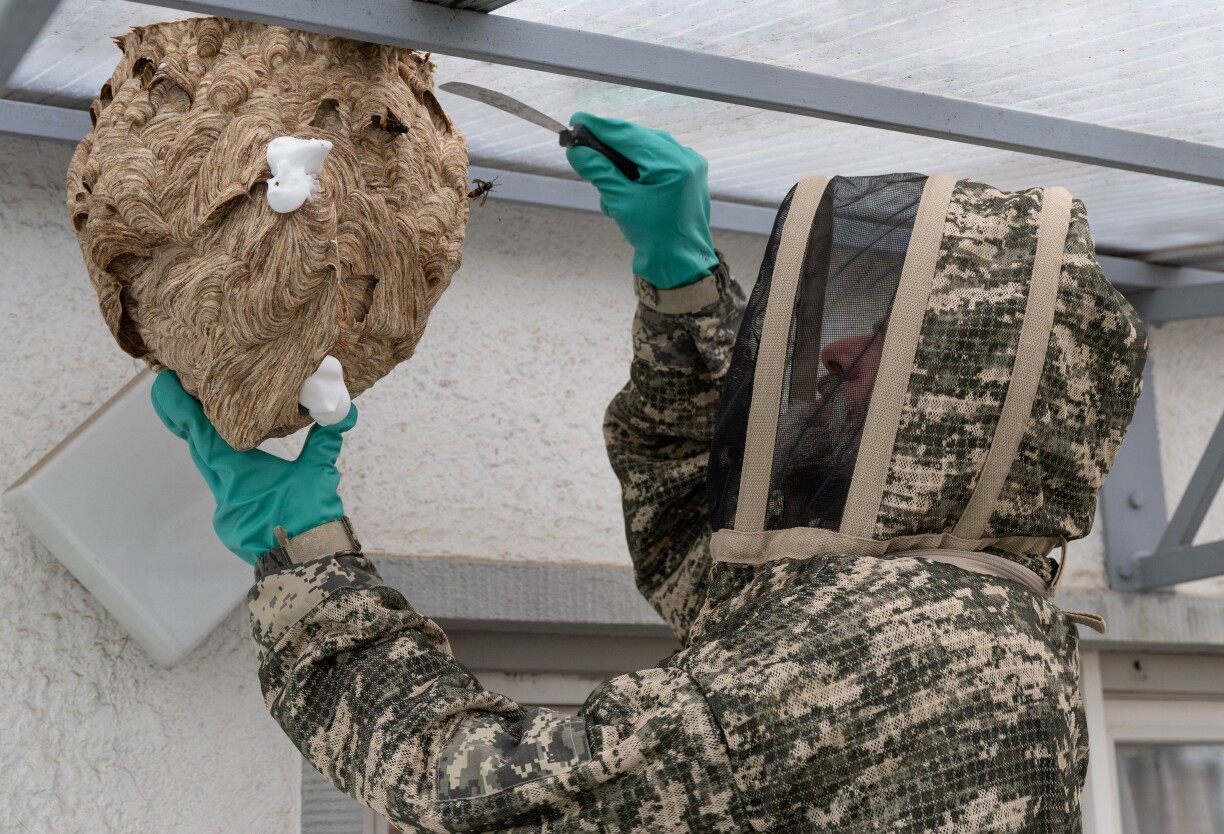
To qualify for financial support, individuals must provide several elements to the authorities, including a photo of the neutralised nest, its exact geolocation and details of the method used.
In addition, the professional carrying out the intervention must have completed a recognised national training course covering the biology and ecology of the Asian hornet, according to the authorities.
Residents are therefore advised to check the credentials of any service provider before proceeding.
The scheme applies exclusively to private individuals and nests located on private property. Interventions in public areas remain the responsibility of the Nature and Forest Agency.
Further details and an online application form are available via MyGuichet.lu.