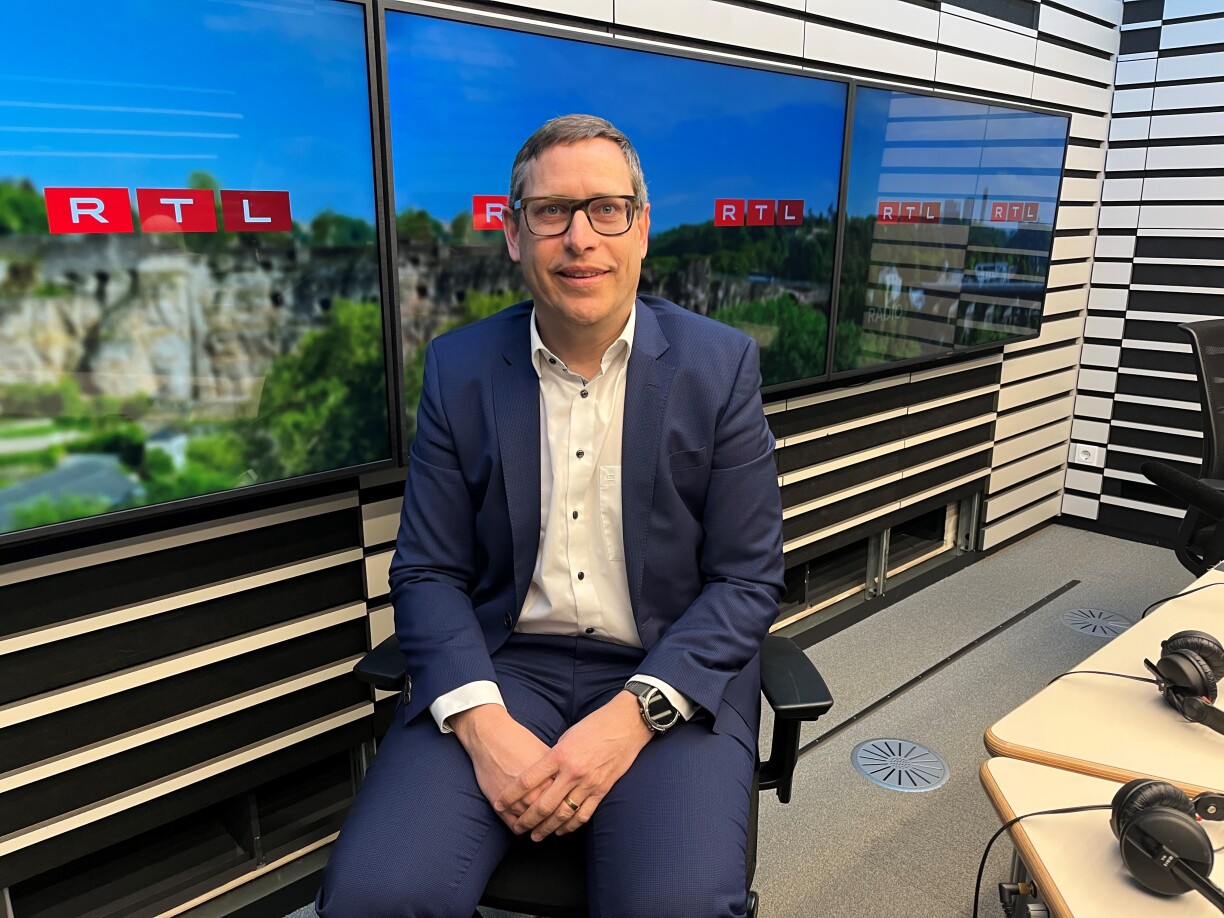
On World Engineering Day, Thierry Flies, civil engineer and President of the Luxembourg Association of Engineers and Scientists, used the occasion to highlight the often unseen but essential role engineers play in everyday life.
According to Flies, the purpose of the day is simple: recognition. Many of the systems people take for granted, roads, running water, electricity, secure data transmission, exist because engineers designed and built them. He pointed out that when we turn on a tap or drive across a bridge, we rarely think about the technical expertise behind it, yet engineers are the ones who make such infrastructure possible in the first place.
He also stressed that engineering is far broader than many assume. It is not limited to civil engineering, as it includes mechanical and electrical engineering, physics, chemistry, bioengineering, environmental engineering, surveying, industrial engineering, and many other disciplines, he said. In his view, the profession covers a vast and diverse spectrum.
This year's World Engineering Day, under the auspices of UNESCO, focuses on sustainable development. Flies believes sustainability must underpin all transformation and development. Whether in industry or construction, reducing CO2 emissions and designing more sustainable infrastructure should always be part of the equation, he said.
He argued that engineers have a responsibility to integrate sustainability into their thinking, ensuring that projects are conceived in the most environmentally responsible way possible.
Artificial intelligence is increasingly present across all sectors, and engineering is no exception. Flies noted that engineers have, in many ways, laid the groundwork for AI. In his view, companies that fail to use AI risk falling behind competitively.
He explained that automation has long been part of industrial processes, but AI now pushes this further. However, he emphasised that AI cannot function independently of human expertise. Engineers are needed to build and maintain data centres, manage digital infrastructure, and ensure sufficient energy supply for digitalisation, he said.
While AI simplifies certain processes and automates tasks, Flies insisted that human oversight remains indispensable. He said that engineers are still needed to lay the foundations, verify results, and question whether AI-generated solutions are correct. He illustrated this with an example from Japan, where he visited a factory run almost entirely by robots, yet somewhere behind those robots, an engineer had designed and programmed the system.
Turning to the construction and property sector, Flies acknowledged that while public infrastructure projects remain strong, particularly in areas such as water management, wastewater treatment, roads, rail, and tram networks, the residential property market continues to struggle.
He said that housing construction remains essential, but that confidence in the off-plan sales system (VEFA) has declined. Developers report that once a house is completed, it tends to sell, but buyers are increasingly reluctant to purchase property at the planning stage. Flies believes restoring public confidence is key, though he admits it may take time for the market to fully recover.
He sees both structural adjustments and renewed trust as necessary. In addition, the state may need to play a greater role in building housing, as Luxembourg urgently requires more homes.
When asked about technological innovation that could speed up or reduce the cost of construction, Flies mentioned robotic house-building experiments, with one unnamed municipality giving the first step. He remained cautious about whether this is the right path but said that all avenues should be explored.
He added that reducing building costs is crucial, as construction remains expensive.
Engineering remains one of Luxembourg's shortage occupations. In 2025, around seven per cent of the 6,000 vacancies registered with ADEM were for engineering roles, he said.
Flies sees it as the responsibility of the Luxembourg Association of Engineers and Scientists to promote the profession, particularly in schools. A recent study conducted with IDEA on STEM careers, which encompass science, technology, engineering, and mathematics, showed encouraging results, with increasing numbers of students, including more women, choosing these fields, he said.
Flies said that certain specialisations are particularly needed, including advanced IT specialists involved in data centres and digital processes, as well as mechanical and electrical engineers. He noted that broader geopolitical developments and increased defence spending may further increase demand for such expertise.
Addressing the question of what it takes to become an engineer, Flies explained that an interest in mathematics and physics is fundamental. Students do not need to be experts from the outset, but they should enjoy these subjects, as they form the foundation of engineering studies at university level, he said.
Beyond technical skills, social competencies are becoming increasingly important, Flies stressed, as engineering is not a solitary profession, with teamwork and collaboration being essential.
To spark early interest, the Luxembourg Association of Engineers and Scientists runs educational initiatives such as its "Wëssensatelier", a mobile workshop aimed at children aged eight to twelve. By allowing children to build simple technical projects, such as small wind turbines, they can see tangible results, which Flies described as one of the greatest rewards of the profession.
For young people considering engineering, his advice is to undertake internships to explore different specialisations and research university options, whether in Germany, Switzerland, France, Belgium, or even Luxembourg. Ultimately, he said, choosing a career should also be about enjoyment and personal fulfilment.