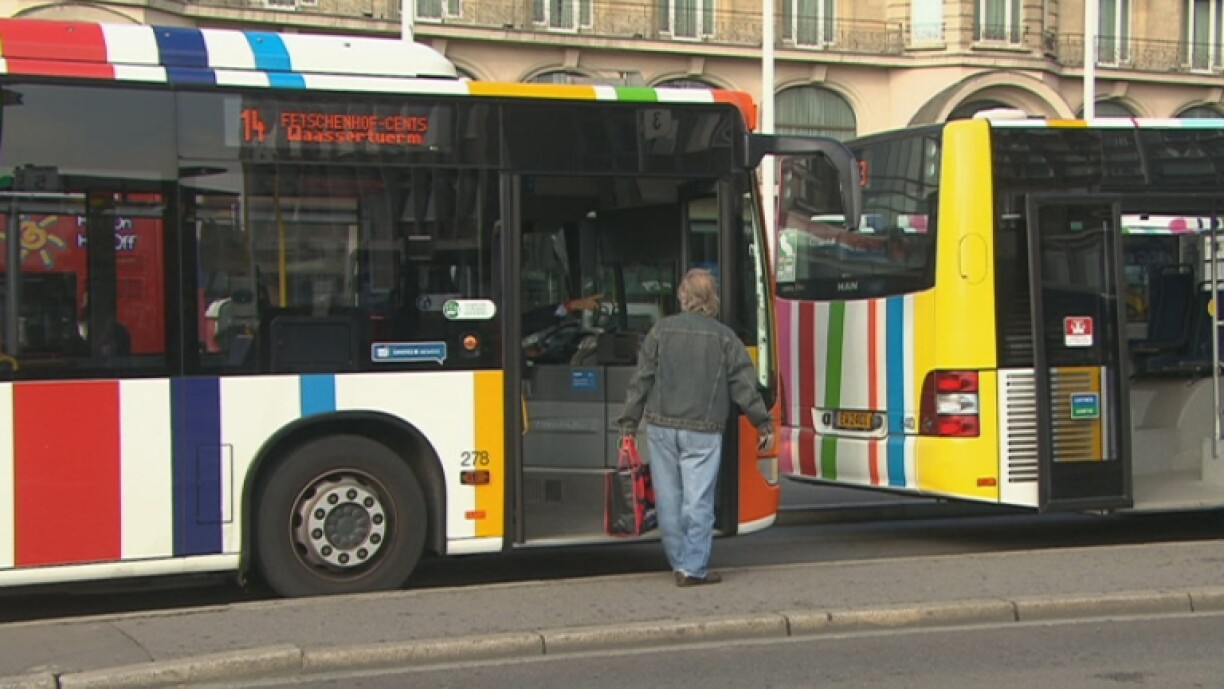
Bus drivers are increasingly being subjected to violence while on duty. Just last week, the police reported that a bus driver had been threatened and beaten in Luxembourg City. The assailant was arrested.
Four similar incidents have been recorded since the beginning of the year.
The LCGB, the biggest trade union in Luxembourg's transport sector, is sounding the alarm.
The situation has deteriorated significantly over the past months, the trade union states, recalling two other attacks at the end of 2021. And the attacks are becoming increasingly violent, says Paul Glouchitski, the secretary general of the LCGB.
"We are dealing with barbaric attacks here," Glouchitski stressed, pointing out that one of the victims of a recent attack was "not only beaten, but also bitten". All of this leads the LCGB to wonder whether Luxembourg might have a serious security problem, Glouchitski stated.
On 11 March, the LCGB met with officials from the public transport administration. One of the issues discussed was the use of anti-aggression cabins.
There is an agreement in principle in favour of such cabins, but the problem is a bit more complicated. At the Ministry of Mobility, officials point out that such cabins also have disadvantages. In the event of an emergency, such as an accident, the driver might not be able to get out quickly enough. They could also give rise to a subjective feeling of insecurity among passengers because they would wonder whether the driver would be able to come to their aid quickly in the event of an attack.
The cost of the cabins varies according to the level of security and the manufacturer of the vehicle.
The Ministry estimates that it would cost up to €15,000 per vehicle. This is not only a hefty price tag for the 1,400 RGTR buses, but also a sum that is not included in this year's budget, the Ministry points out.
Another problem is that it would be "virtually impossible" to install the cabins in buses that are already in use, meaning that they could probably only be installed in new vehicles. While there are plans to install cameras, the LCGB is asking for more immediate protection for the drivers in the form of security guards.
Glouchitski explained that the LCGB is aware that it would not be feasible to hire a security guard "for every bus on every route", but the trade union would nevertheless like to see "targeted action".
According to the Ministry of Mobility, the problem is somewhat localised geographically and assaults occur mostly at stations or stops, and less so on buses themselves. However, the relevant departments are reportedly working intensively on proposals, with the Ministry stressing that better protection for drivers would be at the centre of any upcoming proposals.