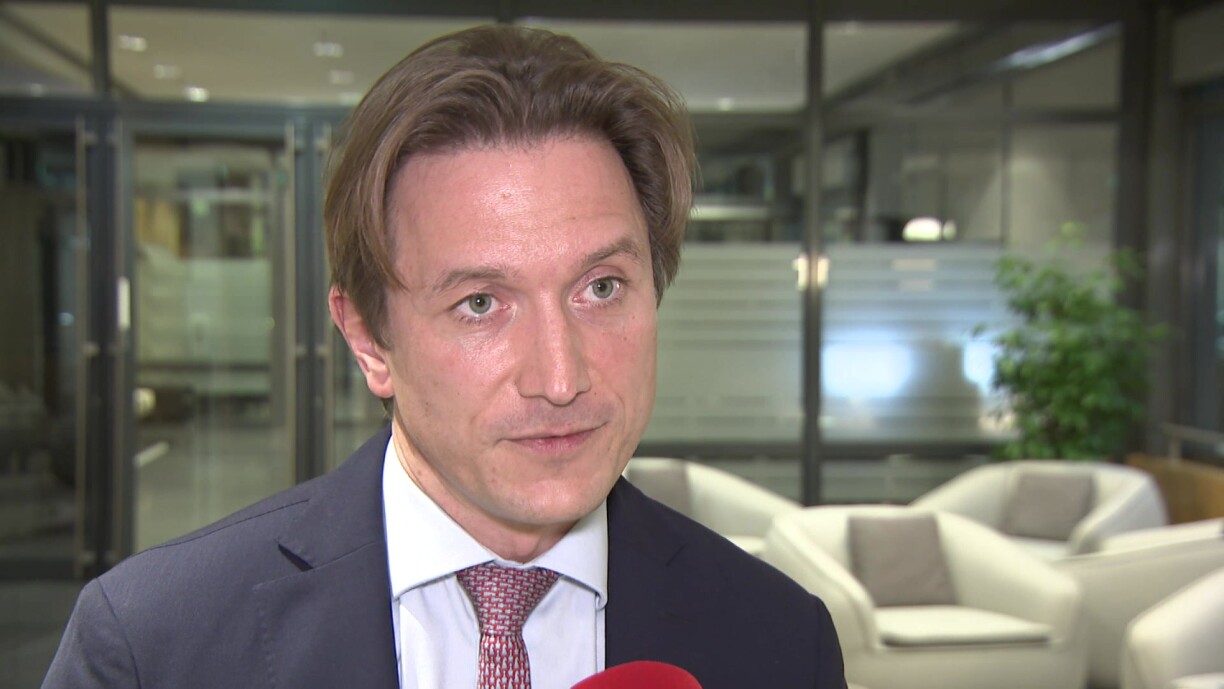
Olinger, the UEL's director, stated that while his organisation is in favour of a supply chain law, it must be "uniform and practical". Olinger reacted to statements made by Charles Muller, the president of the Finance and Human Rights Association, on RTL Radio.
A supply chain law should be "to the point, practical, and comprehensive", Olinger explained, adding that the UEL feels that the discussion is being held at too high of a level, from a global and conceptual point of view. But it is in the nitty-gritty of day-to-day business that "things get more complicated", Olinger pointed out.
Seeing as Luxembourg-based enterprises are a part of a single market, a European framework is necessary, according to Olinger. While some countries have already introduced their own laws, this is not at all an option for the Grand Duchy, the UEL director stressed. Luxembourg exports 80% of its products and many companies are dependent on foreign suppliers. As such, the UEL thinks that a unilateral approach by Luxembourg, without a European framework, would be counterproductive.
A European law, on the other, would have a better chance of actually imposing new social and economic standards, Olinger stated. That way, it would also be possible to negotiate with countries outside of the EU and impose certain rules. According to Olinger, a supply chain law should be coherent in order to be accepted by citizens. Campaigning for human rights, while at the same time importing products such as computer chips from countries where human rights are not being respected, comes across as hypocritical. Olinger argued that this raises several questions, for instance what would happen with products that are not being produced in Europe and only available from third countries. The UEL director wonders whether people would accept to just live without these products, if the countries in question would not comply with the EU's standards, or whether people would turn a blind eye.
Even if it is possible to introduce a supply chain law at a European level, Olinger concluded, it should not be forgotten to also define clear rules for countries outside of the EU.





