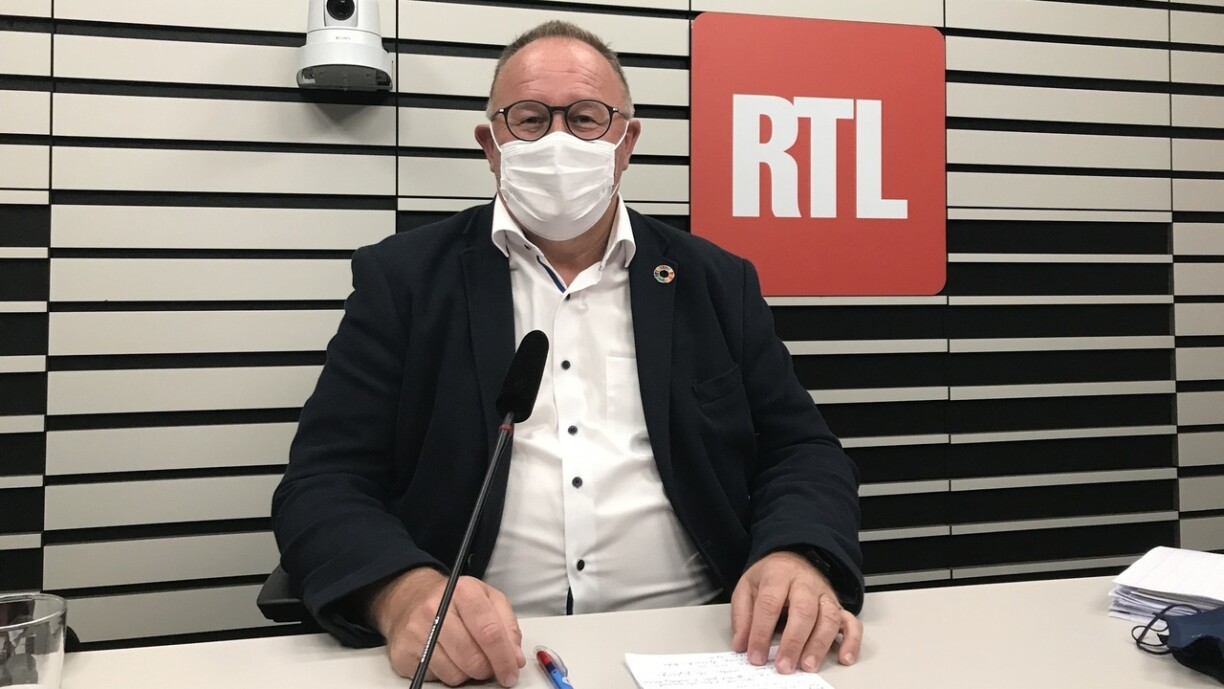
One of the main topics of discussion was the new European agricultural policy, with Schneider stating that while the agreement is "good", the challenges faced by farmers, winemakers, and gardeners remain significant.
From 2023 onwards, 25% of direct aids are tied to mandatory environmental projects. Additional efforts are also to be taken in the areas of animal welfare and climate protection as well as the farmers' social security. In Luxembourg, 40% of all public funds, i.e. around €100 million per year, is directly invested into environmental and animal welfare measures, according to Schneider. The Minister stressed that it is important to work alongside farmers and winemakers on this new path forward, seeing as they do face quite significant changes. Without them, even the most ambitious targets are "useless", Schneider said. To this end, the Minister is in favour of a major simplification of administrative procedures, which would make it possible to submit an increasing number of applications digitally. The farmers' main concern, Schneider explained, should remain "the work in the stable".
A first meeting with industry representatives is planned for 14 July. The meeting will focus on drawing up Luxembourg's national strategy plan, which the Grand Duchy has to submit to the European Commission until the end of the year and which has to comply with the necessary requirements. The Minister also stressed that he intends to involve the responsible environmental organisations in the process as well.
"I believe in the goal of the organic action plan"
In its coalition agreement, the government pledged to reserve 20% of Luxembourg's farmland for organic farming by 2025. Currently, organic farming accounts for 5.18% of the Grand Duchy's farmland. Nevertheless, Schneider rejects accusations that the target is in any way unachievable, stressing that he still believes it can be done. This is why he is currently working on implementing the organic action plan, Schneider explained. A lot of work is being done on the ground, according to the Minister, who added that he thinks there is "one type of agriculture" in Luxembourg. One type of agriculture that is to be sustainable in the future and that will remain focussed on medium-sized, family-owned businesses, Schneider stressed.
However, the Minister stated that he also considers a "partial conversion" of farming businesses for a feasible option. Schneider acknowledged that the system still needs to be "better organised" and adjusted to be less restrictive. In addition, the Ministry is also working on ways to diversify the sector. So far, Luxembourg is only producing a fraction of the vegetables and fruits that are regularly consumed. Major challenges include water consumption and authorisations, but Ministry officials are looking into "all of that", according to Schneider. 5.6% self-supply leaves "a lot of room for improvement" to ensure that people can purchase local and seasonal produce in Luxembourg as well.
The National Health Fund is not a "penny bank"
Romain Schneider also serves as Luxembourg's Minister of Social Security. Similar to 2020, the Luxembourg state will once again cover the exceptional costs regarding leave for family reasons in the context of the coronavirus pandemic and other similar expenses until the end of the year. Schneider stated that the magnitude of the toll the pandemic has taken on the budget of the National Health Fund (CNS) can only be gauged at the end of the year. Some people project costs of around €100 million. But even so, the Minister explained, there is "no reason to panic", as the Fund's reserves remain high.
Dental calculus removal reimbursed two times a year
Schneider acknowledged that the funding system for the CNS needs to be reformed "in the medium term", but nevertheless stressed that the National Health Fund is "not a penny bank".
Regarding dental work, Schneider confirmed that two calculus removals per year are to be reimbursed for every patient. Discussions on fillings and the time period after which a patient can apply for a prothesis are also ongoing. Schneider explained that all of this has to be assessed alongside the Association of Doctors and Dentists (AMMD) and the responsible actors so that it may be discussed as a "concise plan" during the quadripartite in autumn.
The Minister stated that he does not want to hide the fact that it annoys him as well, when new services are announced but then "take ages" to be implemented. But agreements are sometimes difficult to reach, he acknowledged.
As for reimbursements for psychotherapy sessions, Schneider said that it is his "political will" that the negotiations between CNS and Fapsylux come to an end. The deadline is set on 15 July. Schneider stated that the main thing is to make sure that the convention's framework ensures that a "certain balance is kept in other areas" in the future.
New legal framework for outpatient care to be presented in July
Projects such as the planned medical centre by the Hôpitaux Robert Schuman Foundation and the radiology cabinet in Gasperich recently sparked controversy, seeing as the political discussion surrounding outpatient care is still ongoing.
Schneider announced that more details are to be announced around mid-July. The Minister made it clear that the current status quo is "not an option", just as an increased or even full privatisation is also not a solution. The important thing is that the "patient always takes centre stage" and that the jobs of medical staff are secure.