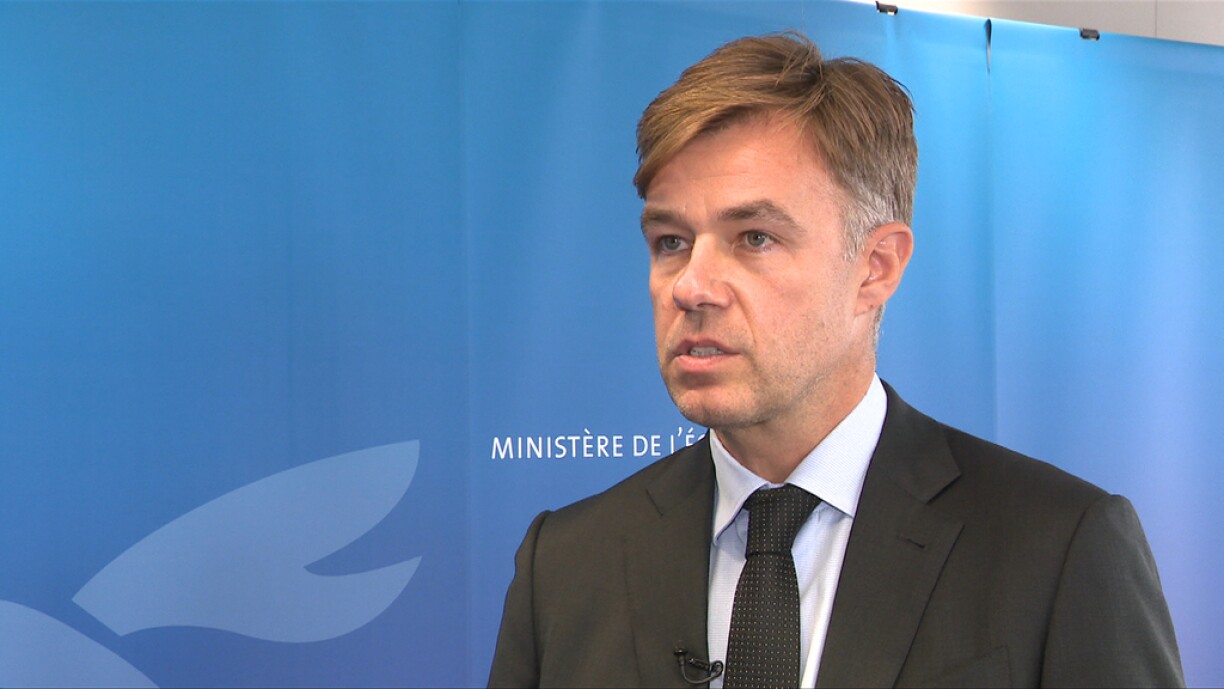
Fayot noted that there was an undeniable accumulation of wealth in the form of real estate, which is considered unproductive in comparison to investments made into active businesses: "We need to differentiate between the scales of accumulated wealth and property by private citizens. It was in fact me who launched the discussion on a possible inheritance tax, but I now doubt that it is the right path forward. I think that an intelligent and well-structured wealth tax might actually be more efficient."
Fayot further conveyed that the administration was currently looking to find countermeasures to tax evasion by businesses and wealthy individuals, enabled by the lack of tax regulations on financial funds and stock options. He did however fail to indicate a possible timeline for the project.
The Minister of the Economy also engaged in a discussion with Blanche Weber, president of the Ecological Movement, and Nora Back, president of OGBL. They addressed a series of policies which could be used to counteract the social, ecological, and economical aftermath of the pandemic. Naturally, the introduction of a wealth tax became a topic of discussion.
Weber argued that a reform would finally allow to answer the calls for a tax on carbon emissions, which she considers long overdue, but which also needed to be adapted relative to income to avoid social injustices.
Fayot bid caution in that regard as to not rush the introduction of such a tax reform, noting that the French yellow vests movement had proven the path to be a slippery slope. Back agreed that the tax would certainly be hard to take for low-income families and needed to be well-thought out in order to be efficient.





