Numerous studies indicate that closing schools is one of the most efficient methods to curb the spread of the coronavirus. A paper monitoring the COVID-19 epidemic with nationwide telecommunication data concludes that human mobility is a major factor in transmissions. In other words: when schools are closed, there are few infections.
Data retrieved from the University of Vienna, which organised so-called 'gargle tests' in schools, shows that the moment schools were reopened, there was a Covid-19 prevalence of 0.39% among pupils and staff. Barely 3 weeks later, the prevalence had risen to 1.44%. In Austria, schools are currently closed.
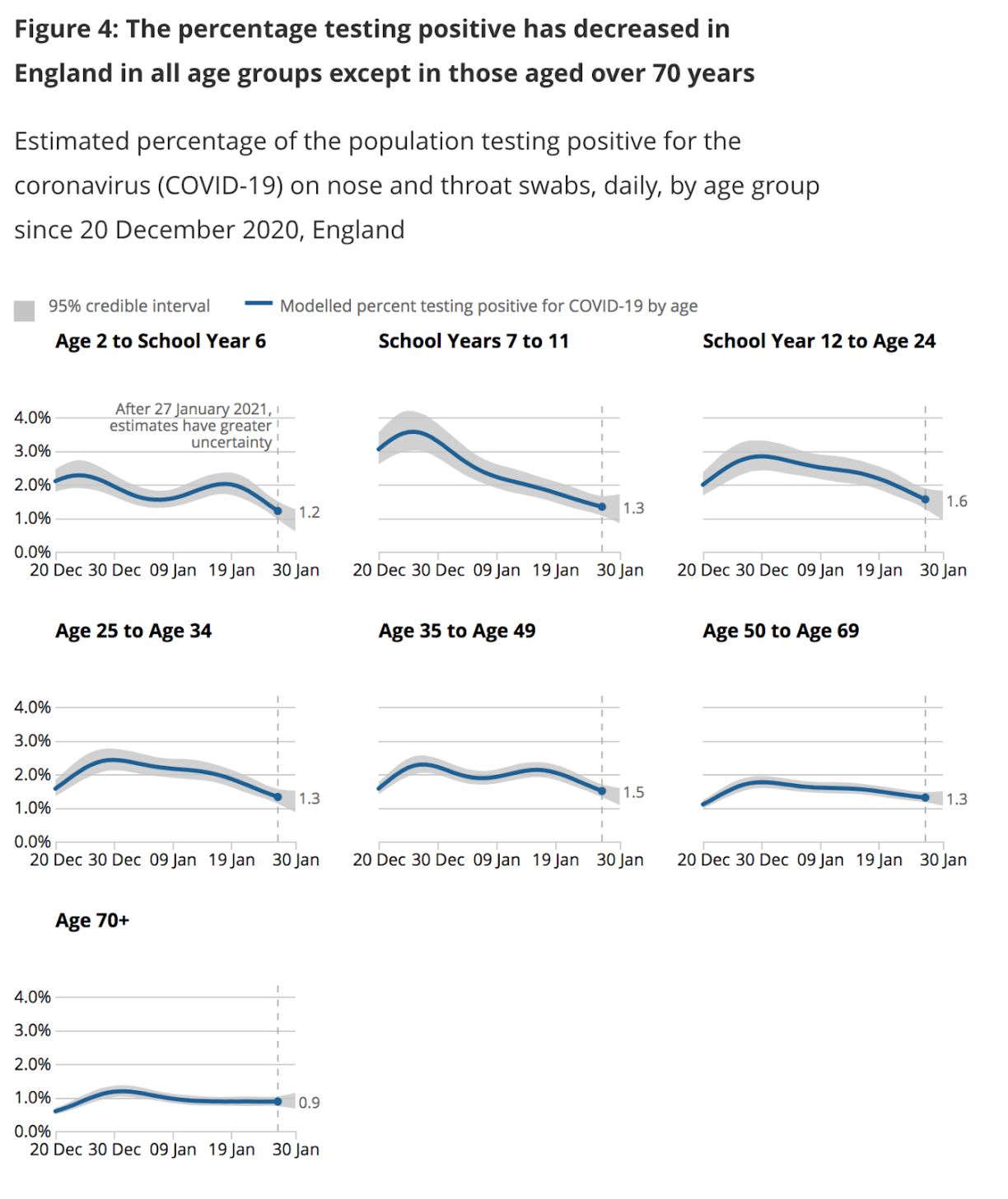
In a tweet from 8 January 2021, German virologist Christian Drosten points out that 1% of adults in the UK were infected with Sars-CoV-2 before the Christmas holidays. Among pupils in primary school it was 2%, and among older pupils it was 3%. During the holidays, prevalence had decreased among schoolchildren but increased among adults. Christian Drosten therefore wondered if there were still doubts about the role of schooling in the spread of the virus.
Not only can the UK vaccinate quickly, it is also a world leader in pandemic data analysis. If one looks at the latest figures for 5 February 2021, you can see that in the UK, the presence of the virus is between 1.3% and 1.6% in virtually all age groups. Schools in the UK are closed until at least mid-February.
There is now a large consensus in science that schools have an impact on the pandemic, and that there are more infections when schools are open than when they are closed.
The coronavirus spreads rapidly through social contact. If there are more contact opportunities, naturally the infections will follow suit. Last week, 25 of the positive cases detected could be traced back to an infection chain within the school, compared with one single case the previous week. Isolated infection cases have doubled.
As the coronavirus is a novel virus to us, most people are immunologically naive, unlike with other infectious diseases. The older an individual, the more contact the immune system has had with infectious agents. Therefore, one would assume that the immune system is better prepared for new diseases.
However, this is not the case for Sars-CoV-2, as both old and young people are encountering this virus for the first time. A British study published in Nature shows that individuals under 20 are, generally-speaking, half as sensitive to an infection as those over 20. The impact of the new variant could not be verified in this study.
When schools are open there is more social contact. Due to the increased activity and interaction, it would be normal to assume that there is a higher number of infections.
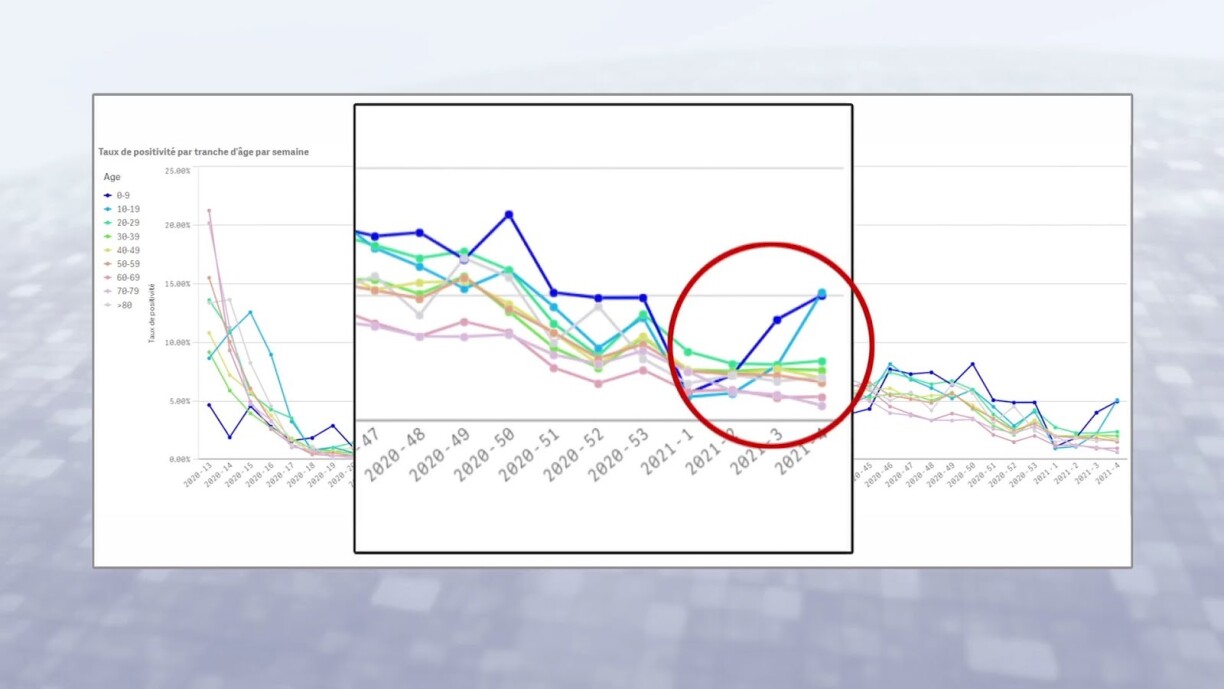
The numbers of infection have been on the rise in the past few days at the time of writing. When analysing the weekly report issued by the Ministry of Health, the numbers notably increased for the younger age categories between 0 and 19 years.
It must be noted that Luxembourg counts several measures to prevent the spread of the virus within schools. Masks are mandatory almost everywhere and carbon dioxide detectors are supposed to help with better ventilation systems, thus preventing potential infections. Mobile testing groups have also been employed to break infection chains.
In the case of an infection, the ministry has launched a plan composed of various stages. All those measures have helped in flattening the curve, even if not every infection can be prevented.
Further reading: Primary schools return to distance learning from Monday
Despite all the measures put in place in Luxembourg, infections in schools seem to rise nonetheless.
The variant of the coronavirus B.1.1.7 was first spotted in the UK back in November of 2020. It was assumed that the variant spreads quicker among children and youngsters.
A report by the British Health Services published in January concluded that all age groups are equally affected, namely that the variant is slightly more infectious. They even proved that children under 10 years old are only half as prone to infection as others. Health officials linked the higher numbers of cases of December to the fact that schools were open before the Christmas holidays.





