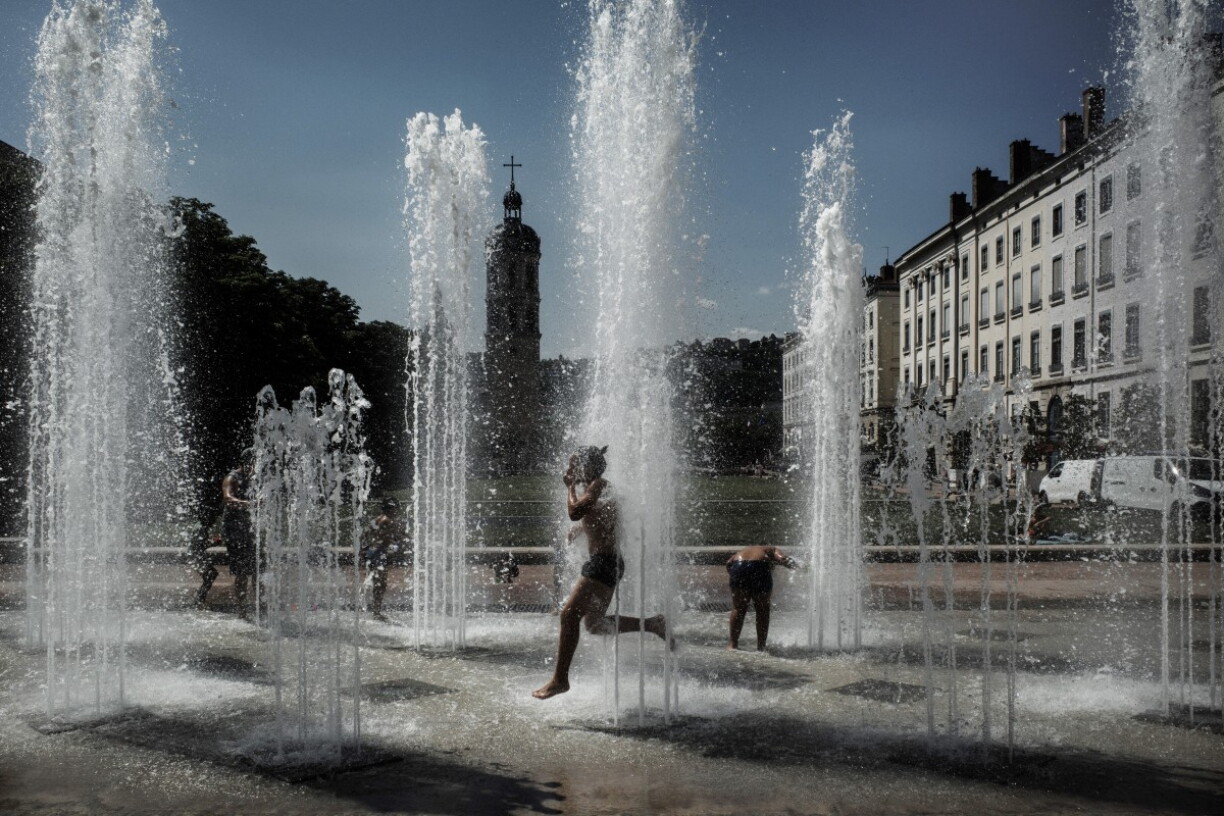
Central Europe is experiencing an intense heatwave, with several countries facing temperatures approaching record levels. Authorities across the region have implemented emergency measures in response to the increasing wildfire risk and increased pressure on water and energy networks. In Hungary, the national meteorological service has forecast temperatures of up to 39°C on Friday, with highs between 40°C and 41°C expected over the next six days.
Local residents are trying to adapt to the stifling conditions. In Budapest, some are choosing to spend time outdoors in shaded areas, as keeping cool indoors often means closing shutters and curtains to block out the sun. Hungarian Prime Minister Peter Magyar has called on industry to voluntarily curb electricity usage to prevent an energy crisis, announcing that public building illuminations will be switched off. Meanwhile, thousands of people in Szentendre are without water, prompting the military to step in and provide drinking water to residents.
The heat is also affecting rural communities. In Pilisszentkereszt, a village north of Budapest, households are subject to water restrictions. One local retiree reported that he and his wife are limiting their water usage to 15-20 litres per day for basic needs such as washing, cooking, and watering their garden.
Neighbouring Slovakia is under nationwide heat alerts, with the highest warning level issued for the south-west of the country. The Slovak hydrometeorological institute expects temperatures to hover between 34°C and 39°C until Sunday. To help the population cope, the authorities in Bratislava have set up more than 30 cooling stations, offering air-conditioned spaces, drinking water, and sanitary facilities.
For many, the heat is becoming increasingly difficult to bear. A pregnant local described the conditions as "unbearable", saying she feels much more tired as a result. Meteorologists have also warned of an elevated risk of wildfires throughout much of Slovakia.
Slovenia is experiencing similar risks. The national environment agency (ARSO) has declared an "extremely high" risk of wildfires in the west of the country and has banned a range of activities that could spark fires. Climatologists say this heatwave is exceptional not only for the high temperatures but also for its duration, with daily highs above 35°C expected to last a record number of days. To reduce the risk of railway accidents caused by heat-induced rail deformation, Slovenian railways are lowering train speeds in certain areas during the afternoon. On the Adriatic coast, sea temperatures may exceed the historic high of 30.4°C recorded in 2010.
Elsewhere in the region, Romania has issued yellow and orange warnings for western areas, where temperatures could reach 40°C this weekend. Meteorologists are not ruling out the possibility of a red alert in the coming days. In Austria, highs of up to 39°C and even 40°C have been recorded in the east, with the heatwave likely to persist into early next week. The weather service GeoSphere Austria notes that this surge in temperatures comes amid an "extreme" drought, with rainfall since the start of the year down by about 30%. The first seven months of 2026 are now the driest since the early twentieth century.
Luxembourg will also feel the effects of the heat in the coming days, although not to the same extreme. Temperatures are set to rise to between 33°C and 35°C on Monday, following highs of 27°C to 29°C on Saturday and up to 30°C to 32°C on Sunday.
From Tuesday, temperatures are expected to dip slightly, with maximums around 29°C to 31°C before falling to 28°C to 30°C on Wednesday. MeteoLux forecasts also suggest the possibility of some showers at the start of the week.





