This is an opinion article. The views expressed belong to the author.
The Egyptian, Persian, Mongol, Ottoman, British and American empires had little in common. They emerged hundreds of years apart, followed different religions and fought with completely different weapons.
Yet, there is a strange pattern in how they became militarily dominant. Each found a new way of combining two things – movement and firepower.
Firepower allows you to destroy an opponent. Movement allows you to take that firepower somewhere the opponent cannot stop it.
Whenever the two came together in a new way, the military balance changed. And quite often, an empire followed.
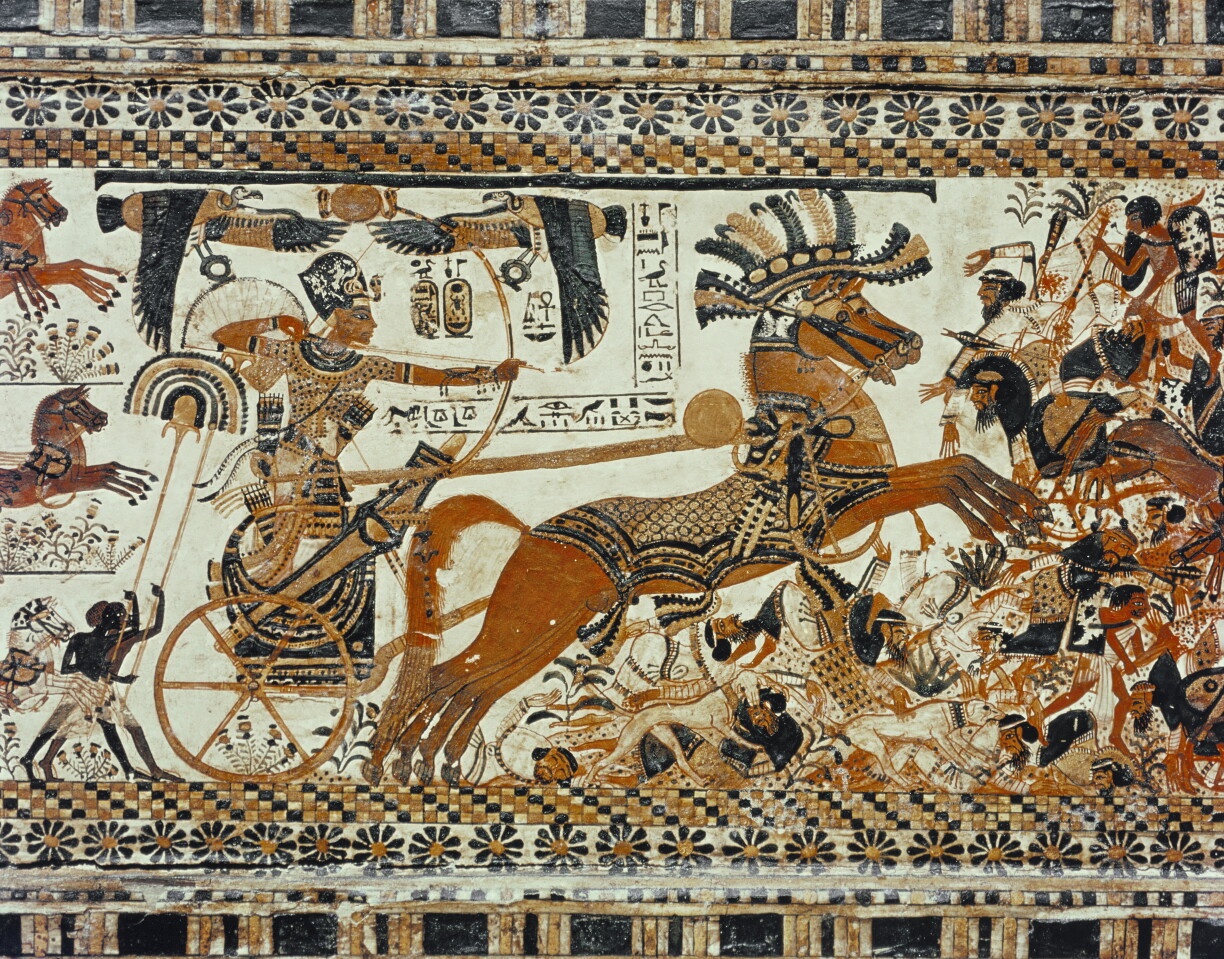
Around 3,500 years ago, Egypt encountered a military technology it did not possess. The Hyksos had introduced horse-drawn chariots into Egyptian warfare.
The Egyptians eventually defeated them, but more importantly, learned from them.
Egypt adopted the chariot and combined its movement with the firepower of the composite bow. An archer was no longer moving at the speed of a man. They were moving at the speed of a horse.
Under the New Kingdom pharaohs, Egyptian armies pushed deep into the Levant and Nubia. Egypt became an imperial power.
Then someone removed the chariot.
Putting the warrior directly on the horse made movement even more flexible. The Assyrians had already developed cavalry extensively, but the Persian Empire took mounted warfare to an enormous scale.
Under Cyrus the Great and his successors, the Achaemenid Empire expanded from Central Asia and the Indus towards Egypt and the Mediterranean. At its height, it was the largest empire the world had yet seen.
But movement could still become deadlier. Someone combined cavalry with ranged firepower.
The Mongols invented neither the horse nor the bow. They simply mastered the combination.
A Mongol warrior could move rapidly while firing from horseback. Chase them and they could retreat. Run from them and they could pursue.
Genghis Khan and his successors combined mounted archery with extraordinary organisation, intelligence and discipline. The result was the largest contiguous land empire in human history.
Then another technology changed the equation.
Movement could conquer territory, but walls could stop it. Gunpowder provided enormous new firepower against them.
The Ottomans did not invent gunpowder or the cannon. They incorporated gunpowder weapons into an extraordinarily successful expansionary military system.
The defining moment came in 1453: Constantinople had survived attacks for centuries behind formidable walls. Mehmed II brought massive artillery against them.
The walls fell.
The Ottoman Empire subsequently expanded across southeastern Europe, the Middle East and North Africa. Firepower had broken one of the great barriers to movement.
The Europeans then put that firepower on ships.
A cannon on land could destroy whatever was within its range. Put it on an ocean-going ship and that firepower could travel around the world. Portugal, Spain, the Netherlands, France and Britain increasingly combined sailing technology with naval artillery.
Britain eventually took this combination further than anyone else and the result was the largest empire in recorded history. Movement and firepower had conquered the oceans.
Then humans replaced wind and horses with engines.
The tank combined movement, armour and enormous firepower in one machine.
The real transformation, however, came from combining tanks with trucks, motorised infantry, artillery, aircraft and radio.
Nazi Germany demonstrated what that meant during the opening years of the Second World War.
Poland fell. Then Denmark and Norway. Then Belgium, the Netherlands and France.
Germany did not invent the tank. It exploited movement, concentrated firepower and communication better than its opponents. Blitzkrieg took firepower further and faster than its opponents could respond.
Then movement left the ground altogether.
Aircraft removed one of the oldest limitations on military power: geography.
Mountains could be flown over. Rivers no longer required bridges. Firepower could travel thousands of kilometres without conquering the territory in between.
After the Second World War, the United States took global air power further than anyone else. It did not invent aircraft, but combined aircraft carriers, overseas bases, aerial refuelling and precision weapons to project military power almost anywhere on Earth.
The result was not a territorial empire like Egypt, Persia, Mongolia, Ottomans or Britain. It was global military hegemony.
And now movement and firepower have combined again in a different arrangement.
A drone does exactly what these earlier technologies did. It combines movement with firepower. But it adds something important: cost.
Drones can increasingly move firepower over enormous distances at a fraction of the cost of conventional aircraft and missiles. Most importantly, the human no longer has to move with the weapon.
The chariot carried the warrior. The horse carried them. The ship carried them. The tank protected them. The aircraft carried them into the sky.
The drone leaves them behind.
History gives us an uncomfortable pattern.
Egypt expanded with chariots. Persia with cavalry. The Mongols with mounted archers. The Ottomans with gunpowder.
European empires with naval cannons. Nazi Germany briefly overran much of Europe with mechanised warfare. American air superiority helped underpin an era of global military dominance.
None of these technologies created those empires by themselves. Economics, politics, leadership and organisation mattered enormously.
But military superiority gave them something indispensable – the ability to impose power further than their opponents could stop it.
Drones may be the latest step in that 3,500-year story. They are becoming cheaper, faster, longer-ranged and increasingly autonomous.
If history repeats itself, somebody will eventually understand this combination better than everyone else. And if history is any guide, that advantage will not remain unused.
The question is no longer whether drones will change warfare. They already have.
The more unsettling question is: If every great leap in moving firepower helped create a new military hegemon, who will the Drone Age create?
About the Author: Waqas M. Awan is a Luxembourg-based corporate professional and the author of Power of Sage: An Anti-thesis to Machiavellian Prince. He writes on economics, geopolitics and power systems at his Substack publication Perspectives (waqasperspective). He has held senior finance roles at Amazon, Kraft Heinz and KPMG.





