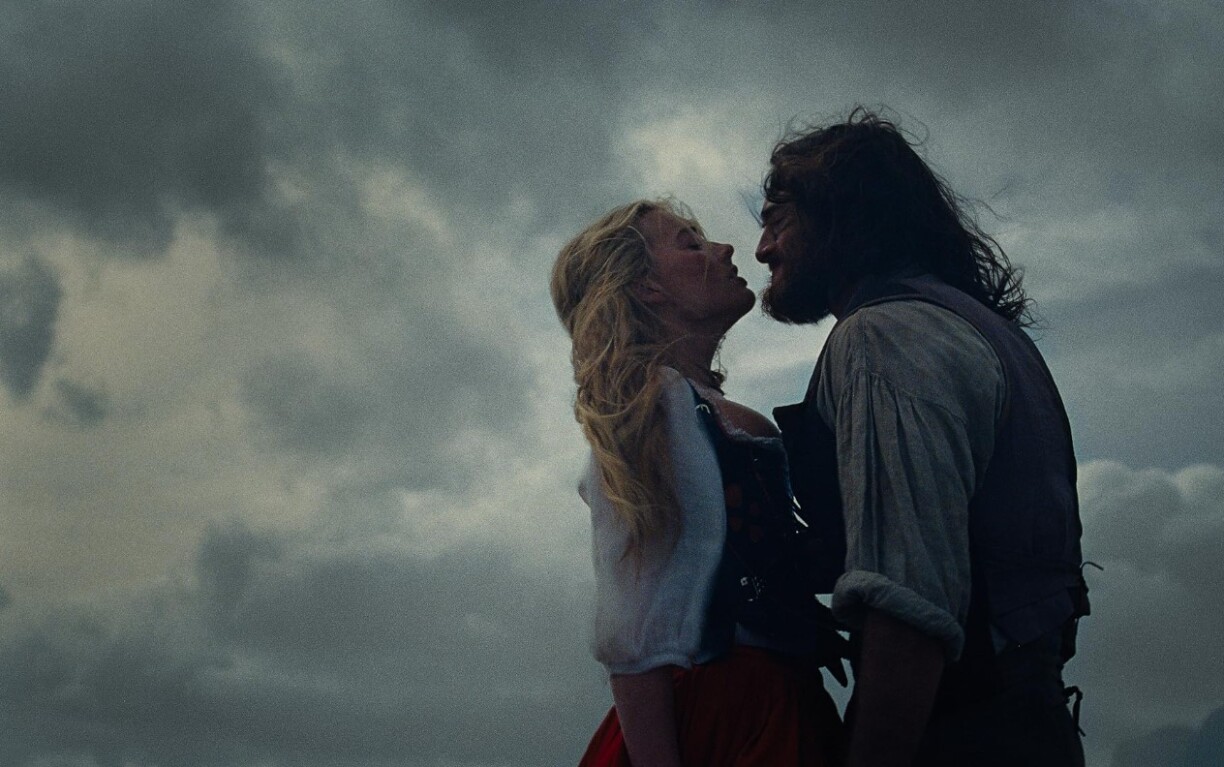
I am well aware that a film adaptation does not have to abide by its written precedent completely, yet this felt like Emerald Fennell ripped the novel apart and corrupted the characters to be vengeful and vicious people.
Let’s start off with some good aspects of the film: I really enjoyed the nature scenes, namely the misty moors and the moodiness of Wuthering Heights and the weather in general.
Nonetheless, the nature scenes contrasted heavily with the dresses Catherine wore after she met Edgar Linton. Some of them looked like they were taken right out of Alice in Wonderland, they were just too bright for the overall mood.
In addition, Heathcliff is wearing hoops when he returns and they are wearing sunglasses that look like they were trending in the 2000s? How is that period appropriate Ms Fennell? The premise of Catherine and Heathcliff’s intense yearning for each other was also kept intact, although sometimes their relationship, or adulterous affair, seemed a bit too kinky and modern for my liking.
The film greets you in its opening scene with a man being hanged. Everyone appears to be excited for ‘hanging day’, for making the ‘sinners’ pay for their deeds to the extent that women are visually aroused by it. I guess this was done to prepare the audience for Zillah and Joseph’s sexual relationship later on, yet I still do not get why the film had to start with such a violent image.
The violence continues as we get to know Mr Earnshaw, Catherine’s abusive and drunk father. His storyline was quite prominent throughout the film, which presents a first difference to the book. Nevertheless, how Mr Earnshaw treated Heathcliff and his other servants serves as an explanation for Heathcliff’s barbaric traits as an adult.
The fact that they cast Heathcliff as a white man and Edgar Linton as a person of colour has also provoked for a lot of criticism. In Bronte’s "Wuthering Heights", Heathcliff is supposed to be racially ambiguous, a critical point of his and Cathy’s relationship, which the producer ignored.
I could go on about comparing the book to the novel for hours, so let me get to the main point where the novel was entirely disregarded. For those of you who still want to watch the film, stop reading now.

For those of you who don’t, who I applaud, the main disregard is Cathy’s death and the death of her son.
In the novel, Catherine dies soon after childbirth, supposedly due to her mental illness. The child who is born is also called Catherine, not like in the film, where Edgar Linton tells the viewers that their family is expecting a son. Catherine loses her son after months of lying in bed after her heated affair with Heathcliff.
Although she keeps telling Nelly she has lost the child already, Nelly ignores it and believes Cathy is being dramatic. As a result, she dies of sepsis. What I found interesting in the film is that Cathy’s mental illness is represented as intense heartbreak rather than a serious disease.
As for the characters, Catherine becomes meaner when she realises young Isabella has developed a liking for handsome Heathcliff. She even threatens her and ridicules her in front of Heathcliff. Isabella becomes their little toy; Heathcliff merely marries her to torment Catherine, which is an aspect of least importance in the book. Furthermore, the truly problematic scene of the many in this film is the pet-play Heathcliff engages in with Isabella, who is represented to enjoy it.
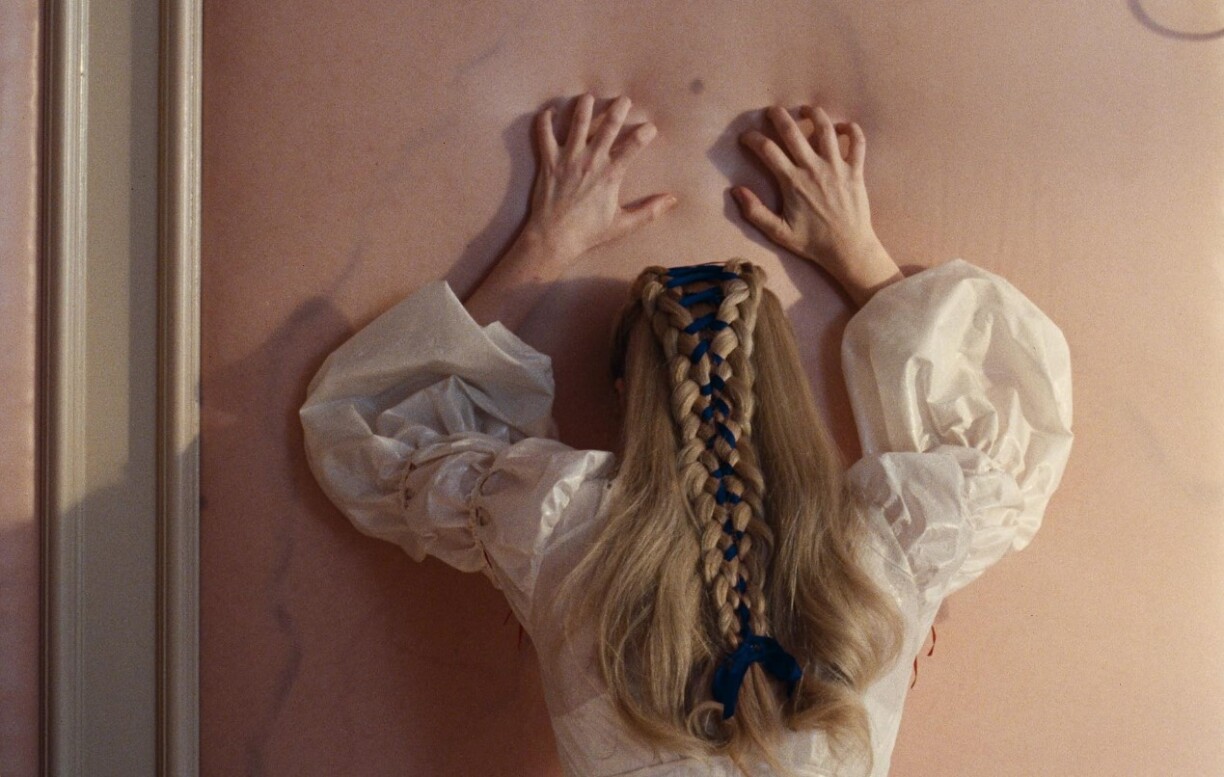
In the cinema, people were laughing at Isabella barking and wearing a leash, though it was far from funny in my opinion. There again I asked myself, why is this film so kinky?
This scene is preceded by other abusive scenes between Isabella and her husband, in which abuse is glorified as being arousing. Heathcliff disrespects Isabella and uses her purely to arouse Catherine’s attention.
I do not know what they did in the 19 th century but I think this takes it a step too far. The same goes for Cathy and Heathcliff’s affair: their longing for each other across all those years is embodied by numerous erotic scenes which take up a good third if not more of the film. Their longing was embodied through the physical touch, though I did not feel an overflowing chemistry between them.
The film ends in intense sorrow with Heathcliff grieving Cathy’s death, which did make me well up I have to admit, but at this point there was nothing left to save in this film.
All in all, as you can tell, I did not enjoy the film. I am still shocked about what Fennell did to this beloved classic, and as someone who is very fond of the Brontë sisters, this was an offensive film to Emily Brontë.
I hope Emerald Fennel never has the idea to adapt Jane Eyre into film, or if she does, she should at least read the book again after reading it at the age of 13.