Abrigado is a centre run by the National Committee for Social Defence (CNDS), located in the capital's Bonnevoie district. It is well known for its distinctive container building, which many people have at least seen from the outside, if not passed by regularly.
Abrigado provides a safe space for people struggling with addiction, offering both a supervised drug consumption room and a night shelter for those in need.
The night shelter opens its doors at 10pm. Many of the people who spend the night there are regulars, greeted by name by the support workers on the late shift. Those who stayed the previous night are assigned the same bed.
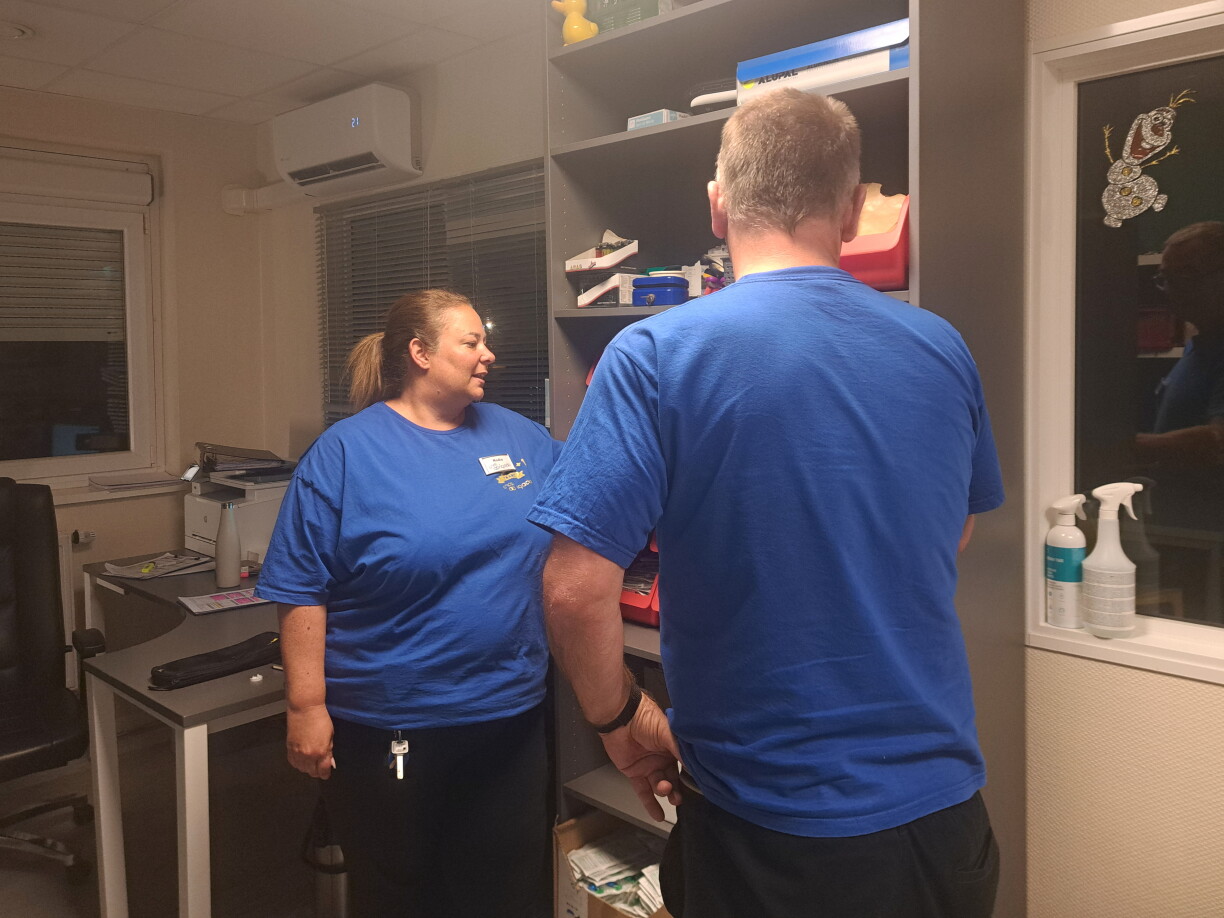
At reception, in addition to checking in for the night, visitors can request clean drug use materials, explains Michael Jung, who has worked at Abrigado's night shelter for seven years. Alongside him is Nadia Baciotti, the shelter's coordinator, who has been working night shifts for an impressive 17 years.
According to Baciotti, the primary aim of the night shelter is to offer people a roof over their heads, as well as a space where they feel safe and protected. The facility has 30 beds for men, 11 for women, a communal lounge, and bathrooms with showers.
On an average night, between 25 and 30 beds are occupied. One of them tonight is Ado, who, at 37, has been coming to Abrigado on and off for five years. He has been using cocaine since 2010, and for him and many others, the shelter is a lifeline.


Each person who comes to the shelter has their own story, says Baciotti. Some stay at Abrigado every night, while others come only occasionally. The only prerequisites for a bed are that the person must be at least 18 years old and must have a contract from the supervised drug consumption room, which is located below the shelter and currently only open during the day.
Since the night shelter opened at the end of 2003, nearly 3,400 such contracts have been signed. However, it is important to note that this number includes some people who do not use drugs but were allowed to stay in the early years, a policy that has since changed.
As needs have evolved over time, so too has the shelter's approach, Baciotti explains.
For instance, a substitution programme was introduced during the pandemic. Each morning at 6.30am, a nurse visits the night shelter to provide substitution medication to those who have spent the night, helping them avoid withdrawal symptoms and begin the day in better health.
This, says Baciotti, was an important step forward for their clients.
Over the years, Luxembourg's drug scene has changed, and the services offered at Abrigado have adapted accordingly. When Baciotti first started working at Abrigado in 2009, heroin was the main drug in use; now, there has been a sharp increase in cocaine and crack.
These changes impact both users' behaviour and sleep patterns. She notes that now, at night, people go outside more often to use, especially with cocaine, observing that they are more restless and have trouble sleeping.
This is a key reason why the consumption room will begin opening at night from October. Currently, no drug use is permitted inside the night shelter itself, so people have to leave the building if they wish to use.
From October, clients will instead be able to access a safe and supervised space downstairs. For many, Abrigado is the first step towards greater safety and, potentially, stability.
If they choose, residents can be referred to other support services, as was the case for David, who credits Abrigado with helping him move forward. He recounts that when he was ready, staff referred him to Taba, another CNDS service.
Nonetheless, David stresses that you have to be ready to take that step yourself, though; otherwise, nothing changes.
Now in his 50s, David heads to work after spending the night at Abrigado, something he says would not have been possible without support. He reflects that he comes from a good family, but he experienced a life-changing emotional shock. He did not know anything about this social environment before, and to come here, he first had to accept his own situation.
After years working in addiction services, Baciotti is convinced that no one is immune to misfortune. She stresses that anyone can experience an event that knocks the ground out from under them, adding that this is something society needs to reflect on, because anyone could find themselves in need of help tomorrow.
On this particular night, 26 men and two women spent the night at the shelter – most of them are over 45 years old. Everyone must leave the building by 7.15am.
By the end of 2027, Abrigado is expected to move into another temporary structure. The reason: the site currently occupied by the containers will be redeveloped to house a permanent facility.
Luxembourg City authorities say the goal is to have a long-term solution in place by 2035, although the specifics have yet to be finalised. The City points out that the drug scene continues to evolve, and the services must be adapted accordingly.
The Ministry of Health has confirmed that the 2035 timeline remains in place.