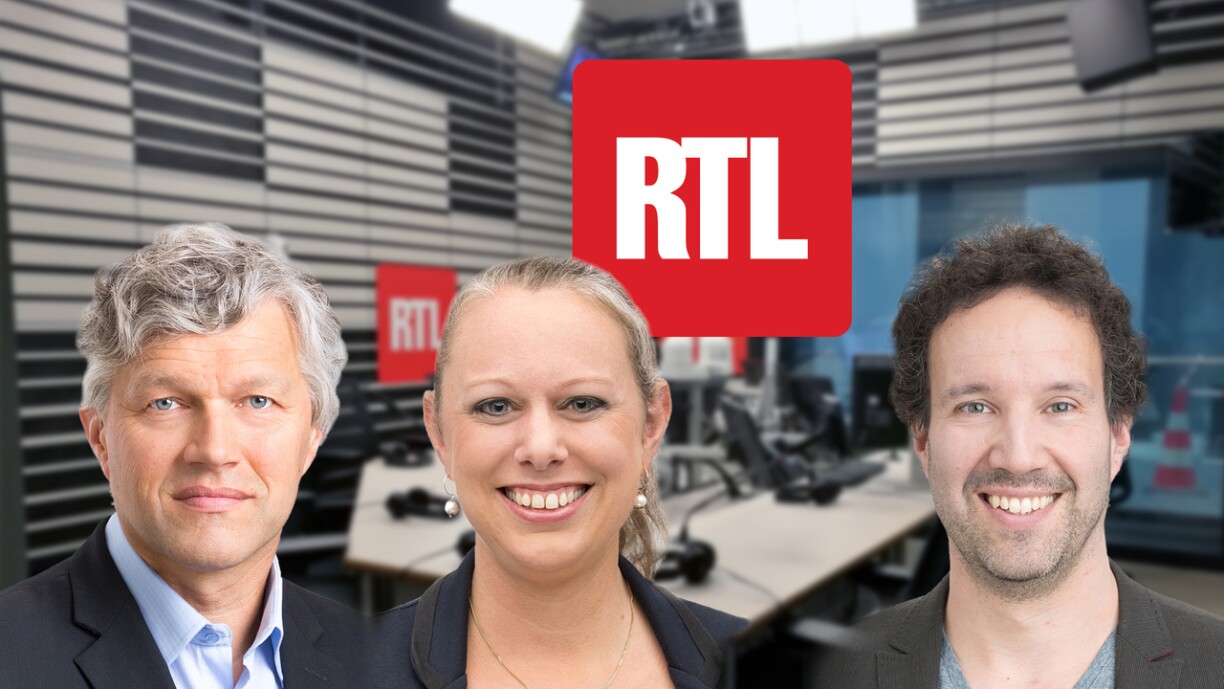
What must be done is enormous. How it can be achieved is still yet to be decided. A lot is going well, a lot is still missing. And it comes down to convincing everyone to get on board.
In a nutshell, these are the conclusions of the round-table discussion on climate protection and the United Nations Climate Change Conference.
The guests were Minister for the Environment Carole Dieschbourg, who participated remotely as she is still in Glasgow for the Conference, Director of Greenpeace Luxembourg Raymond Aendekerk, and MP Paul Galles from the Christian Social People's Party (CSV), who has just recently returned from Glasgow.
Galles stated that while everyone has highly ambitious goals, there is still no actual plan to reach these lofty targets. The MP describes the situation as "paradoxical".
Nevertheless, Galles also said that a conference such as COP26 is "exciting" and "worth the effort" because it allows climate activists to meet politicians. The CSV MP thinks that Europe's leading role is "highly interesting" and that young people are right to question everything.
Galles also stressed that the social aspect of climate change must not be neglected. Climate protection is often expensive, and poorer countries are suffering the consequences of the lifestyle of wealthy nations, Galles pointed out.
While he welcomes the interim arrangements concluded in Glasgow, Director of Greenpeace Luxembourg Raymond Aendekerk stressed that they are "not enough".
Large developed countries have made promises to become climate neutral, but the decisions they then take on a national level are far removed from these promises, Aendekerk criticised.
Minister for the Environment Carole Dieschbourg described the overall atmosphere as "positive". However, Dieschbourg acknowledged that decisions are not reached fast enough at the moment, admitting that young climate activists such as Greta Thunberg are right to call this out.
Referencing a statement by Thunberg, the Minister nevertheless stated that COP26 is more than just "blahblahblah". Dieschbourg argued that it is normal that discussions between almost 200 countries take some time. "We are fighting as bridge builders", the Minister stressed.
According to Dieschbourg, large polluters such as China or India must still be convinced to sign more ambitious agreements. Even though negotiations involve almost 200 countries with in part different interests, the Minister stated that they were never "frustrating".
The current proposal for the final declaration, which has yet to be approved, contained important progress, Dieschbourg said. For instance, a guarantee for more inclusivity that would allow indigenous populations to participate in the discussions.
Meanwhile, Raymond Aendekerk criticised that the financial sector continued to invest in fossil energies even after the Paris Agreement was signed.
The director of Greenpeace Luxembourg stated that because of this, he is interested to see to what extend lobbyists will be able to "water these climate agreements down". Aendekerk stressed that Greenpeace is in favour of a broader and more general system change.
All three guests stated that they understand the concerns of business owners, who feel left alone with implementing climate protection measures.
Aendekerk and Galles both demanded more urgent aid for companies to allow them to install solar panels on their offices or factories, for instance.
For her part, Dieschbourg pointed to the numerous premiums and bonusses already available to companies, while also promising that they will be further improved, and in part even paid out in advance, in the future.
The Minister stressed that companies in other countries are "envious" of these aids available to Luxembourgish companies but added that companies nowadays must be prepared to invest in future technologies.
LIVESTREAM: RTL Radio Lëtzebuerg live lauschteren.
Klimaschutz an de Betriber: "Schwätzt mat eis" (Reportage vum Annick Goerens)