Syprolux came to the conclusion on Saturday that the political decision to fully subsidise public transport is coming too early. In terms of the subject, these concerns are shared by organisations across the border.
The 'Amis du Rail' union raised a number of issues in a press release, including parking at the borders, delays, and a lack of customers.
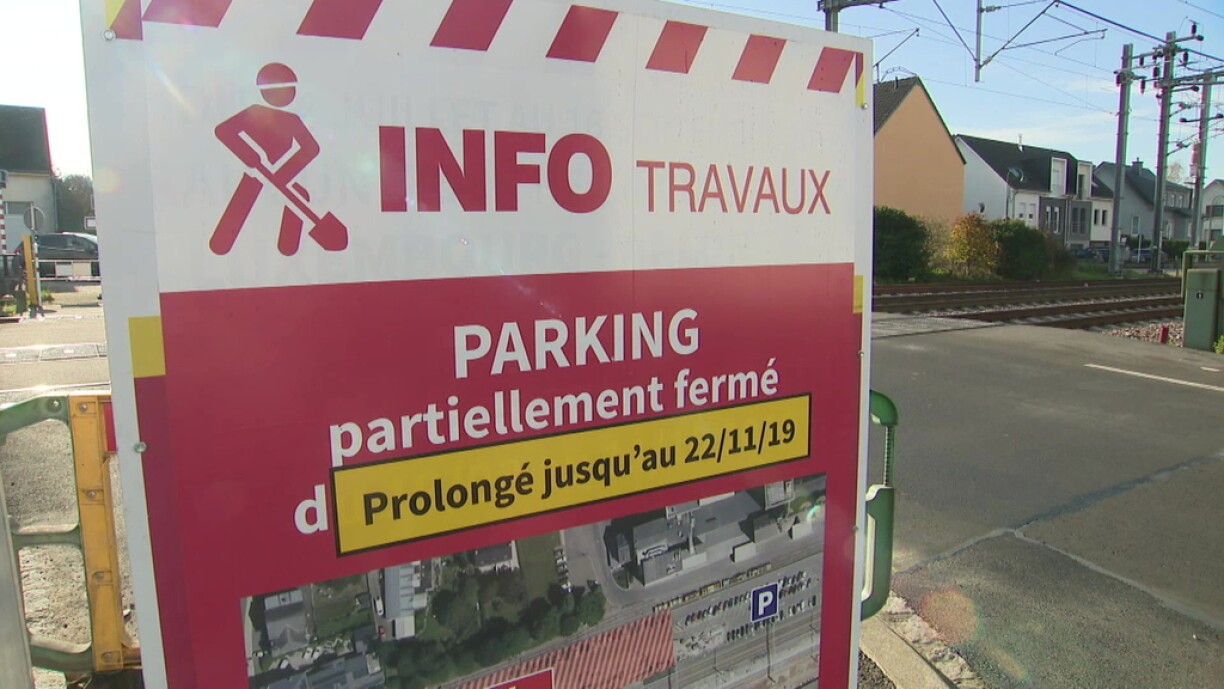
Concerns notably surround the Park&Rail at Kleinbettingen station. The infrastructure of the car park is currently being modernised and will offer 138 parking spots, according to the CFL website. The 'Amis du Rail' believe that these spots will all get filled very quickly once public transport is free. At the same time, those travelling from Arlon - only several kilometres away from Kleinbettingen - will still have to pay for the journey, despite onward travel being free.
Some of the biggest issues affecting cross-border workers from Belgium are delays, train breakdowns, and journey times being longer. According to the union, the prospects for improvement are bleak.
Whilst Luxembourg's authorities may have completed engineering works on the Grand Duchy's side of the route, their Belgian counterparts expect works to take some time. Notably, the station in Arlon will not be modernised in time for free public transport, as the date for works concluding is at the end of 2020.
A key issue is that rail traffic at Arlon station will cease completely over three weeks in the summer, to allow the three platforms to be extended. Once extended, the 350-metre long trains from Brussels will be able to stop in Arlon from 2022 onwards. The trains will not be able to continue onward journeys into Luxembourg.
Between 2012 and 2018, the route linking Arlon and Luxembourg has lost 15% of its customers, which the union attributes to people being fed up.
In the summer of 2014, the Arlon mayor Vincent Magnus met with then-Minister for Sustainable Development, Francois Bausch. The meeting in Viville was meant to lead to a largescale Park&Rail with more than 1,000 spots, but the Belgian government struck the project from its list of priorities.
The group concluded that patience is required for improvements and, more generally, for the rail line connecting Luxembourg and Brussels. This has been a longstanding issue, as the press was already alerted to railworks in 2007. Twelve years ago, authorities committed to connect the European capitals with trains travelling at 160km/h by 2013. The latest information suggests high speed trains cutting the journey to two hours and five minutes should not be expected before 2026.





