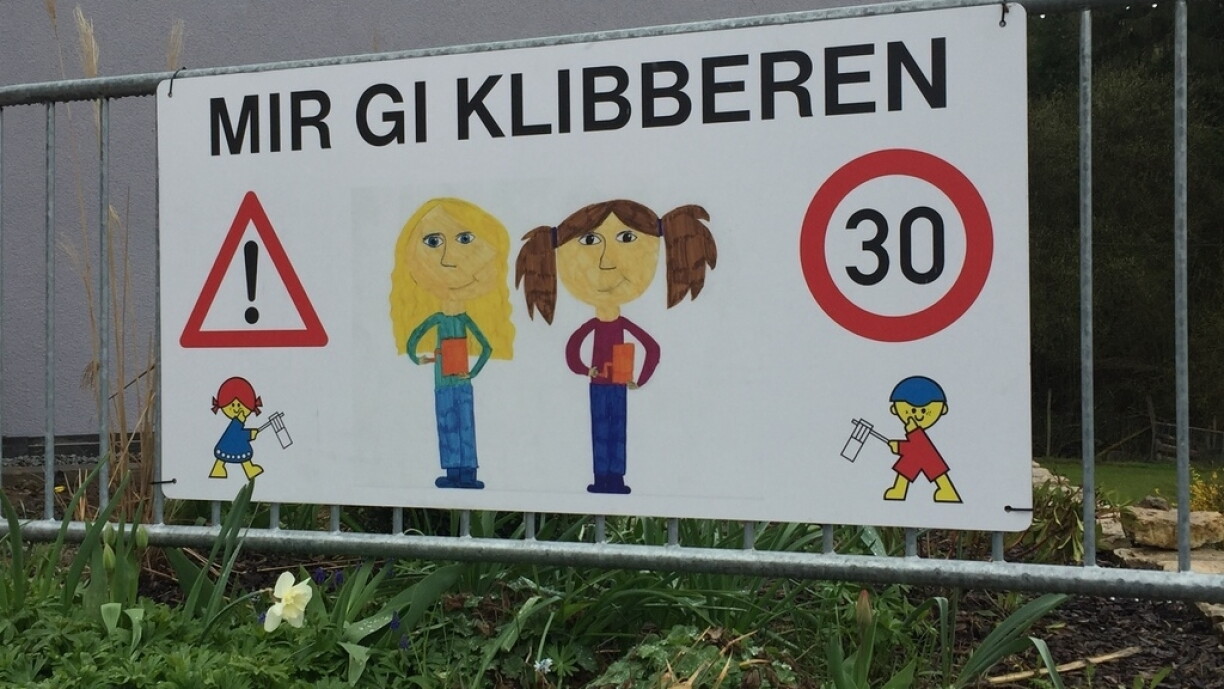
Now however, young boys and girls alike have taken over these religious rites. You may spot them patrolling the streets, morning, afternoons and evenings, armed with rattles. More likely is, you'll hear them and the noise they're making. Try not to be alarmed, as it's nothing nefarious. Participation is voluntary, but rewards in the shape of money, chocolate and Easter eggs are very welcome.
Saturday Easter egg Hunt
Recently the tradition seems to be declining. While most neighbourhoods and villages echoed with the sound of rattles, many places are now left quiet. Often only the morning chimes reverberate through the streets.
That’s why, if you run into any kids with their rattles, bells or clappers, best drive a little slower.
In order to commemorate the suffering of Christ, no bells, organs, or rattles are allowed in Mass from Holy Thursday to Easter Sunday. Children used to be told that the bells are quiet because they’re being flown to Rome to be blessed.
On Sunday: the Easter mass and the Urbi et Orbi blessings will be streamed on the RTL livestream at 10am.
According to Luxembourgish juror and author Edmond de la Fontaine, "klibberen" can be dated back to ancient Egyptian customs. This is how evil ghosts were warded off during the mourning of Osiris’ Death.
"Klibberen" was also mentioned in a book back in 1482, and Sebastian Franck’s "World Book", published in 1534, stated that the noise was supposed to ring through cities to call people to church.
It is also a custom that takes place during Purim, a Jewish holiday that celebrates the saving of the Jewish people from Haman. During the festival, stories of the Book of Esther are read out, and when the name "Hamam" is said, all the children shake their rattles to drown the name out in noise.





