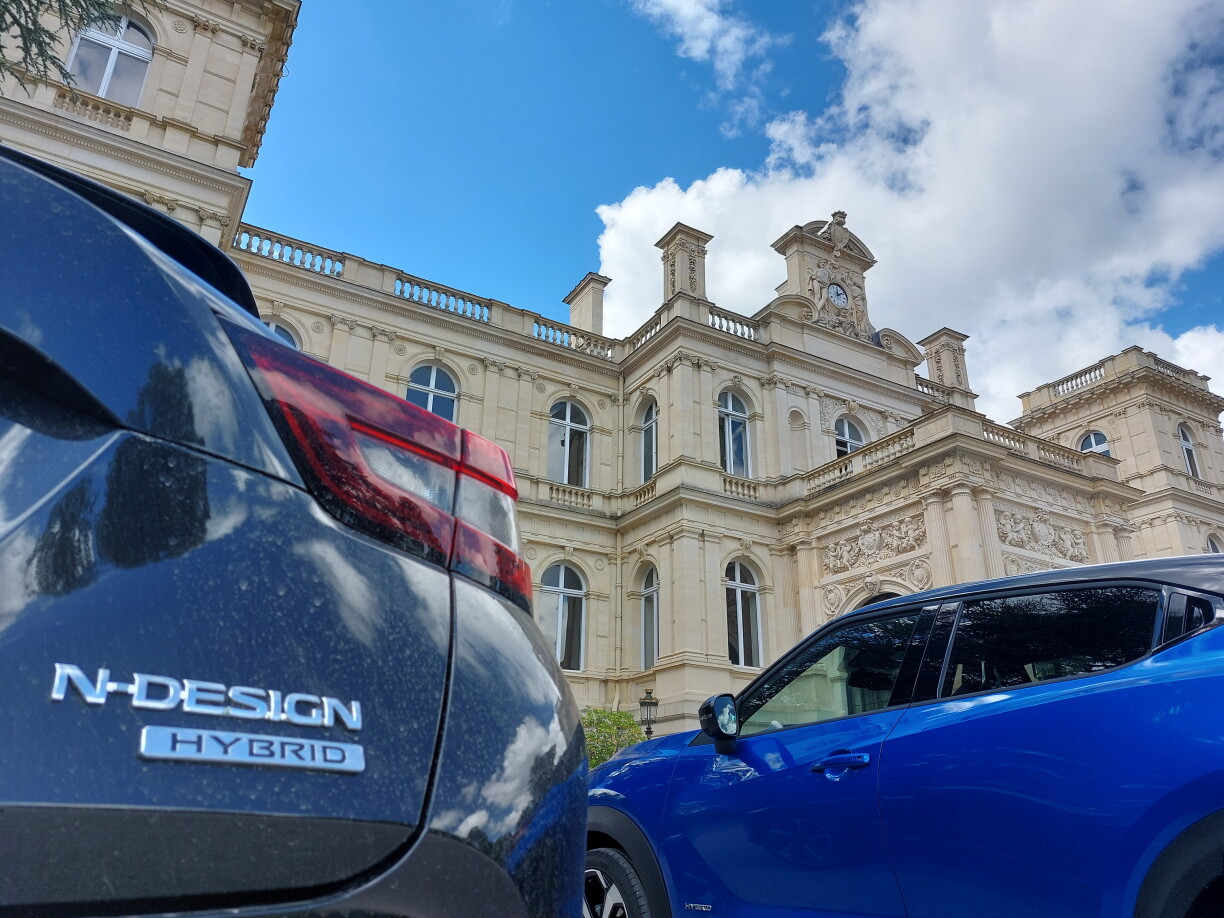
The Chamber of Employees (CSL) and the Ecological Movement (Mouveco) have issued a joint statement criticising the government’s proposed changes to company car taxation, specifically the reintroduction of incentives for hybrid vehicles.
Both organisations single out the planned hybrid benefits as sending the wrong signal for climate policy.
Under the current system, fully electric company cars receive significantly more favourable tax treatment than hybrids and plug-in hybrids when calculating the so-called "benefit in kind" for employees.
However, from next year, the government intends to treat hybrids on par with electric cars for tax purposes. The move constitutes a step backwards, according to the CSL and Mouveco.
Blanche Weber, president of the Mouveco, said her organisation does not understand the rationale behind the proposed amendments to the law.
She pointed out that for years, plug-in hybrids were deliberately given less support, and therefore questioned why the government would now return to favouring them, as was the case five or six years ago. To her, the policy change appears illogical.
At a joint press briefing, both organisations described the planned policy as a false signal and pointed to independent studies, which is now also recognised by the European Union, showing that real-world emissions from hybrid vehicles are 3.5 to 6 times higher than official values.
According to Marc Krier from Mouveco, this discrepancy arises because the official testing procedure overestimates the amount of time hybrids are actually driven in electric mode.
The organisations further criticised the inconsistency in government policy, noting that while the climate mobility bonus no longer offers purchase subsidies for hybrids, tax benefits for company hybrids will now increase.
They argue that this reversal lacks coherence, especially as infrastructure for electric vehicles has largely improved in recent years.
Weber highlighted the lack of clarity in the government’s approach, asking why exceptions are being made for hybrids at a time when incentives and policies should be moving in the same direction.
She referred to the national energy and climate plan (PNEC), noting that Luxembourg is still far from reaching its targets.
Contradictory measures and mixed policy signals complicate public understanding and weaken the state’s position, according to her.
CSL and the Mouveco also questioned the principle of tax-favourable treatment for company cars in general, especially from a social angle.
Citing a 2018 STATEC study, they pointed out that only around 8% of employees actually benefit from a company car.
They argue that public funds should be redistributed to support those unable to afford the switch to electric vehicles, rather than subsidising company cars for the few.
Both organisations firmly reject the government’s current plans and hope the issue is not yet closed.