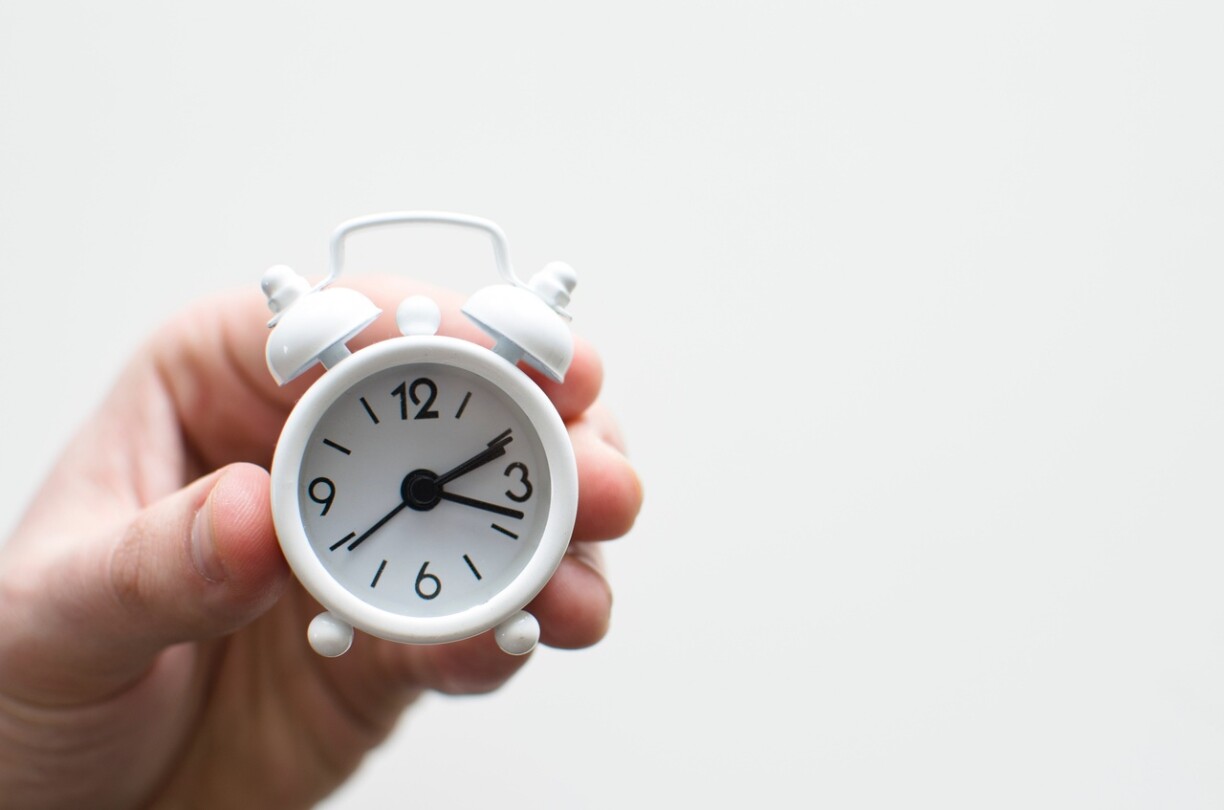
As usual, the question returns to everyone's mouths: 'Do the clocks go back or forward?' We may be used to the routine, but there is always a slight amount of confusion as we near those weekends in March and October. Here, the saying 'spring forward, fall back' is handy to remember just what's happening.
Over the night of Sunday 27 October, the clocks will be put back an hour at 3 am, making it 2 am. Good news, we'll gain an hour's sleep. The bad news is that while the sun will rise earlier, it will inevitably set earlier and the afternoons will be shorter.
The clocks changing this year will be one of the last times this event takes place, after the European Commission and Parliament queried residents on the matter. The majority showed they were in favour of abolishing the whole changing clocks routine. The last time the clocks go backward could thus take place in 2021.
In two years time, EU member states will have to choose between summer time (making the last clock change March 2021) or winter time (with the clocks changing in October 2021).

LSAP MP Mars Di Bartolomeo submitted a parliamentary question to Minister of the Economy Etienne Schneider on how Europe will apply the reform in due time. In his response, Schneider indicated that the European Council has yet to come to a consensus on the matter, fearing different time zones between neighbouring countries. He specified that agreeing to the abolition could only occur after an inter-state takes place, proving that it is possible to maintain a coherent map of time zones within the EU.
The minister added that Luxembourg has taken the time to consult with its partners and neighbours, but even within this small group, there is no consensus. France would like to keep to summer time, whereas the Netherlands have expressed a preference for winter time. Neither Belgium or Luxembourg have expressed a preference whilst they await neighbours to come to a compromise.





