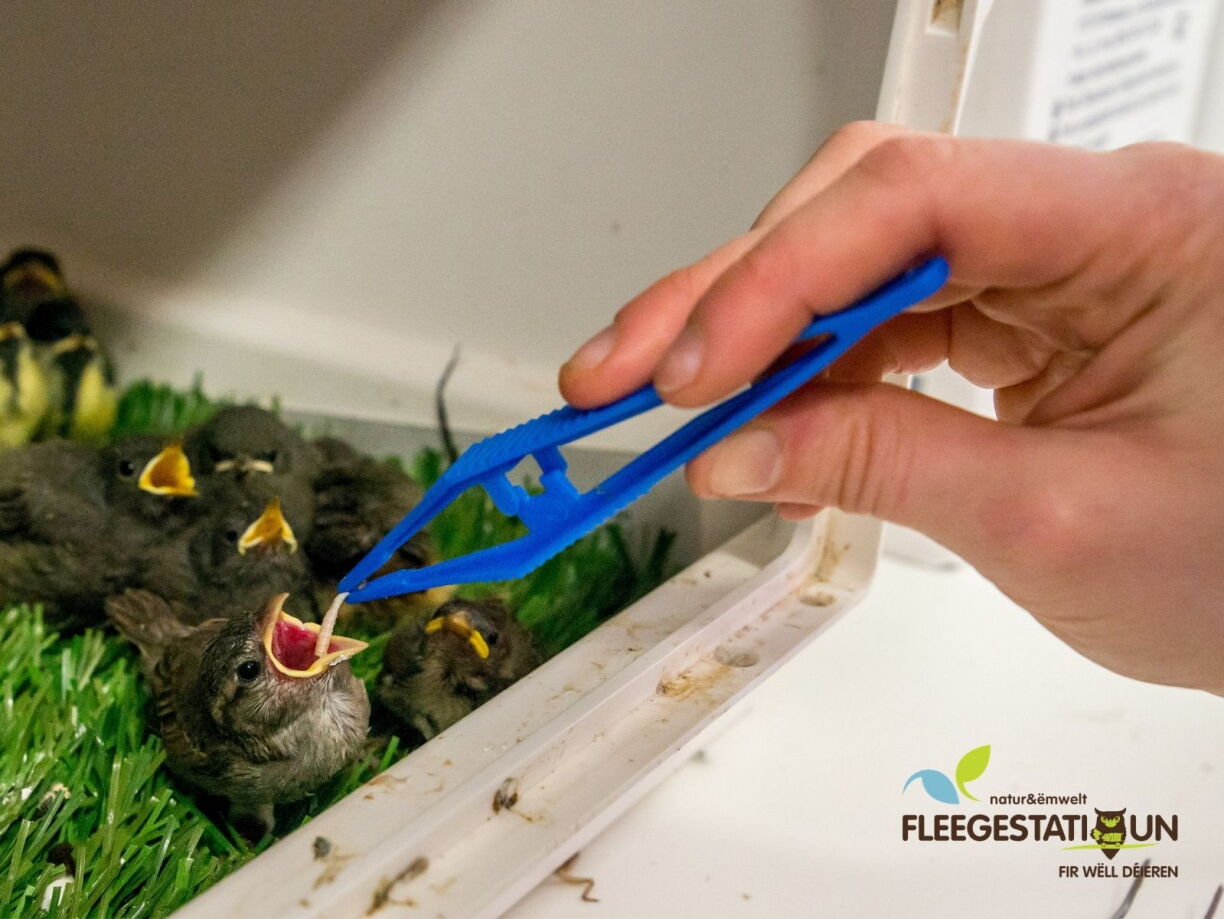
The Dudelange wildlife care centre is struggling to cope with a surge in admissions triggered by the recent heatwave, pushing the facility to its limits.
For nearly 40 years, the sanctuary has been rescuing injured or sick animals and nursing them back to health before releasing them into the wild. However, the scorching temperatures over the past week have led to an exceptional influx of animals, overwhelming the centre's capacity.
"Faced with an exceptional influx of animals and a lack of capacity, we are forced to temporarily close our admissions," the centre announced on Sunday. No further injured animals can be taken in "until further notice."
For now, the centre's teams are concentrating on the animals already in their care. 'It is painful for all of us that we cannot accept any more animals", Roby Biwer told RTL. As president of NGO natur&ëmwelt, he and his teams had to make the difficult decision to close both the Dudelange centre and the various collection points where injured wildlife can be dropped off across the country.
The centre had never before received so many animals each day as it did during last week's heatwave. Biwer cited 65 swallows and more than 100 common swifts as examples.
The young swifts need to be fed approximately every two hours.
"People work late into the night. Then, in the morning, just as the sun is rising, the next animals are already arriving", Biwer said.
The sheer number of animals became too much for the professional carers and volunteers. Biwer said the centre had contacted everyone available to help.
"If we continue accepting animals, we will no longer be able to care for all of them properly", he said.
This could place animals already admitted to the centre at risk of dying because staff would no longer be able to give them the attention they need.
Biwer nevertheless remained optimistic.
"Once the weather settles down, we will be able to accept animals again", he said.
He did not want to give a precise timeframe, but estimated that many of the animals could recover and be released back into the wild next week. Once this happens, the centre will have space to accept new arrivals.
Closing the centre "was painful, but we had to do it", he said.
The teams in Dudelange now have a clear objective: "To nurse as many of the animals currently in our care back to health as possible."
That cannot be achieved if the teams are overwhelmed by the workload.
In recent days, the centre has had to contend not only with the heat and the large number of animals suffering as a result, but also with the fact that other wildlife centres in the Greater Region had stopped accepting animals much earlier.
"People also came here from abroad", Biwer explained.
This contributed further to the pressure on the Dudelange centre.
Biwer told RTL that the teams had done "a fantastic job despite the heatwave".
The wildlife rescue centre in Dudelange is currently being expanded. Although there may still have been enough physical space to accommodate more animals, the centre does not have enough people to care for them, according to Biwer.
The work involves far more than feeding the animals and cleaning up after them. Biwer explained that other tasks include preparing food and collecting, washing, and folding the towels used to keep young birds warm.
Administrative work also needs to be completed.
"Every helping hand is needed", Biwer said, calling on anyone interested in volunteering to get in touch.
The easiest way to do so is by calling the centre on 26 51 39 90.
"Please tell people to try several times and not give up after their first attempt. We currently need everyone we can get to help care for the animals", Biwer stressed. The telephone line may sometimes be unattended when staff are needed to help with animal care.
Both permanent staff and volunteers are offered training opportunities. These range from raising a young squirrel to nursing an injured bird back to health.
"People come into contact with an extraordinary variety of animals from Luxembourg's native wildlife", Biwer noted. These include native birds, foxes, martens, and, on occasion, eagle owls.
Volunteering does not mean having to work at the centre every day. The organisation also needs people who can help occasionally when required, particularly during heatwaves or other events that result in large numbers of animals being brought to the centre.
Every additional volunteer reduces the risk of the centre having to close its doors again in order to protect its staff and properly care for the animals it has already admitted.





